
Bliny are the desserts that best represent Maslenitsa, celebrated seven weeks before Easter for a total of seven days, which can be defined as the Russian Carnival, and are comparable to crêpes, with the difference that they require leavening.
In the most authentic version, bliny are leavened, N.B. bliný (блины) is the plural of blin (блин), made with a batter based on flour (often part buckwheat), milk, eggs, butter, and yeast (usually fresh or active dry).
The yeast gives them a softer and spongier structure, very different from modern or simplified versions (which resemble more crêpes and don’t require leavening).
Traditionally, leavened bliny were prepared with long leavening times, even a few hours, especially for special occasions like Maslenitsa, also called “Butter Week”.
Orthodox religion prohibits the consumption of dairy products, butter (in Russian máslo), and eggs during Lent, Maslenitsa represents the last opportunity to enjoy these ingredients, which are found in both bliny.
Bliny are traditionally served with sour cream to accompany caviar or smoked salmon or salmon roe, or mushrooms, but they can also be eaten with jam or preserves (варенье), or with ricotta (творог).
The classic mix of flours includes about 50/50 of buckwheat flour and wheat flour, or 2/3 buckwheat and 1/3 soft wheat, to balance flavor and structure → this is the most authentic version, especially in rural Russian areas.
The use of soft wheat flour appeared later, now used to make bliny softer and also suitable for sweet fillings.
My version is both savory and sweet, with mushrooms and sour cream and with jam.
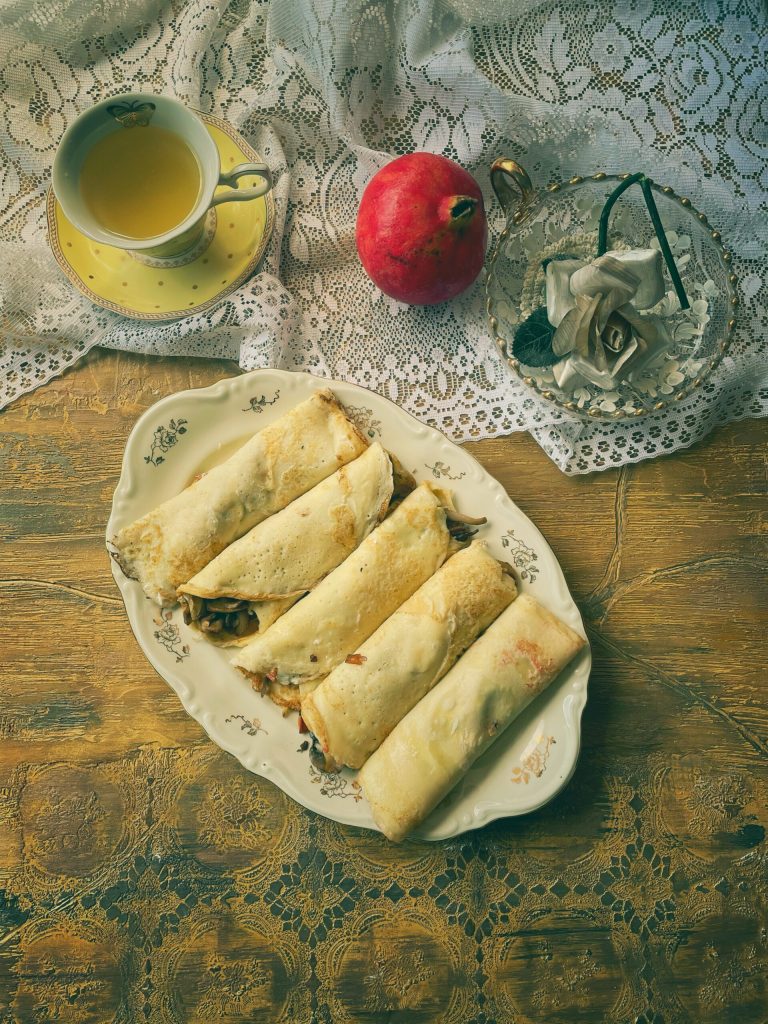
- Difficulty: Medium
- Cost: Cheap
- Rest time: 1 Hour
- Preparation time: 5 Minutes
- Portions: 15 Pieces
- Cooking methods: Stovetop
- Cuisine: Russian
- Seasonality: Carnival, All seasons
Ingredients
- 17 oz milk (warm)
- 2 eggs
- 0.5 oz fresh yeast (or 0.2 oz dry)
- 3.5 oz wheat flour
- 3.5 oz buckwheat flour
- 2 tbsp butter (melted)
- 10.5 oz sour cream
- 7 oz mushrooms
- 2 tbsp sugar
- to taste salt
- to taste jam (or preserves)
Tools
- 1 Pan 8/9 inches
Preparation
Dissolve the yeast in the warm milk with the sugar and let rest for 10 minutes.
In a large bowl, sift the flours.Gradually pour in the milk with the yeast, stirring.
Add the beaten eggs, melted butter, and finally the salt. Mix until you get a smooth batter.
Cover the bowl with a cloth and let rise for about 1 and a half hours in a warm place, until the dough is puffy.
Heat a non-stick pan and brush it with butter.
Pour a ladleful of batter and spread it in a thin layer. Cook on both sides until golden.For the savory version, sauté the thinly sliced mushrooms in a soffritto with onion. Fill the bliny with sour cream and mushrooms and roll up.
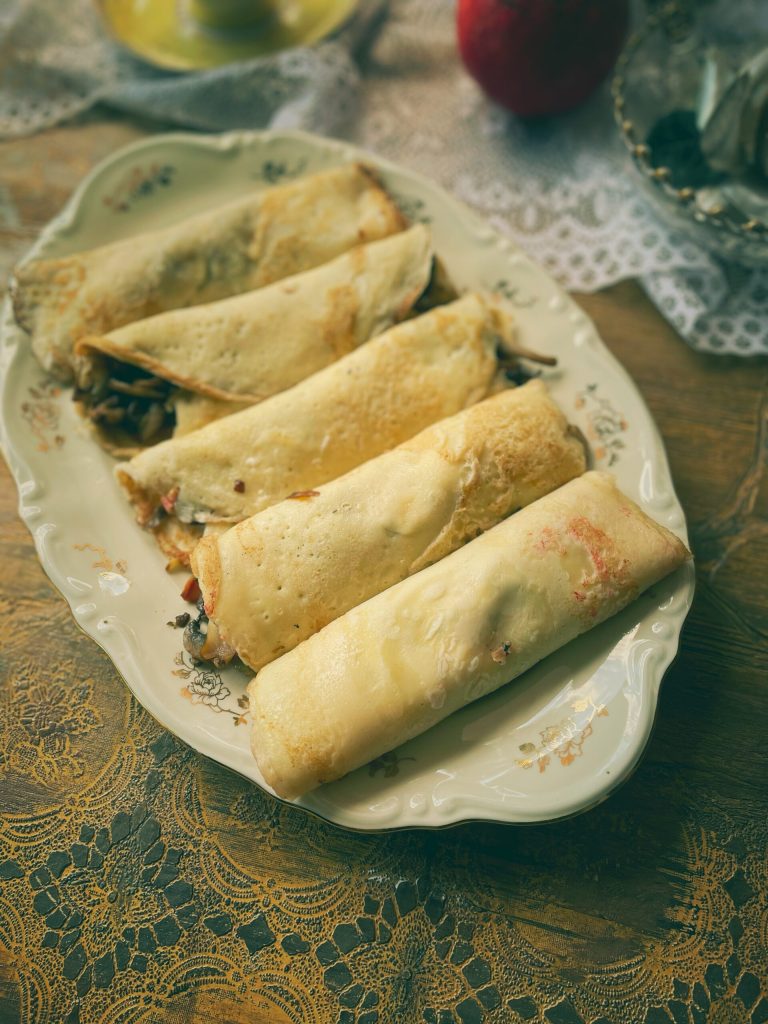
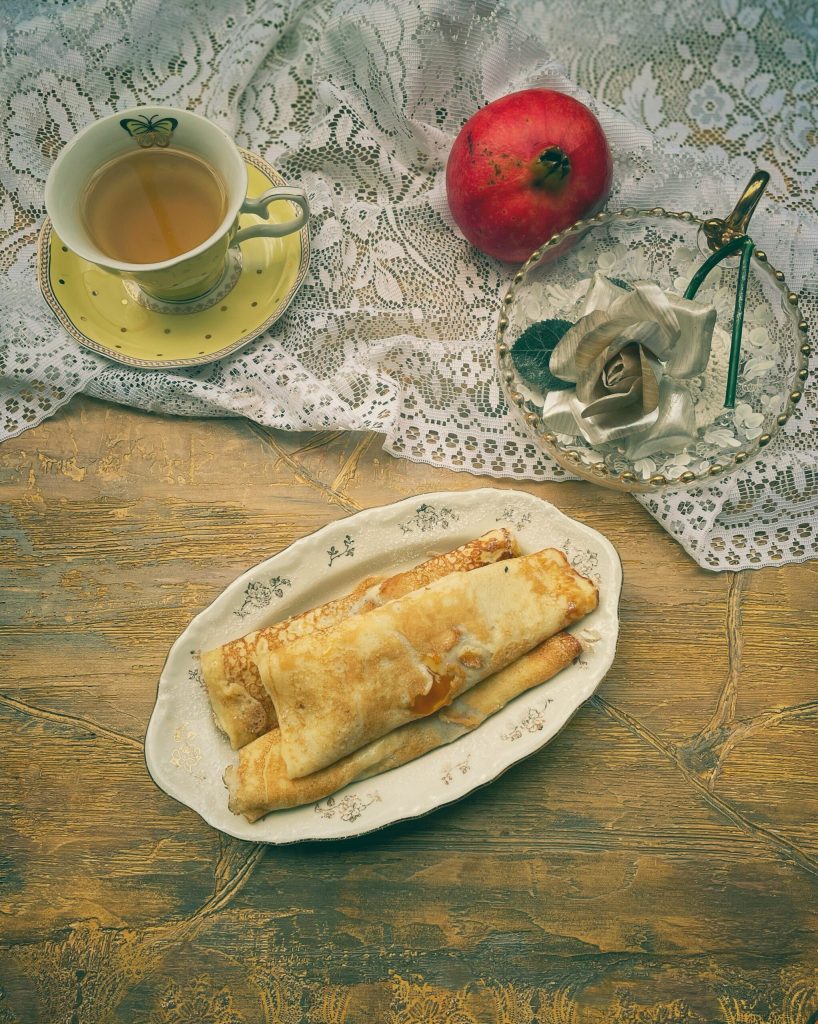
For the sweet version, spread the jam and roll up.
Any book suggestions about Russia? History of Russia
What is Maslenitsa?
Also known as Butter Lady, Butter Week, Crepe week, or Cheesefare Week, Maslenitsa is an Eastern Slavic religious and folk holiday that has preserved in its ritual many elements of Slavic mythology.
It is celebrated during the last week before Great Lent, which is the eighth week before Eastern Orthodox Easter, equivalent to the Western Sexagesima.
Maslenitsa’s date changes every year, depending on the Easter celebration date. It corresponds to the Western Christian Carnival, except that Orthodox Lent begins on Monday instead of Wednesday, and the Orthodox Easter date can differ significantly from the Western Christian date.
Traditional attributes of Maslenitsa celebration include the Maslenitsa effigy, sleigh rides, and festivities.
Russians make bliny and unleavened bread, while Belarusians and Ukrainians make pierogi and syrniki.
According to archaeological evidence from the 2nd century A.D., Maslenitsa might be the oldest surviving Slavic holiday.
In Christian tradition, Maslenitsa is the last week before the start of Great Lent.
During Maslenitsa week, meat is already forbidden to Orthodox Christians, and it is the last week when eggs, milk, cheese, and other dairy products are allowed.
It is celebrated seven weeks before Easter for a total of seven days, and the last day of Maslenitsa coincides with the Forgiveness Sunday (voskresen’e proscenija).With which drink are bliny typically consumed in Russia?
Typical Russian drinks paired with bliny:
Black tea (drunk strong, without milk)
Kvass (a fermented drink made from rye bread)
In more festive contexts, vodka served ice-coldIs the traditional version of bliny rolled?
Exactly, the traditional version of Russian bliny is thin and rollable, not similar to thick pancakes.
Even for a diameter of 7 inches, the batter is spread thin, almost like a crêpe.
Authentic bliny should be elastic, soft, and thin, ideal for rolling or folding with sweet or savory fillings.
If they turn out thick and fluffy, they resemble more olad’i, which are another Russian and Ukrainian preparation similar to pancakes.
So yes, real bliny are thin, even if cooked in small pans. The key is in the amount of batter poured and how it is distributed.
