
Never been to Belgium.
Excluding my teenage passion for Jean Claude Van Damme (born Van Verenberg, Belgian) and the delightful viewing of “In Bruges” (great movie and beautiful location), my knowledge of Belgium doesn’t go much further… But a recipe does attract me a lot…
It is about the Brussels waffle, often known by the name Belgian Waffle, and it was the Pilgrim Fathers who brought the recipe to the Americas.
There are two types of waffle: Brussels and Liege.
The Brussels waffle is characterized by its rectangular shape and its deep and large pockets.
They are served with a sprinkling of powdered sugar or with any kind of cream, from chantilly to pistachio cream or fresh fruit.
It is a fairly light dessert (thanks to the whipped egg whites and little sugar), it is served hot, sprinkled with powdered sugar or with a cream.
The Liege waffle is much smaller, oval in shape, with rounded edges, and the ingredients are slightly different and sweeter than the Brussels version: flour, eggs, milk, butter, brewer’s yeast, a pinch of salt, vanilla sugar, and pearl sugar.
The dough does not fill the entire iron, but remains in the central zone resulting in an irregular shape.
It is rich in sugar because it contains sugar pearls inside, and can be eaten either hot or cold.
It is traditionally served without any other additions.
The first is usually served at the table and requires a utensil to be consumed, because it is almost always enriched with a generous topping and then covered with powdered sugar.
The second is offered in a paper napkin, freshly cooked, and can also be eaten while walking.
The Brussels waffle is a Belgian dessert with international fame, recognized as a Belgian product at the New York World’s Fair in 1964 (the recipe below).
A Belgian tradition wants that waffles are gifted on Sint Maartens Dag, Saint Martin’s Day, (November 11) and served with chocolate, hazelnuts, butter, almonds, cream, syrups, powdered sugar.
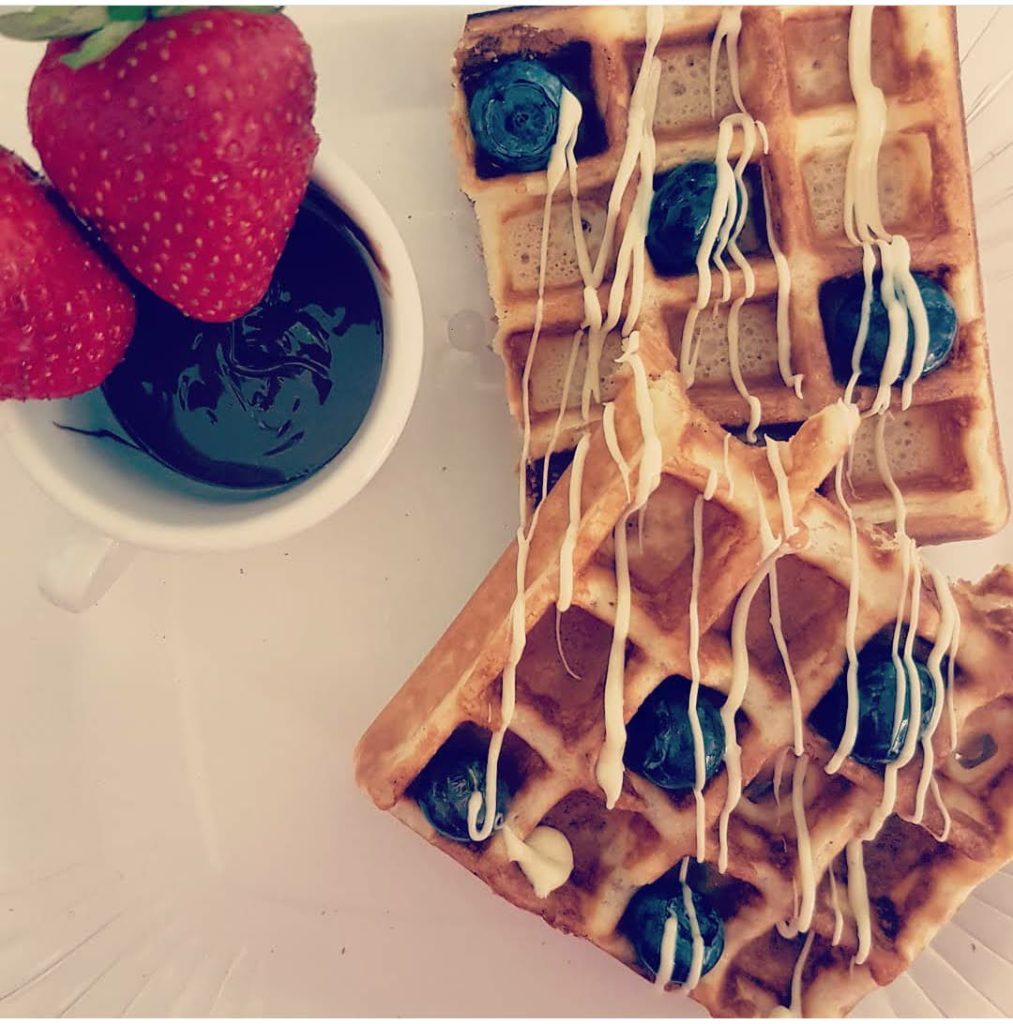
In the picture, the waffle you can taste from Alessio at the ice cream and crepe shop “Il Papero” in Pietra Ligure.
In the video, however, the preparation of the Liege version by fellow blogger and TikToker Martina from the blog “The Spadanos” and you can find her recipe here.
- Difficulty: Medium
- Cost: Economical
- Rest time: 30 Minutes
- Preparation time: 10 Minutes
- Portions: 6 waffles
- Cooking methods: Other
- Cuisine: Belgian
Ingredients
- 2 cups flour
- 1 1/2 cups milk
- 2 tsp sugar
- 1/2 cup butter (melted)
- 1 tbsp fresh brewer's yeast
- 3 eggs
- 1 1/4 vanilla bean
- to taste powdered sugar
Tools
- 1 Waffle Maker or gaufres
Preparation
Heat the milk.
Mix the yeast with a little warm milk and the sugar.
Separate the egg whites from the yolks. Whip the egg whites with an electric mixer or a whisk.
Sift the flour and add the rest of the warm milk, mix everything vigorously.
Add the yolks, melted butter and dissolved yeast, the vanilla, cover the batter with a sheet of plastic wrap and let it rest for half an hour in the refrigerator.
Preheat the waffle iron and brush the surface with butter to avoid sticking.
Pour a ladle of batter over the surface with a spoon, spread it and let the waffle cook for about 3-4 minutes. When it turns golden, it means it’s cooked inside.
Decorate with powdered sugar (or fill as desired)
NB. The lightness of the Brussels waffle is mainly due to the whipped egg whites. Therefore, the mixing of the whites must be performed with the utmost care to avoid deflating the foam!
Difference between waffle and gaufre:
Same in shape, but different in batter, they are both cooked on the classic honeycomb iron; for waffles, a sort of semi-liquid batter is made with baking powder, sometimes buttermilk.
Gaufres, instead, richer in butter, require brewer’s yeast and a fundamental ingredient to get a product as close as possible to the original Belgian one (for the Liege version): the pearl sugar.
Pearl sugar resembles sugar granules for sweets, but it is in the form of fairly hard irregular granules. The “sucre perlé” does not melt inside the batter until it starts to melt at 302°F, leaving the inside of the gaufre tender and the outside caramelized.
The name waffle derives from the old Belgian language, where “sweet” was said as “wafla“.
The name waffle derives from the old Belgian language, where “sweet” was said as “wafla“.
