
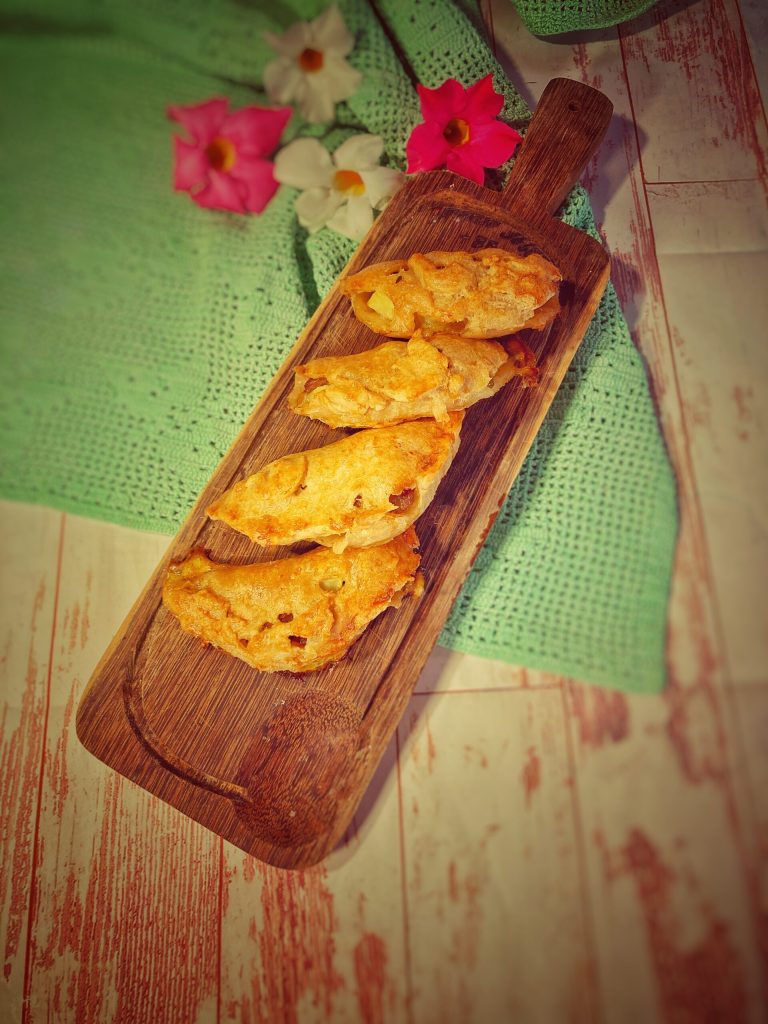
The Cornish Pasty is a typical English dish, distinguished by its crescent shape and crimped edge.
It is a pasty (small parcel) originating from Cornwall.
It is made by placing a meat and vegetable filling on one half of a flat circle of folding the pastry over the filling into a semicircle and sealing the curved edge before baking.
The recipe for a Cornish Pasty, as defined by its specification, includes: beef (although early recipes called for venison), onion, potatoes and swede (rutabaga), diced or coarsely chopped together with a “slightly peppery” seasoning.
Sometimes turnip is used, but the recipe requires true rutabaga (swede), not turnip. The use of carrot in a traditional Cornish Pasty is also frowned upon, although it sometimes appears in recipes.
You can also find sweet pasties with ingredients such as apple and fig or chocolate and banana, which are common in some parts of Cornwall.
Initially a meal of the nobility, pasties became famous thanks to miners, fishermen and farmers.
It was especially through miners that they spread around the world and acquired their particular form: wives made them with a thicker, crimped edge so men could eat safely without contaminating the filling. Miners would warm pasties with a lit candle under a tin bucket and eat them with their hands, discarding the dusty outer crust contaminated with copper and tin dust.
In 2011, Cornish pasties received Protected Designation of Origin (PDO) and Protected Geographical Indication (PGI) status, and therefore must meet very specific requirements.
These requirements are the following:
– they must be made in Cornwall.
– They may contain only beef, potatoes, swede (rutabaga), onion, salt and pepper. No other meat, vegetables or seasonings are permitted.
– The ingredients must be raw when the pasties are assembled and then cooked slowly.
– The edges must be sealed by folding them in the traditional Cornish crimped manner.
- Difficulty: Medium
- Cost: Economical
- Rest time: 3 Hours
- Preparation time: 10 Minutes
- Cooking time: 50 Minutes
- Portions: 6-7 pieces
- Cooking methods: Oven
- Cuisine: English
- Seasonality: All seasons
Ingredients
- 14 oz beef (sirloin or rump)
- 1 onion
- 11 oz potatoes
- 5 oz rutabaga (swede)
- to taste salt and pepper
- 1 egg
- 4 cups flour
- 9 tbsp butter
- 9 tbsp lard
- 3/4 cup water
- to taste salt
Steps
Combine the flour with the butter and lard, season with salt, and gradually add the cold water. Knead and place in the refrigerator for 3 hours.
For the filling: mix the diced beef with the onion, diced potatoes and chopped rutabaga. Season with salt and pepper.
Cut 8-inch circles from the dough and fill them with the filling.
Close by crimping and sealing the edge.
Brush with beaten egg and bake in a convection oven at 329°F for 50 minutes.
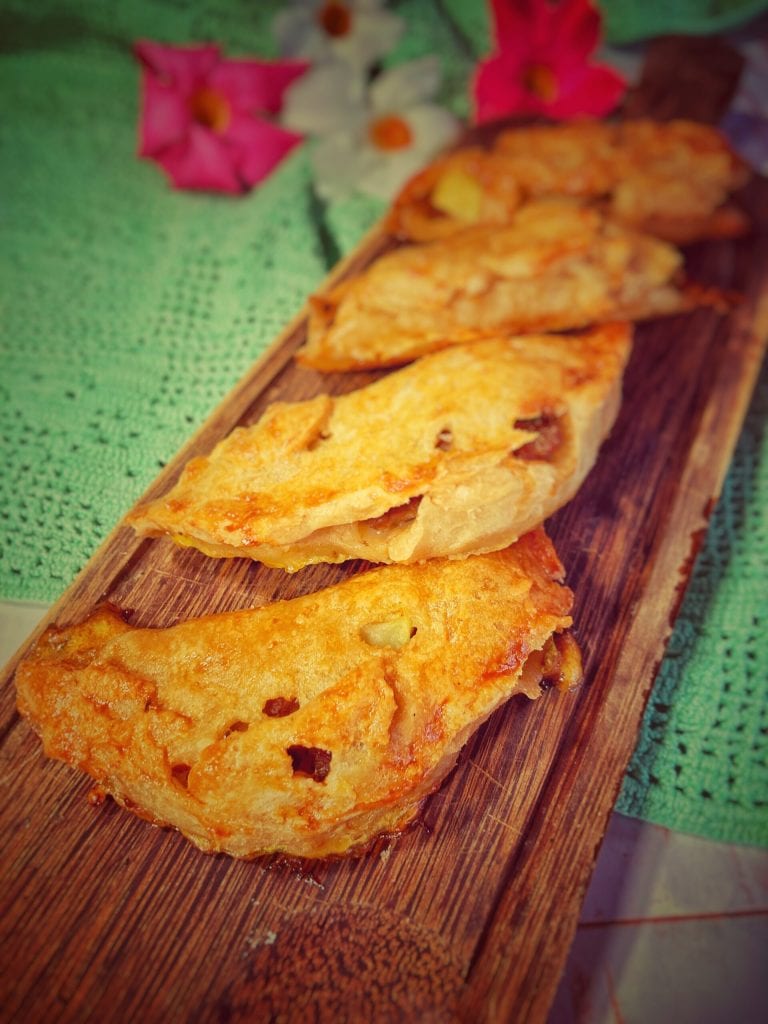
The above are the original ones we tasted during our trip to Cornwall in December 2024, in the village of Tintagel at Pengenna Pasties.
The Cornwall, a county in the southwest of England, is famous for the beauty of its landscape, made up of unspoiled beaches, steep cliffs plunging into the crystal-blue sea, wide rolling countryside and deep wooded valleys.
