
The Dhodhol, or Dodhol, or Kalu Dodol, is a traditional dessert from Sri Lanka, also very popular in Indonesia, Malaysia, and among Tamil and Muslim communities in Sri Lanka, especially during festivals such as Eid, Ramadan, and other special occasions.
It is a dense, gelatinous and rich dessert made with:
• rice flour
• kithul jaggery, a traditional Sri Lankan sweetener made by boiling the sap of the kithul palm (or jaggery palm)
• coconut milk
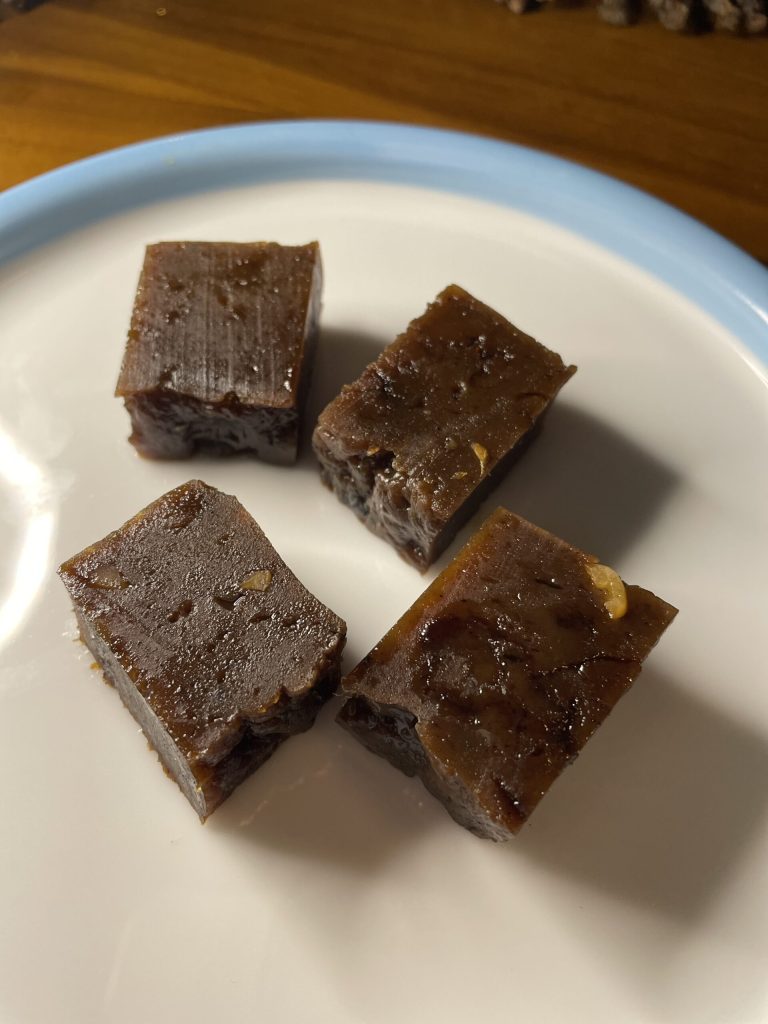
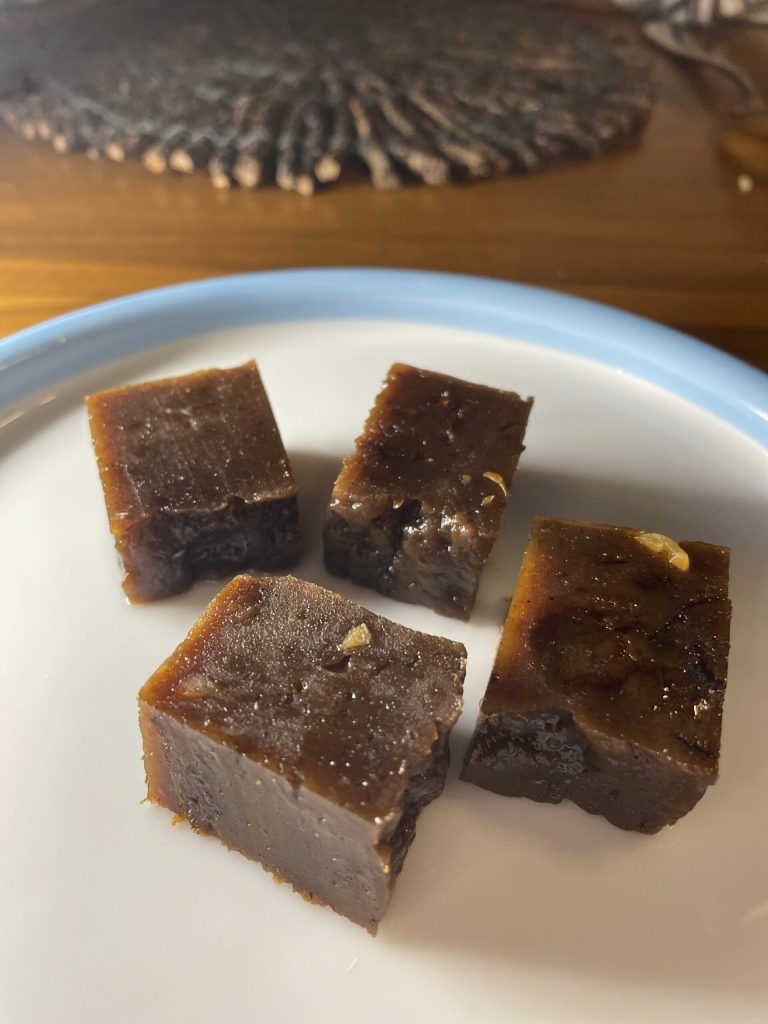
The result is a dark, shiny, highly aromatic mass, cut into diamonds or squares once cooled. It has a texture similar to firm jelly.
Kalu Dodol is the most common name in Sri Lanka, especially among the Sinhalese. “Kalu” means “black,” referring to the dark color of the preparation due to the jaggery and long cooking.
Dhodhol (or dodol) is a term used in other areas of Southeast Asia, such as Indonesia, Malaysia, India (Goa, Kerala), and some Tamil communities, including those in Sri Lanka.
Naturally gluten and lactose-free.
This was tasted during the trip to Hikkaduwa in October 2025, within the walls of the Galle fort.
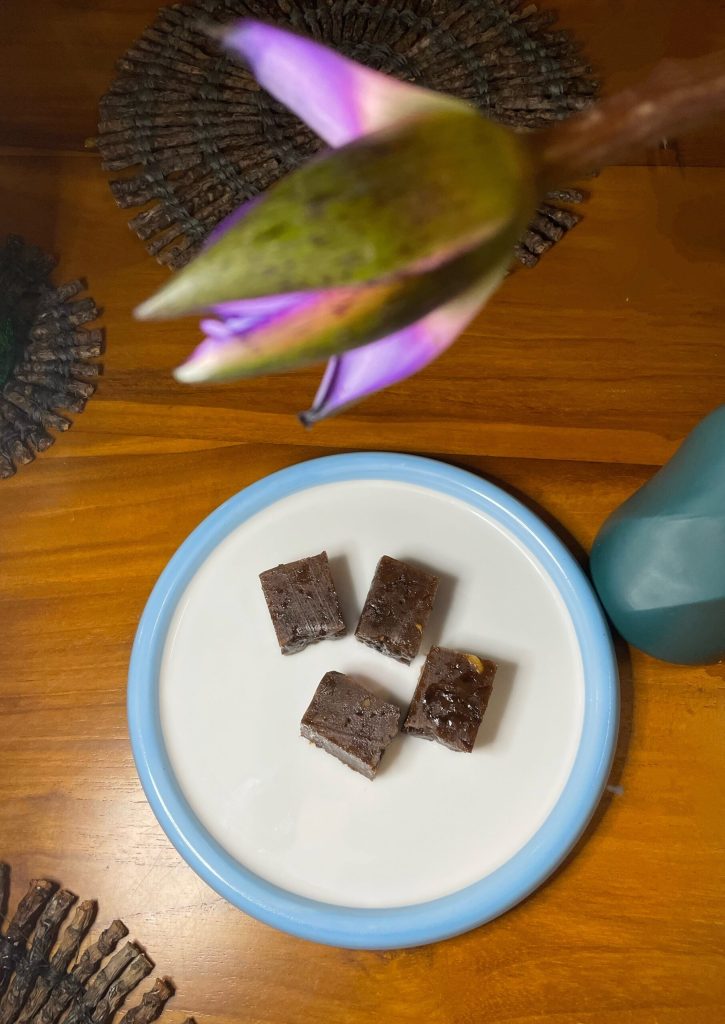
- Difficulty: Easy
- Cost: Cheap
- Preparation time: 5 Minutes
- Portions: 10Pieces
- Cooking methods: Boiling
- Cuisine: Sinhalese
- Seasonality: Ramadan, All seasons
Ingredients
- 1 1/4 cups rice flour
- 7 oz kithul jaggery
- 3 cups thick coconut milk
- to taste spices (nutmeg and cardamom)
- 1 pinch salt
Steps
Dissolve the jaggery with some coconut milk and strain.
In a non-stick saucepan, combine all ingredients and cook over low heat.
Stir continuously (for 45-60 min) until the mixture thickens, pulls away from the sides, and becomes glossy.
Pour into a greased tray, level, and let cool.
Cut into square or diamond-shaped pieces.
FAQ (Frequently Asked Questions)
Why is the city of Colombo in Sri Lanka named that way?
The name Colombo was given to the city by the Portuguese in 1505 and likely derives from a misinterpretation or adaptation of the original Sinhalese name:
• ”Kolon thota” or “Kola-amba-thota,” which mean “port on the Kelani River” or “port of the leafy mango,” respectively.
When they arrived, the Portuguese transformed this name into “Colombo,” perhaps also to make it more familiar or as a nod to Christopher Columbus, although there is no concrete evidence that the name was given directly in his honor.
In summary:
• The name has Sinhalese roots.
• The Portuguese adapted it to “Colombo.”
• The association with Christopher Columbus is more a linguistic coincidence than an official dedication.
