
The Rougaille is a Creole sauce that gives its name to many Mauritian dishes; it seems like a simple tomato sauce, but the influence of European flavors with fresh thyme along with Indian ingredients such as chili, coriander, garlic, and ginger make the difference.
The Mauritian rougaille (or Reunionese rougail) is indeed a dish originating from the Mascarene Islands, its name has Indian origins and is said to derive from the Tamil language (from ஊறுகாய் ( ūṟukāy ), meaning “candied green fruit”, related to Telugu ఊరగాయ ( ūragāya ).
The term designates a preparation to accompany some dishes from La Réunion, Mauritius, but also from the Comoros and Madagascar.
The recipes are similar, however, the Mauritian version is often less spicy and contains a bit more spices.
There are different varieties of rougail, which come in the form of a more or less thick sauce or paste.
In Mauritius, La Réunion, and Madagascar, rougail is a spicy dish whose base is a sauce made of sliced and browned onions, crushed tomatoes, chili in which previously boiled and cut pieces of deli meats, sausages, boucané, andouille, or dried or smoked fish (cod, herring, snouk) are desalted and browned.
These dishes may include the addition of crunchy vegetables at the end of cooking (large peppers, flower onion stalks, margoze).
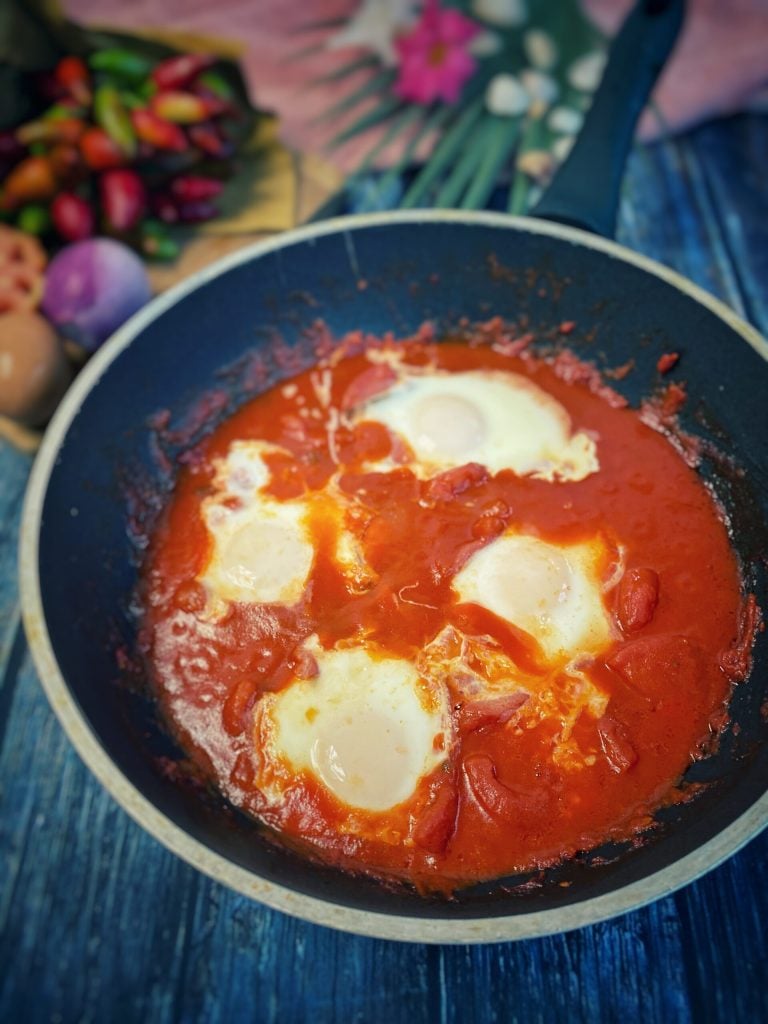
Like onion rougail, lemon rougail, cucumber bilimbi, tamarind, Granny Smith apple, mango, or dakatine rougail, made with peanut paste, or with eggs: Egg Rougaille, the recipe that follows.
Do not confuse with Rougail oeufs (also called “cari zeufs”) typical Reunionese rougail which includes boiled eggs.
It is very similar to Chakchouka, a North African dish, which many people eat at breakfast, lunch, or dinner.
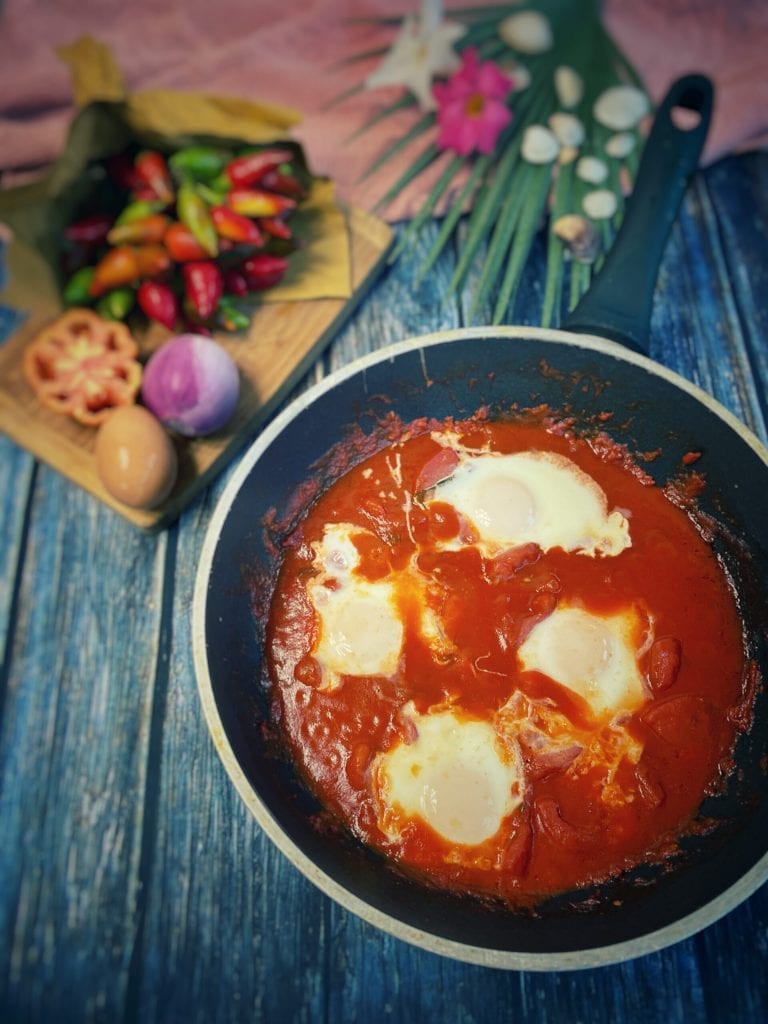
- Difficulty: Very easy
- Cost: Very economical
- Preparation time: 5 Minutes
- Portions: 1 Person
- Cooking methods: Stove
- Cuisine: International
- Seasonality: All seasons
Ingredients
- 4 eggs
- 1 onion
- 2 cloves garlic
- 1 chili
- to taste thyme
- 1 tomato
- 14 oz tomato pulp
- to taste salt
- to taste coriander
Steps
In a pan, sauté the onion with the ginger, garlic, chili, and thyme.
Add the chopped tomato, the tomato pulp, and the coriander. Adjust the salt and cook for 5 minutes.
Break the eggs and finish cooking in a few minutes.
FAQ (Questions and Answers)
How is Rougail prepared and used in La Réunion?
In La Réunion, the custom is to use this word also to designate the complete dish of carry type*, such as sausage rougail and cod rougail.
Here the cooked rougail based on fruits and vegetables is consumed as a side dish.
An example is the tomato rougail, which also includes onions, ginger, peppers, and kaffir lime.
By adding wine, the rougail turns into a Civet of deer, zourite (octopus) or others, it’s the same base of the rougail with an extra glass of red wine and a few fewer spices.
*The carry is a traditional dish of the Reunionese cuisine composed of meat or fish, primarily prepared with tomatoes, onions, turmeric (or saffron pei), and sometimes ginger and other aromatic plants and spices (garlic, thyme, salt, pepper…).
This non-spicy preparation follows basic rules: in a cast-iron pot, brown the meat or fish, sauté and reduce the onions, garlic, tomatoes, add the turmeric (local saffron), thyme, salt, pepper, etc. then let simmer.
There also exists the Malagasy rougail which, as the name suggests, comes from Madagascar and is prepared with only tomatoes.
The rougail of the Comoros is made with tomatoes, onions, lemon, parsley, salt, and chili.Are Carry and Curry the same dish?
No.
The carry (cari or kari, in Creole) is a traditional culinary specialty of Reunionese and Mauritian cuisine, derived from the curry of Indian cuisine, a variant of the massalé or masala carry, made with meat, fish, shellfish, or vegetables, cooked in a preparation of onion, tomatoes, garlic, and spices (turmeric).
The word carry (or cari, in Creole) is derived from the curry of Indian cuisine (kari, slow-cooked dish 1, in Tamil of southern India, the language of one of the ethnic components of the island of Reunion and Mauritius).
Cari is also a generic term that can refer to slow-cooked and spicy food in the Creole sense. A symbol of their culture and identity, it is part of the daily life of most Reunionese and Mauritians.
The only spice originally used in carry is that of the root of turmeric, called “saffron” or “saffron péi” in Reunion (not to be confused with saffron).
The most famous local saffron péi (country) is grown locally in the highlands of the city of Saint-Joseph (Reunion), founded in the 18th century by Joseph Hubert (who then introduced turmeric to the island). You can also find imported turmeric in stores.
The massalé of goat, chicken, or even vegetables contains curry leaves, called caloupilé (massalé is the name given to the local spice blend).
We must distinguish between curry, sauces (tuna sauce), or even vindayes and rougails, as the method of preparation is not the same at all.
