
Carnival in the Canary Islands is not just an explosion of colors and music, but a rite that passes through subsistence cooking.
Carnival Tortillas are its symbol: born out of the need to use simple ingredients (flour, eggs, and flavors) to create an energetic food before the rigors of Lent, these flat pancakes represent the identity of each island.
Although the base is common, the archipelago divides in flavors:
Gran Canaria (Pumpkin Variant): It is the island where pumpkin (calabaza) is the absolute protagonist. Here the tortillas are more orange, moist, and naturally sweet. Often, a touch of grated fresh cheese is added to the dough to create a savory contrast.
Tenerife (The “Floral” Version): In Tenerife, it is very common to use orange blossom or a larger quantity of citrus zest. The texture tends to be lighter and spongier, less dense than that of Gran Canaria.
La Gomera (Palm Honey): Here the batter is similar to the basic recipe, but the distinctive touch is the seasoning. Exclusively the Palm Honey from La Gomera is used, a unique product obtained from the sap of the Canary palm, giving it an intense and almost smoky flavor.
El Hierro (Herreño Cheese): On this island, famous for its cheeses, it is not uncommon for the tortillas to have a more substantial base thanks to the addition of crumbled local fresh cheese, the Herreño Cheese, making them almost “sweet cheese pancakes.”
The variant from the island of El Hierro – the one that follows – is the most “rustic” and, for me, the most fascinating.
Here, the history of Carnival intertwines with the ancient tradition of herders. Unlike the purely sweet versions of the other islands, the herreña one uses fresh cheese (historically goat or sheep), a key ingredient of the local economy.
Do not confuse them with Tortillitas de Camarones (shrimp pancakes) typical of Cadiz (Andalusia). They are also eaten at Carnival, but are distinctly savory, thin as wafers, and extremely crispy, made with chickpea flour and small crustaceans.
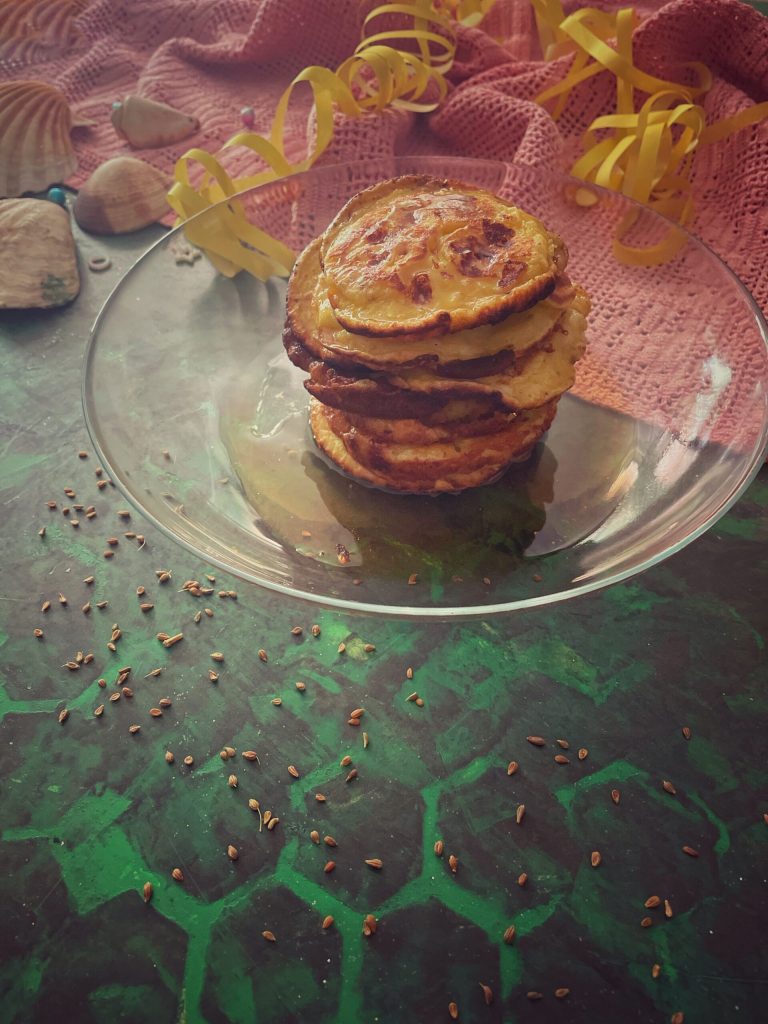
The result is a pancake with a grainy texture, where the savory taste of the cheese meets the aroma of anise seeds (matalahúga).
On the blog, you can find another typical El Hierro Carnival recipe:
- Difficulty: Medium
- Cost: Very cheap
- Rest time: 20 Minutes
- Preparation time: 10 Minutes
- Portions: 15 Pieces
- Cooking methods: Stovetop
- Cuisine: Spanish
- Seasonality: Carnival
Ingredients
- 9 oz goat cheese (like ricotta or chèvre)
- 3 eggs
- 2/3 cup sugar
- 1 lemon (zest only)
- 2 tsps anise (Matalahúga)
- 1 tbsp anise liqueur
- 5 oz milk
- 1 3/4 cups flour
- as needed vegetable oil
- as needed wildflower honey
Tools
- 1 9.5 inches
Steps
Preparation: Mash the cheese with a fork until creamy but grainy.
Flavors: Combine eggs, sugar, lemon zest, anise seeds, and liqueur. Stir vigorously.
Batter: Gradually pour in the milk and incorporate the sifted flour little by little. You will get a thick and rich batter.
Rest: Let the mixture rest for 20 minutes: it’s the secret for the flavors to meld with the cheese.
Frying: In a 9.5-10.2 inch pan, heat some oil. Spoon the batter in spaced dollops. El Hierro tortillas tend to remain a bit thicker and “rustic” in appearance.
Serving: When they are golden and crispy on the edges, drain on paper towels and serve hot with plenty of honey.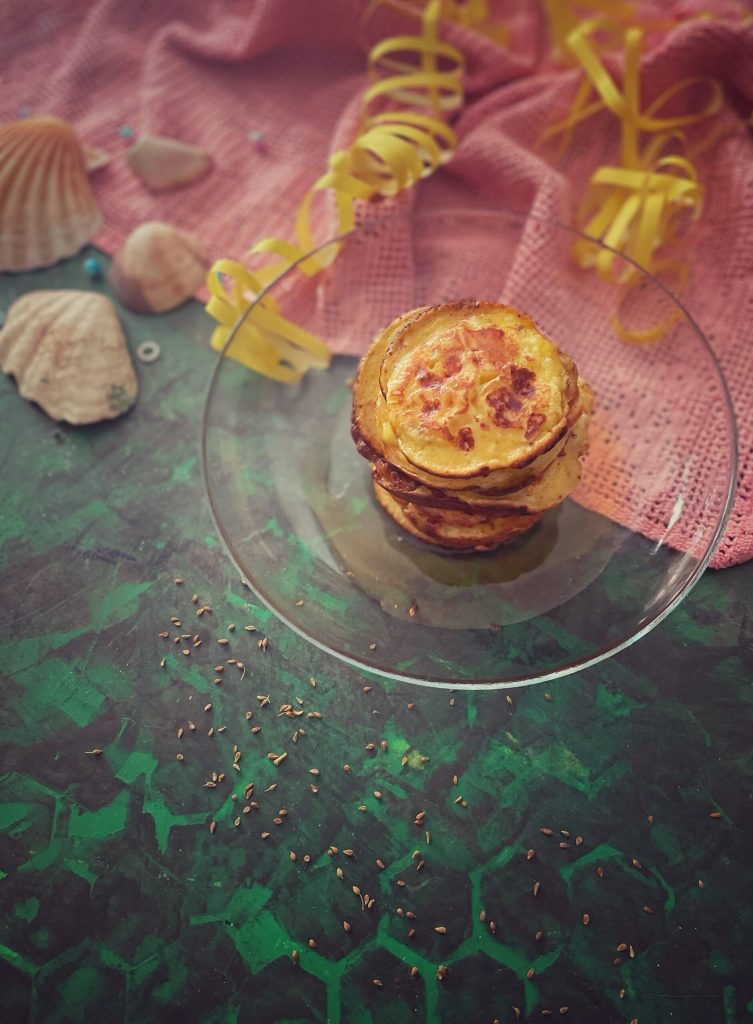
Name Trivia
They are called “tortillas” simply for their flat and round shape, similar to an omelette (which in fact refers to the famous tapa), and not for the ingredients.
In Spain, there is an entire family of sweet pancakes called this way, to differentiate them from puffed desserts (like buñuelos) or those in stick form (like churros).
FAQ (Questions and Answers)
Are Carnival Tortillas presented stacked on top of each other or spread on a plate?
Generally, Carnival Tortillas follow two styles of presentation, both very convivial:
1. The “Mountain” (Traditional and Family Style)
This is the most common way to serve them at home or during street parties. The tortillas are stacked on top of each other to form a tower.
Why: This method retains heat longer.
The final touch: Honey (or syrup) is poured directly onto the top of the stack, allowing it to trickle down the sides to soak the tortillas underneath.
2. Arranged in a “Fan” (Restaurant or Tapas Presentation)
In venues, or if you want a more curated presentation, they are arranged slightly overlapping (in a fan shape or in a line) on a large flat plate.
Advantage: This allows each individual tortilla to keep the edges crispier, preventing the weight and moisture of the ones above from softening them too much.
Decoration: In this case, you can decorate the plate with a few sprigs of mint or an extra sprinkle of cinnamon aroundWhat honey is used in El Hierro?
In El Hierro, for Carnival Tortillas, the traditionally used local bee honey is often a wildflower honey reflecting the island’s unique flora. Sometimes the renowned palm honey is also used, which is a syrup derived from the sap of the Canary palm.
Types of Honey Used in El Hierro:
Bee Honey (Miel de Abeja): It is the most common condiment. El Hierro produces high-quality bee honeys, mainly multifloral (wildflower) honeys with flavors ranging from delicate to intense, depending on the blooms predominant at the time. These local bee honeys are the most authentic option if you want to faithfully replicate the traditional recipe.
Palm Honey (Miel de Palma): Although the main production of this palm syrup happens in La Gomera, it is widespread and appreciated throughout the archipelago, including El Hierro. It is not a true honey produced by bees, but guarapo, the sap of the palm boiled and reduced to a thick and dark syrup. Its flavor is unique, almost caramelized, and pairs perfectly with the savory taste of the local cheese.
Also used to make the Frangollo, a typical Canary Islands dessert made with milk, millet (or corn) flour, lemon, eggs, sugar, butter, raisins, almonds, and cinnamon.
