
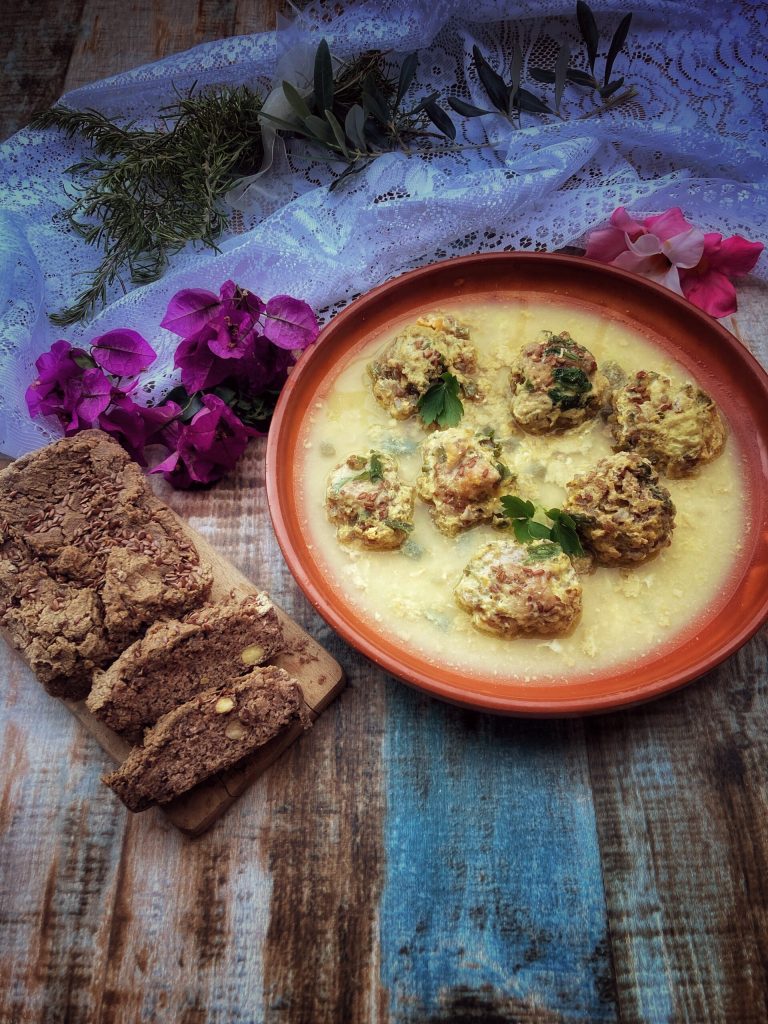
The Giouvarlakia or Yuvarlakia – from Greek: γιουβαρλάκια – is a dish made of minced beef meatballs, rice and other seasonings like onion, parsley, egg, salt, and pepper, cooked in a pot, in water or meat broth.
▶ The meatballs can be served in tomato sauce or avgolemono, as in this case… a family of sauces and soups based on egg yolk and lemon juice mixed with broth, heated until it thickens.
▶This type of sauces is found in Greek, Arab, Sephardic Jewish, Turkish, Balkan, and Italian-Jewish cuisines.
▶Depending on the density of the sauce, Giouvarlakia can be considered a soup or a stew.
▶The mixture is similar to that used for making sarmale or koupepia, vine leaf rolls that encase a filling of grains (bulgur or rice) and minced meat, or both.
- Difficulty: Easy
- Cost: Economical
- Rest time: 1 Hour
- Preparation time: 10 Minutes
- Portions: 2 people
- Cooking methods: Boiling
- Cuisine: Greek
- Seasonality: All seasons
Ingredients
- 12 oz minced beef
- 1/2 cup rice (long grain)
- 1 onion
- 1 egg
- to taste parsley
- to taste salt and pepper
- 1 yolk
- 1 lemon (juice)
Steps
Mix the meatball ingredients: meat, rice, parsley, onion, egg, salt, and pepper and refrigerate for 1 hour.
Form small meatballs, arrange in a pot and cover with cold water.
Cook over low heat for 30 minutes.
For the avgolemono sauce: beat the yolk in a pot on the stove while slowly adding the filtered lemon juice. Stir and add 2/3 cup of the meatball broth. Let it thicken.
Add the sauce to the meatballs.
Serve with parsley and toasted bread.

You can serve with rustic buckwheat flour bread as I did.
FAQ
What is avgolemono?
Also known as egg-lemon sauce, it is a family of sauces and soups made with egg yolk and lemon juice mixed with broth, heated until they thicken.
These are found in Greek, Arab, Sephardic Jewish, Turkish, Balkan, and Italian-Jewish cuisines.
In Sephardic Jewish cuisine, it is called agristada or salsa blanco, and in Italian cuisine, it is known as bagna brusca, brodettato, or brodo brusco.
In Arabic, it is called tarbiya or beida bi-lemoune “egg with lemon”; and in Turkish terbiye.Is the rice put in raw?
Yes.
