
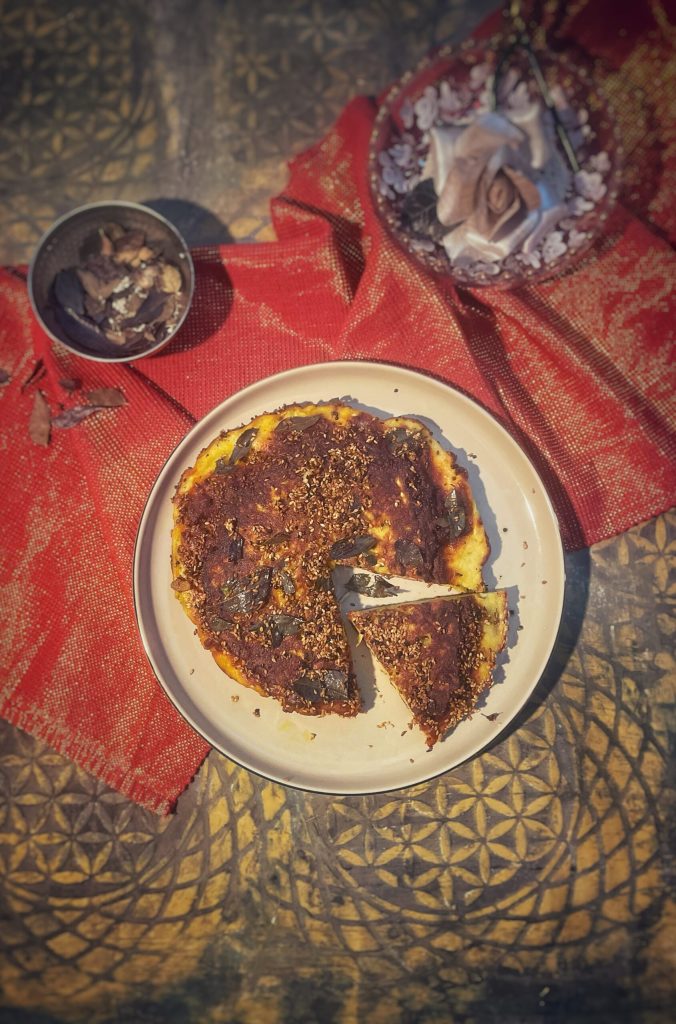
The handvo (or haandvo) is a flavorful spiced vegetable cake, a staple of the cuisine from the state of Gujarat, India.
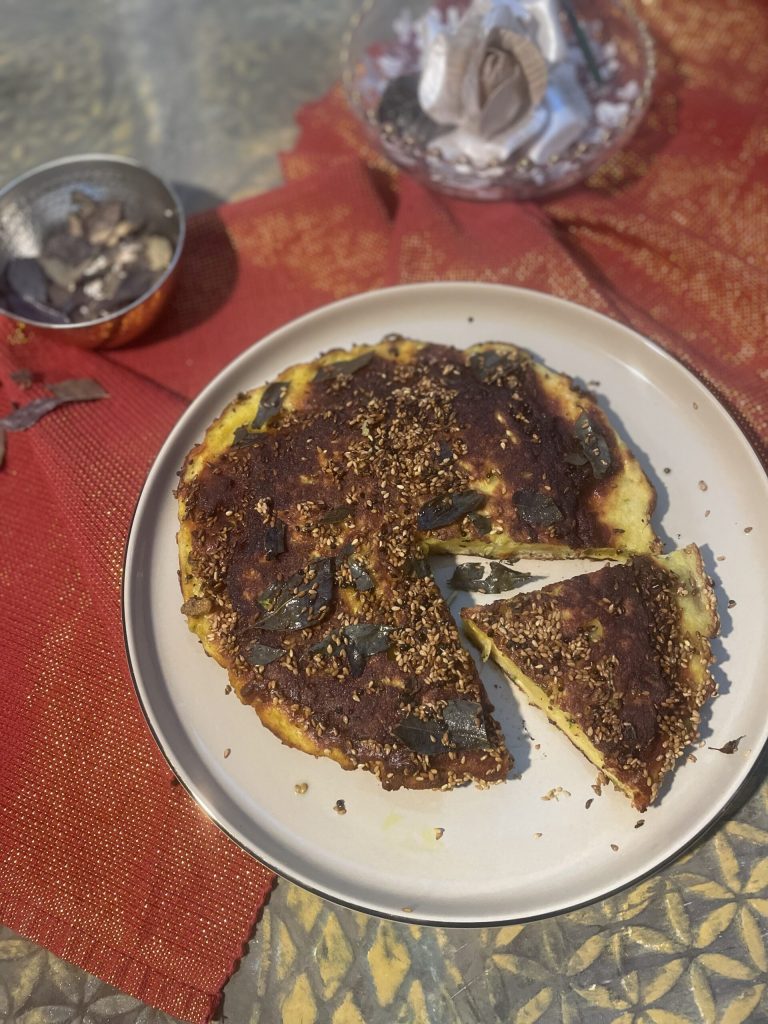
It is characterized by its unique texture: a golden, crispy crust that encloses a soft and nutritious interior.
Base Ingredients: It is made with a fermented batter of rice and various legumes (typically chana dal, toor dal, and moong dal) mixed with yogurt.
Vegetables: The traditional “secret” ingredient is bottle gourd (lauki or dudhi), grated directly into the batter to keep it moist. Carrots, peas, or corn are often added as well.
Before baking, it is sprinkled with a tempering (tadka) of mustard seeds, sesame seeds, chili, and curry leaves, which gives it its characteristic aroma.
It can be baked in an oven, in a pan—preferably cast iron (recipe follows)—or in an aluminum oven called the Handvo Cooker, used directly on the stove and featuring a central hole (similar to a bundt pan).
It is usually served as an afternoon snack or for breakfast, accompanied by a classic cilantro and mint chutney or a cup of hot tea.
- Difficulty: Easy
- Cost: Economical
- Rest time: 18 Hours
- Preparation time: 15 Minutes
- Portions: 6 People
- Cooking methods: Oven, Stove
- Cuisine: Indian
- Seasonality: All Seasons
Ingredients
- 1 cup short-grain rice
- 1/2 cup chana dal (hulled chickpeas)
- 1/4 cup toor dal (split peas)
- 1/2 cup urad dal (white mung beans)
- 1/2 cup plain whole yogurt
- 1 cup bottle gourd (or zucchini, grated)
- 1/2 tsp baking soda (or baking powder)
- to taste vegetable oil
- to taste turmeric powder
- to taste green chili (chopped or powdered)
- to taste ginger paste
- 1 tsp cumin seeds
- 1 tbsp sesame seeds
- 1 tsp mustard seeds
- 10 leaves curry leaves
- 1 pinch Asafetida
- to taste salt
Tools
- 1 Skillet 8/9 inches
Steps
Soaking: Rinse the rice and legumes well, then soak them in water for at least 4-6 hours.
Blending: Drain the water and blend the mix with the yogurt (add it gradually) until you get a grainy batter (similar to semolina), not too liquid.
Fermenting: Cover and let rest in a warm place for 8-12 hours (or overnight). The volume should slightly increase.
Assembling: Add the grated bottle gourd or zucchini, spices, and baking soda to the batter. Mix gently.
Cooking (in a skillet): Heat the oil in a non-stick skillet, add the tempering ingredients until they crackle. Pour the batter (thickness about 1 inch), cover with a lid, and cook over very low heat for 10-12 minutes until the base is golden and crispy. Flip the handvo and cook the other side for another 5-8 minutes.If you prefer the oven, you can bake it at 350°F for about 30-40 minutes in a previously greased baking dish, pouring the hot tempering on top of the batter before baking
Fermentation
The true secret of handvo is not how long the grains remain in water, but how long the batter rests after blending. Once turned into batter with yogurt, the grains must ferment for 8-12 hours (overnight). It is during this phase that the softness and typical taste develop.
FAQ (Frequently Asked Questions)
What can I substitute for Bottle Gourd?
Traditionally, only Bottle gourd (known as Lauki or Dudhi in India) is used, aesthetically similar to a giant zucchini, but with a very smooth light green skin and a white pulp inside.
Texture: It has very firm flesh that, once grated, does not “disappear” during cooking but gives a spongy softness to the batter.
Taste: It is almost neutral, allowing the spices and the fermentation of the rice/legumes to be the stars.
Moisture: It releases water gradually, helping the interior remain moist while the exterior becomes crispy.
Zucchini – The Modern Substitute
Common zucchinis found in Italy are the closest substitute and accepted by Indian cooks abroad, but they are much more watery, so the grated pulp must be squeezed.What type of yogurt is used for handvo?
In India, Dahi (homemade yogurt) is used, which is much more fluid, less strained, and most importantly, more acidic than Greek yogurt. The acidity is crucial because it triggers the natural fermentation of the legumes and rice overnight.
The classic plain whole yogurt is the perfect choice and the closest to the original Indian Dahi.
