
Lebanon is perhaps among the countries of the Middle East the one that fascinates me the most, for its history, for its capital Beirut, nicknamed “the Paris of the Middle East“, characterized by a millennial history marked by conflicts and invasions, and for its cuisine, the true cradle of all Middle Eastern cuisine.
Unfortunately, Lebanon, like other Middle Eastern states, also lives in a continuous alternation of peace and wars, especially internal and religious ones.
The recognized confessions are 18, among which are Greek Orthodox Christian, Armenian Apostolic, Shiite, Sunni, Jewish, Protestant, and Coptic.
The Muslim religious community represents the majority, while a few decades ago, Christians held the primacy.
Recently, after a peaceful period lasting nearly 3 years, since 2011, during the Syrian civil war, there has been a resurgence of the Lebanese sectarian conflict, with Sunni factions supporting the rebels, while Shiite ones, particularly the Hezbollah militia, also militarily supporting the Syrian government.
One of the oldest known epics, that of Gilgamesh, took place here, in the Land of the Cedars, a tree that serves as a national emblem.
The Lebanese cuisine belongs to the large family of Levantine cuisines, and among these, it is considered the best by the public, magazines, and specialized agencies.
The elements are those of Levantine cuisine: cereals, legumes, vegetables, poultry, a lot of fish, and typical area seasonings such as olive oil, lemon, garlic, sesame, parsley, and aromatic herbs, particularly mint.
On a trip to Lebanon, one cannot fail to try hummus, which is said to have been invented precisely in this country, but many countries claim its paternity.
Considered a classic of Middle Eastern cuisine (hummus is to the Middle East what ragù is to Italians), it is a chickpea and tahini sauce (sesame paste).
The full name is actually ḥummuṣ bi ṭaḥīna, which means “chickpeas with tahini.”
The very word “hummus” comes from Arabic and means chickpeas, a legume that was first cultivated in the Middle East ten thousand years ago.
There is also a variant of the classic hummus: the Musabaha, another recipe of Levantine tradition, very widespread in Jordan, Lebanon, Palestine, and Syria, but with some fundamental differences.

- Difficulty: Very easy
- Cost: Very affordable
- Preparation time: 5 Minutes
- Portions: 10 people
- Cooking methods: No cooking
- Cuisine: Lebanese
- Seasonality: All seasons
Ingredients
- 10.6 oz dried chickpeas (21.2 oz canned chickpeas)
- 1.8 oz tahini
- 1 lemon (juice)
- 2 cloves garlic
- 1.7 fl oz olive oil
- to taste salt
- to taste paprika
- to taste sesame (optional)
Preparation
Soak the chickpeas for 12 hours in twice their volume (20.3 fl oz of water).
After this time, drain them, rinse them very well, and cook them for about 2 hours (or until they are very soft).
Rinse the cooked chickpeas under water and move them with your hands to remove the small skins that cover them. Remember to set aside a glass of cooking water.
If you use canned chickpeas, it is not necessary to soak them, but remember to set aside some of the water from the chickpea can.
If you want, you can heat the chickpeas in a pan before blending them.
Blend the chickpeas in a processor adding the tahini, garlic, oil, lemon, and salt.
The cream you should obtain must be thick and without lumps; if necessary, to make it creamier, you can add a bit of the legume water.
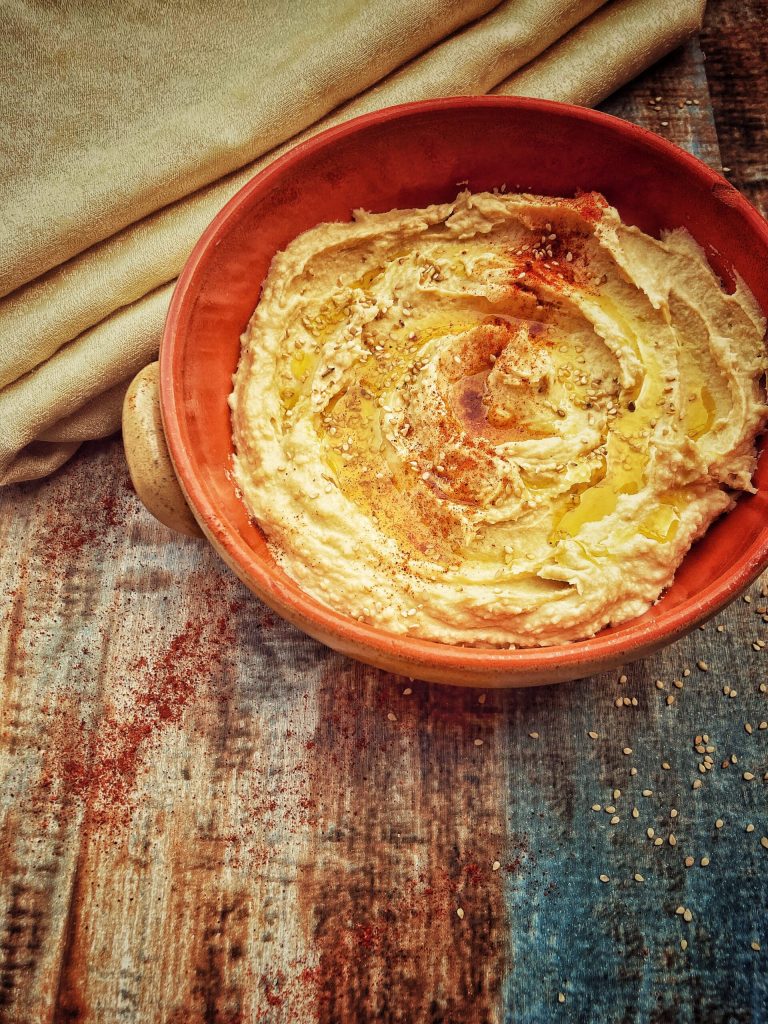
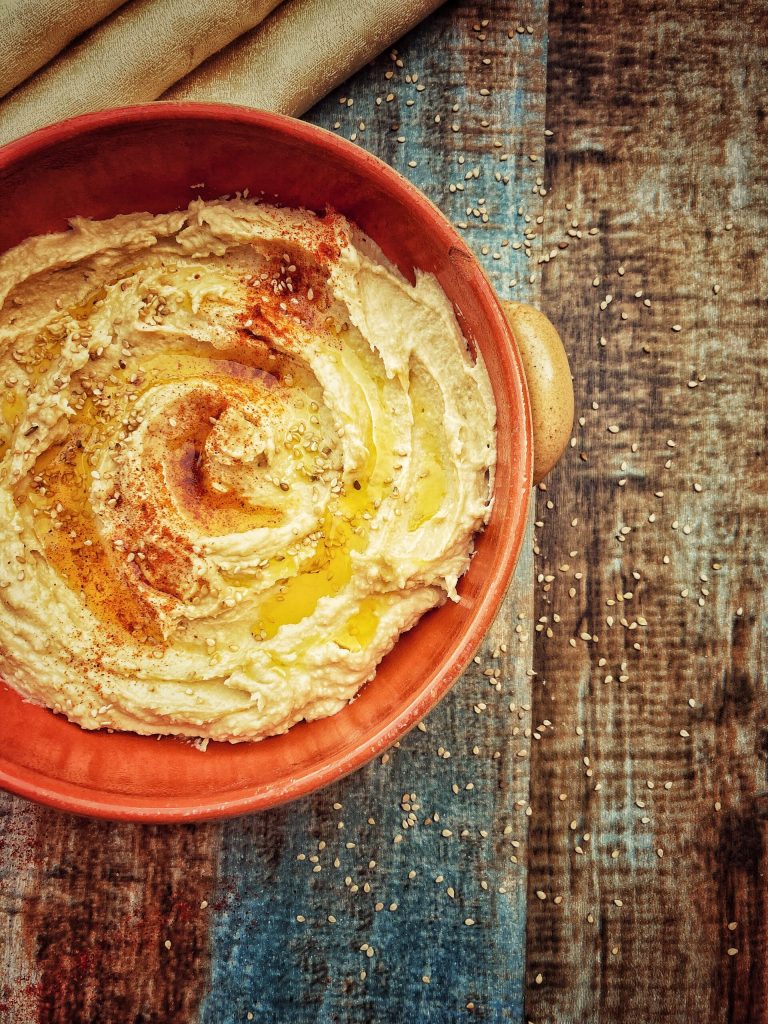
Serve, if desired, with a drizzle of oil, decorating with sesame seeds and paprika
VIDEO RECIPE:
What is the difference between hummus and musabaha?
What is Musabaha?
It is a whole chickpea cream (not completely blended), served warm or lukewarm.
The chickpeas are mixed with tahini (sesame paste), lemon, garlic, salt, and often olive oil, fresh parsley, paprika, or cumin.
Sometimes a bit of blended hummus is added to the base, but the chickpeas remain visible.
Difference with hummus:
Hummus: smooth, blended cream.
Musabaha: more rustic texture, with whole or coarsely mashed chickpeas.
Typical dish for breakfast or savory snack.
Often served with warm pita bread.What is the musabaha recipe?
Note: in Arabic, it may appear written as مسابحة, msabbaha, masabaha, or mashawsha, all referring to similar variations,
🍲 Musabaha – Traditional Levantine Recipe
Ingredients (4 servings)
• Cooked chickpeas: 17.6 oz (result of about 7 oz of dried chickpeas soaked) or 2 cans of 14 oz, drained and rinsed [2]
• Tahini (sesame paste): 1.8 oz
• Lemon juice: 0.5–1 fl oz (1–2 tablespoons)
• Chickpea cooking water or water: about 4.2 fl oz
• Salt and pepper to taste
• Ground cumin: 1 teaspoon (optional, common in the Levant)
🍋 For serving (traditional topping):
• Olive oil: 1–1.5 fl oz
• Sliced or chopped garlic: 2–3 cloves (optional)
• Toasted pine nuts: 0.5–0.7 oz
• Paprika or Aleppo pepper: 0.1–0.2 oz (optional)
• Fresh chopped parsley: to taste
🥣 Procedure
1. Preparation of chickpeas:
• If using dried chickpeas: soak 7 oz of dried chickpeas for at least 8 hours, then cook them with water and a bit of salt until very tender (about 30–45 minutes).
If using canned chickpeas, drain and briefly heat them.
2. Combine ingredients:
In a bowl, combine the warm chickpeas, tahini, lemon juice, cumin (if using), salt, and pepper.
Use a fork or spoon to slightly mash the chickpeas, leaving them partly whole and partly broken: this gives Musabaha its characteristic texture (not completely smooth like hummus).
3. Liquid and consistency:
Gradually add the cooking water (or regular water), adjusting the consistency: it should be creamy but not completely homogeneous.
4. Season and serve:
Drizzle a generous amount of olive oil over the chickpeas.
Sprinkle with toasted pine nuts, lightly sautéed garlic, a pinch of paprika or Aleppo pepper, and fresh parsley.
Serve hot or warm with fresh pita bread or traditional Arabic bread.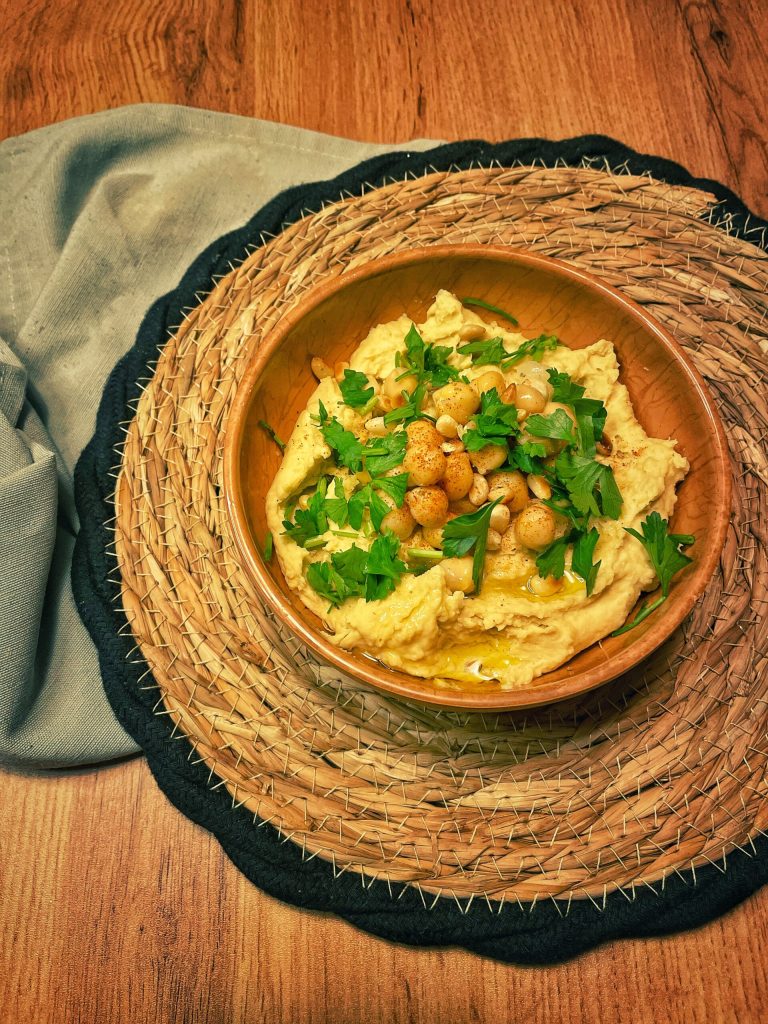
Musabaha with Hellofresh
Box with pre-measured fresh ingredients + step-by-step recipe = dish ready in no time.
I chose the 🇸🇾musabaha with crunchy vegetables
Use my discount code HFRESH026
👉 40% off the first box + 25% off the next 3 boxes
