
The Kärntner Reindling is the symbolic sweet yeasted bread of Carinthia, a region in southern Austria.
Historically linked to Easter, it owes its name to the Reindl, the circular container in which it is baked, a kind of pot or casserole.
The Reindling is the central element of the Osterjause (the Easter snack).
Its peculiarity lies in its “hybrid” consumption:
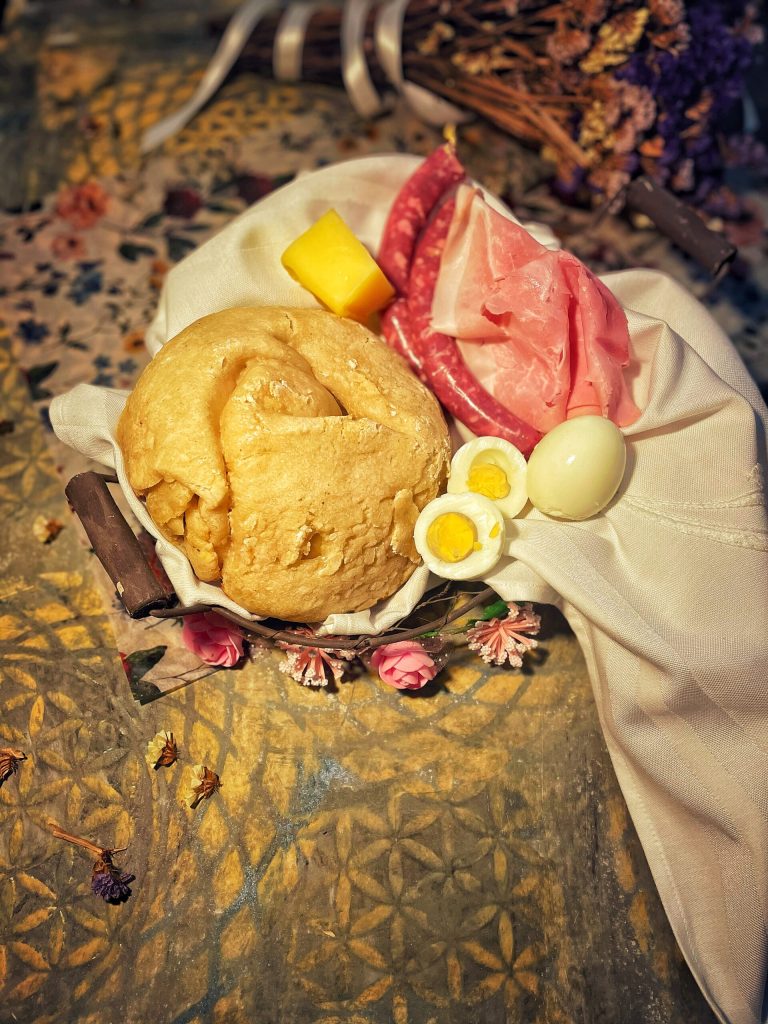
on Holy Saturday it is taken to church for the Fleischweihe (Blessing of the meat) in baskets wrapped in traditional embroidered napkins, along with Osterschinken (smoked ham), Selchwürste, eggs, butter, and Kren (horseradish), and then consumed on Sunday morning.
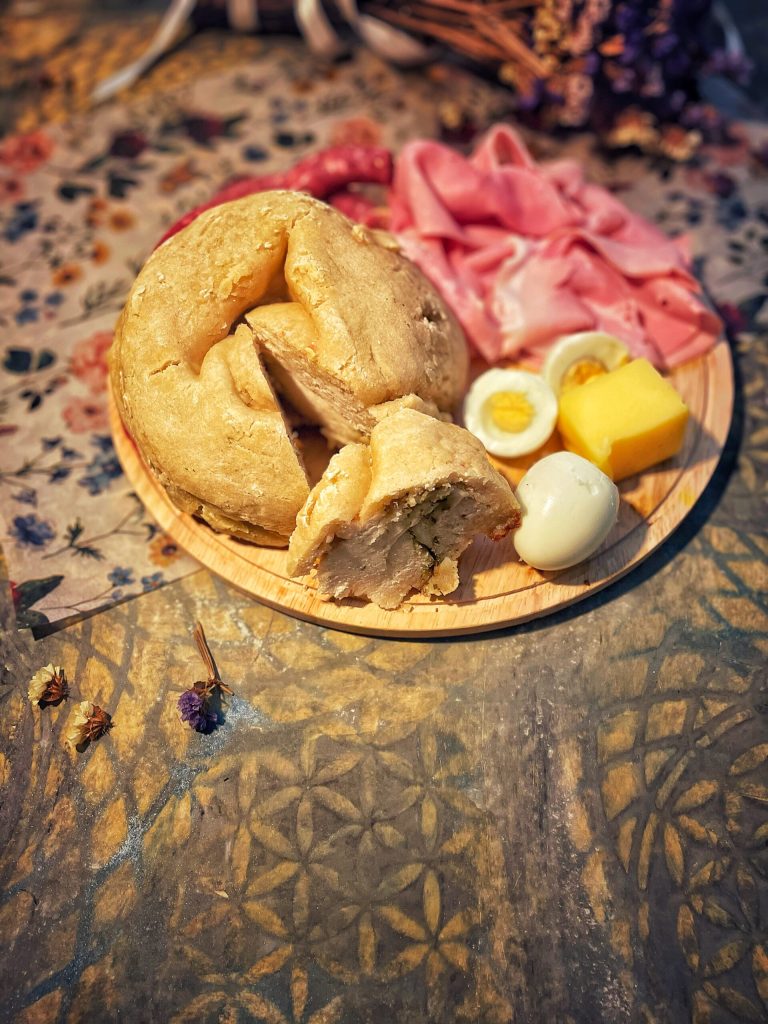
On the cutting board, the Reindling is served sliced along with cold cuts, boiled eggs, Selchwürste (smoked sausages), and grated horseradish root, creating a sharp contrast between the sweetness of the dough and the savoriness of the meat.
The original recipe requires a yeast dough rich in eggs and butter, filled with sugar, cinnamon, raisins, and nuts. But there are also savory versions.
I wanted to propose a Gluten-Free adaptation and a slow fermentation with fresh sourdough starter.
Although it has similarities with the Friulian Gubana, the Kärntner Reindling stands out for a more compact structure and an aromatic profile dominated by cinnamon.
- Difficulty: Medium
- Cost: Medium
- Rest time: 9 Hours
- Preparation time: 15 Minutes
- Portions: 6 People
- Cooking methods: Oven, Electric oven
- Cuisine: Austrian
- Seasonality: Easter, Spring
Ingredients
- 5.3 oz fresh sourdough starter
- 1 cup milk
- 3 tbsps rice flour
- 1.1 lbs gluten-free flour mix
- 7.4 oz sugar (+ 1 tsp)
- 6 oz butter
- 1 egg
- 1 lemon zest
- 0.2 oz salt
- 3 tsps ground cinnamon
- 7 oz raisins (soaked and drained)
- 5.3 oz walnuts (coarsely chopped)
Tools
- 1 Casserole 8.7 x 3.9 h
Steps
Dissolve the sourdough starter in the warm milk with the teaspoon of sugar. Add the flour, mix, and let rest 10 minutes until you have a gelatinous mass.
Dough: combine the gluten-free mix, sugar (2.5 oz), and egg. Work with the paddle attachment. Gradually incorporate the softened butter (2.5 oz), then the salt and lemon zest. Work for 10 minutes until the dough is smooth and glossy.
First Fermentation: Let rise at 78-82°F for 5-6 hours. The dough should visibly expand (about 60-70% more).Roll out the dough into a rectangle between two sheets of parchment paper dusted with rice flour (thickness 0.4 inches).
Filling: Brush with the melted butter (3.5 oz). Evenly sprinkle with sugar (5.3 oz), cinnamon, raisins, and walnuts.
Shaping: Roll up the dough using the parchment paper. Place it in the previously buttered and sugar-cinnamon dusted casserole.
Second Fermentation: Let rise in the mold for 2-3 hours in a warm place.
Baking: Bake at 356°F (static) for about 45-50 minutes. If the surface darkens too much, cover with foil after 30 minutes.
Finishing: Remove from the oven and wait until warm before flipping it over. Complete cooling is crucial for maintaining the gluten-free slice.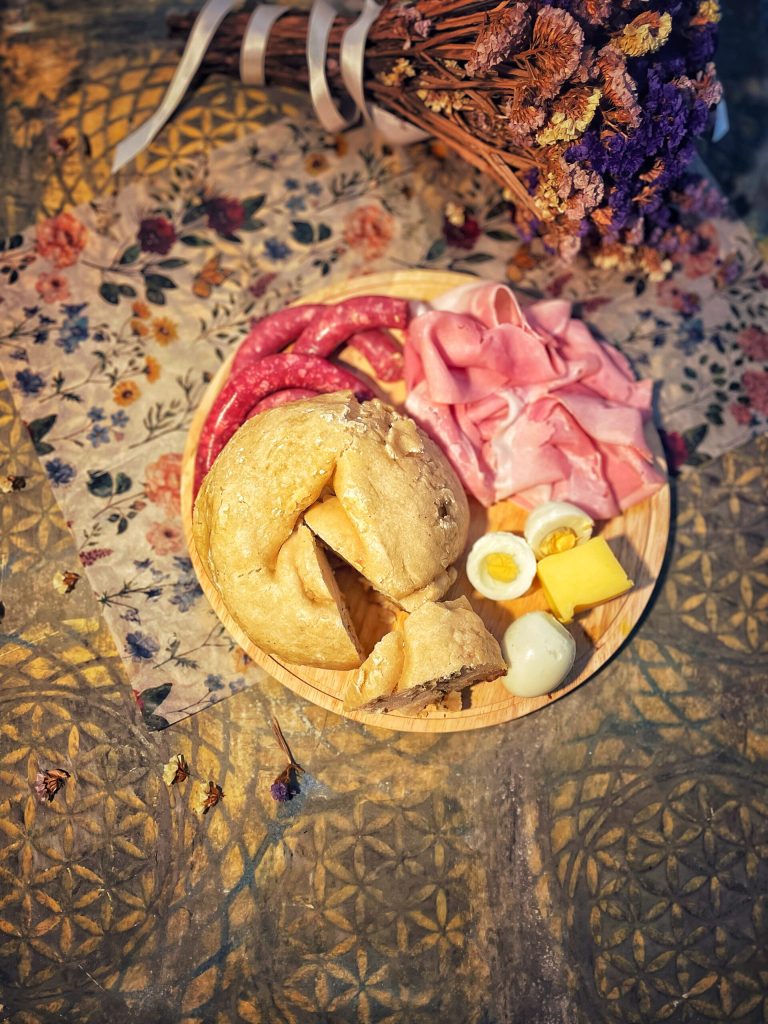
FAQ (Questions and Answers)
What is the savory version of Reindling?
The savory variant of Reindling is called Pikanter Reindling (spicy or savory Reindling), mainly known as an alternative to bread during rural banquets or festivities.
Here are the main differences compared to the classic version:
The dough: It is very similar to the sweet one, but with a drastic reduction of sugar (only a teaspoon is left to activate the yeast) and a slight increase in salt.
The filling: Instead of cinnamon, sugar, and raisins, pork cracklings (Grammeln) are used.
Aromatic herbs (chives, marjoram), black pepper.
Sometimes small cubes of smoked ham or local cheese.
The shape: It remains identical, i.e., a rolled yeast bread baked in the circular mold, but the outer crust is not caramelized but rather golden and savory.
While the sweet version accompanies the ham at Easter, the savory Reindling is often served as a side dish to hearty soups, such as Ritschert (a barley, bean, and smoked meat soup typical of Carinthia).What is the difference between Reindling and Gubana?
Gubana and Reindling share the same Central European soul, but have some key differences that define their character:
The dough: The Friulian Gubana (typical of the Natisone Valleys) often uses a richer leavened dough, similar to a brioche. The Reindling is slightly more rustic and “bready”.
The filling: Here’s the real challenge. The Gubana is an explosion of ingredients: nuts, pine nuts, raisins, orange zest, crumbled biscuits, and, above all, lots of grappa or plum (slivovitz). The Reindling is more essential, dominated by the aroma of cinnamon and raisins.
The shape: While the Reindling is baked in the classic bundt pan (the Reindl), the Gubana is rolled on itself like a snail and baked free-form or in a low round mold.
The final “touch”: The Gubana is often moistened with grappa directly on the slice before eating it. The Reindling, on the other hand, pairs incredibly well with ham baked in bread and horseradish during the Easter breakfast in Carinthia.Can I replace fresh sourdough with dry and instant yeast?
If you decide to switch from sourdough to dry yeast, the recipe becomes much quicker and the gluten-free structure often results in more airiness, as the yeast boost better compensates for the heaviness of alternative flours.
Here are the precise adjustments for the recipe:
1. Conversion of quantities
Dry yeast: 0.25 oz (a standard packet). If you want an even slower and more aromatic rise, you can reduce it to 0.1-0.14 oz.
Flour: Add 3.5 oz of gluten-free Mix to the total (to compensate for the solid part of the removed sourdough). Total flour: 21 oz.
Liquids: Add 1.7 oz of milk/water to the total. Total liquids: 11.6-12.3 oz.
2. Procedure with Dry Yeast (Instant or Active)
Instant dry yeast: You can mix it directly with the flour.
Active dry yeast: It should be dissolved first in warm milk with a teaspoon of sugar and left to rest for 10 minutes until foamy (as recommended by Paneangeli).
Rising times: These are drastically reduced. The first rise will last about 1.5 – 2 hours (until doubled), while the second in the mold will take about 45-60 minutes.
3. Technical difference in Gluten-Free
Dry yeast is very reliable with mixes like Schär Mix B, which often already contain thickeners that respond well to quick rises. Compared to sourdough, you will get a Reindling that is taller and lighter but tends to harden a bit sooner (I recommend warming it slightly before serving).
