
Lo Mai Gai, or Nuò Mǐ Jī/糯米鸡, is known as sticky rice with chicken wrapped in lotus leaves. It is one of the most ordered dishes at Cantonese dim sum restaurants.
These are parcel-like bundles wrapped in lotus leaves and filled with glutinous (sticky) rice, chicken and other ingredients such as Chinese sausage (Lap Cheong/腊肠) or Chinese cured pork belly (Lap Yuk/腊肉), shiitake mushrooms and dried shrimp, as well as salted egg yolks, bamboo shoots, chestnuts, peas, diced carrots, etc.
Besides the lotus-leaf wrapped version, Lo Mai Gai can also be prepared in small bowls (or similar containers) and then inverted onto a plate.
In the video you can find a more home-style version made with shrimp and shiitake.
Another typical Cantonese dim sum recipe:
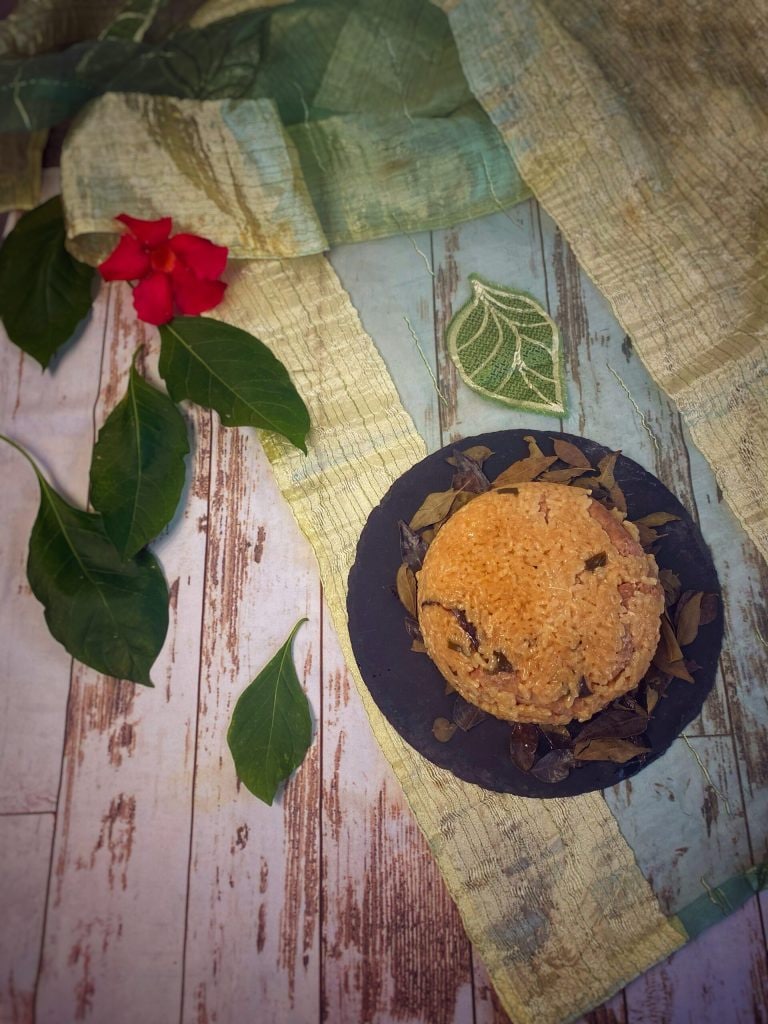
- Difficulty: Medium
- Cost: Affordable
- Preparation time: 15 Minutes
- Cooking time: 1 Hour 15 Minutes
- Portions: 4 People
- Cooking methods: Steaming
- Cuisine: Chinese
- Seasonality: All seasons
Ingredients
- 1 1/8 cups glutinous (sticky) rice
- 3 shiitake mushrooms (dried or fresh)
- 5 dried shrimp
- 2 lotus leaves
- 5 oz chicken (about 130 g)
- 1 lb 2 oz Chinese sausage (Lap Cheong) (about 500 g)
- 1 tbsp soy sauce
- 1 tsp oyster sauce
- 1 tsp rice wine (Shaoxing)
- to taste white pepper
- to taste peanut oil
- to taste salt
- to taste ginger
- to taste minced garlic
- 1 tsp sugar
Steps
• Rinse the glutinous rice under running water. Then soak it in plenty of water for at least 2 hours.
• Rehydrate the dried shiitake mushrooms in water. Slice them (reserve the soaking water for later use).
• Add two tablespoons of hot water to the dried shrimp. Let soak for 10 minutes. Drain and chop finely (reserve the soaking water for later use).
• Soak the lotus leaves in water. Let rest for 1 hour until they become flexible. Trim off the hard stem ends. Cut each leaf into 4 equal pieces.
• Cut the chicken into small pieces. Slice the Chinese sausage on the diagonal into thin slices.
• In a small bowl, mix all the seasonings (soy sauce, oyster sauce, Shaoxing rice wine, sugar, salt, white pepper). Add the shrimp soaking water and about 1/3 cup (80 ml) of the mushroom soaking water.
• Heat 1 tablespoon of cooking oil in a wok or large skillet. Sauté the chopped onion, grated ginger and minced garlic over medium-high heat.
• Add the rehydrated dried shrimp and the Chinese sausage. Fry until the fatty parts of the sausage become translucent. Then add the shiitake mushrooms and fry for another ~30 seconds. Set aside.
• In the same wok add the chicken and brown it.
• Add the drained glutinous rice along with the seasoning mixture. Mix so the chicken and rice are well coated with the sauce.
• Finally, add the fried sausage with the mushrooms and shrimp. Mix well.
• Place a piece of lotus leaf with the smooth side up. Brush a thin layer of oil on the area where the filling will be placed. Put about one-eighth of the rice mixture on the leaf. Wrap it into a parcel with the leaf. Use a piece of kitchen twine to tie it if desired (optional).
• Steam: place all the parcels in the steamer. Bring the water to a boil and steam over medium-low heat for 1 hour and 15 minutes. Remember to check the water level 1-2 times to prevent it from drying out.
I used the Magic Cooker, a magic lid for steaming. I arranged the parcels in the pan, added 2 cups of water and cooked covered for 1 minute over high heat and 45 minutes over low heat.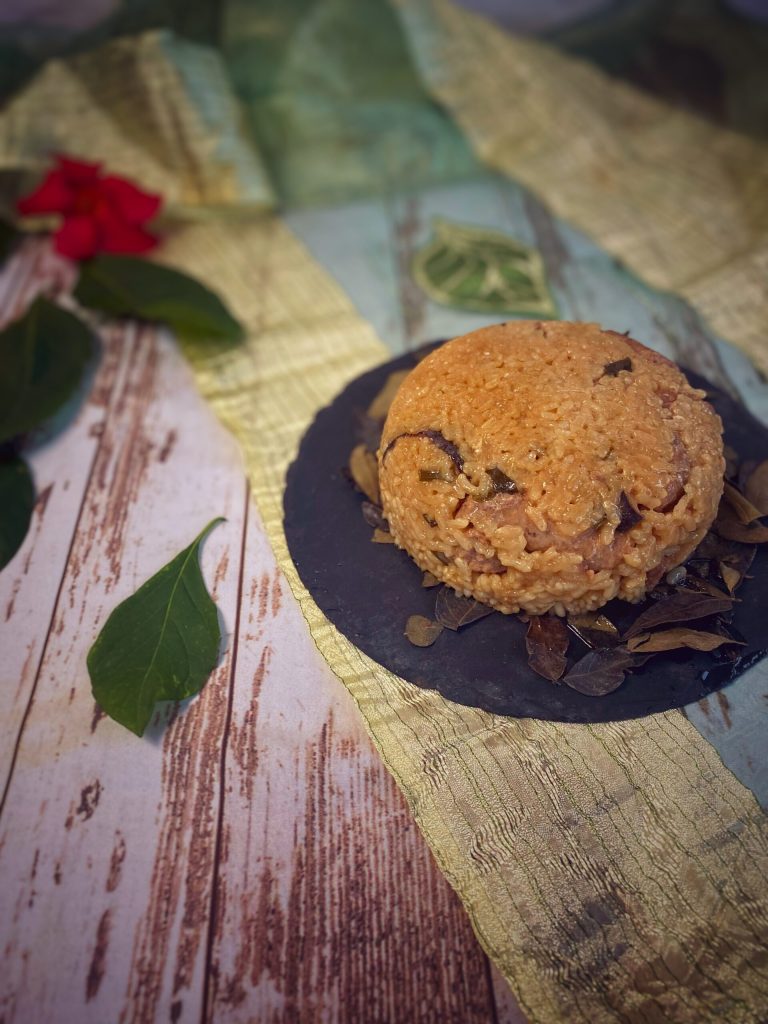
You can purchase the Magic Cooker at this link.
FAQ (Questions & Answers)
What can lotus leaves be substituted with?
With parchment paper as a wrapper, or you can steam the mixture in small bowls (brushed with a little oil).
Banana leaves.
In North America, banana, lily or grape leaves are primarily used.What are the variants of Lo mai gai?
In Malaysia and Singapore there are two types of lo mai gai, the first being the original Cantonese version.
The second is a takeaway variant served in coffee shops and local dim sum specialty stores.
The takeaway lo mai gai differs from the original because the glutinous rice is served directly with the chicken and not wrapped in lotus leaves, but placed in a simple box.
Sometimes lo mai gai is divided into two smaller parcels called chun zhu gai (珍珠雞), which literally translates to “pearl chicken”.
Thanks to the flexibility of lotus leaves, lo mai gai are generally wrapped into a rectangular shape.
The zongzi, a variant common throughout China and East Asia, uses bamboo leaves folded into a triangular-based pyramid (a tetrahedron).What is the origin of Lo mai gai?
According to legend, sticky rice with chicken originated in the night market of Guangzhou to satisfy customers’ late-night snack needs.
Originally it was steamed in a porcelain bowl with raw glutinous rice, marinated chicken and mushrooms.
Later, for the convenience of street vendors, the filling was wrapped in lotus leaves, and the portion size and chicken ingredients were no longer limited to a porcelain bowl. Sausages, dried shrimp, salted egg yolks, etc. were added.
It then spread to Hong Kong and later evolved into larger-portion variants.
