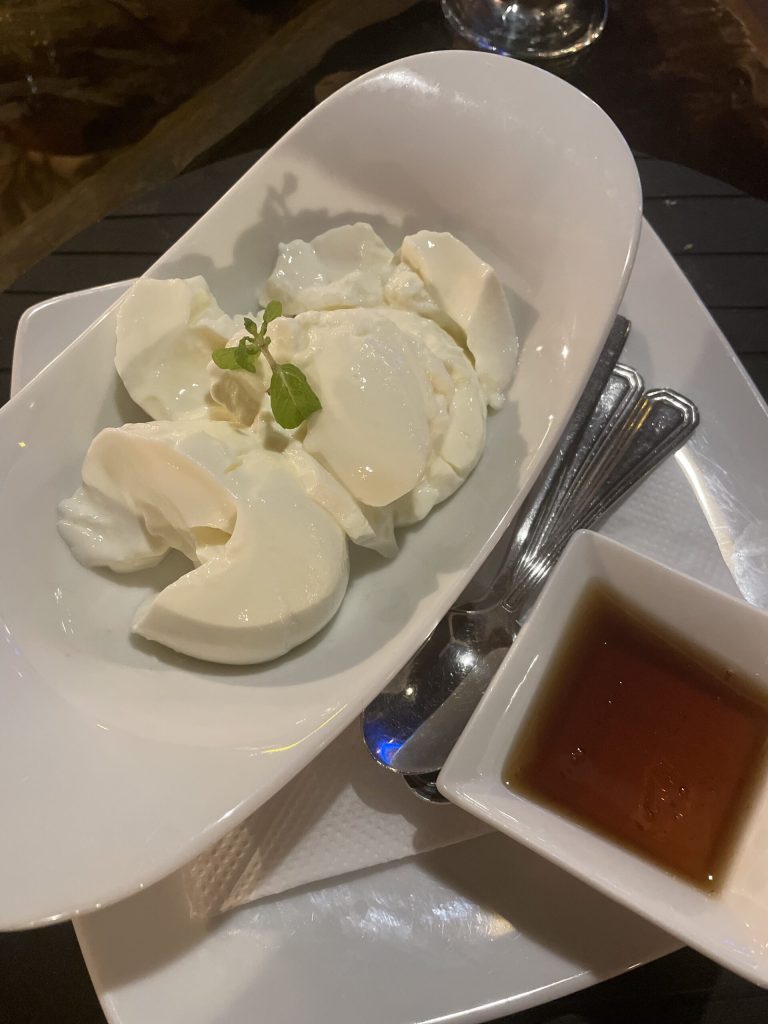
Mee kiri (in Sinhala මී කිරි) is a type of fermented curd traditionally made with buffalo milk. It is a food rooted in the dietary culture of Sri Lanka, especially in the southern regions.
Mee kiri is considered a prestigious item in rural communities — often offered as a dessert, consumed at breakfast, or enjoyed with local sweet syrups (like kithul treacle) as an accompaniment.
The fermentation of milk into products like curd was a traditional strategy to preserve excess milk in rural communities.
In academic literature, there is an article titled “Traditional Sri Lankan fermented buffalo (Bubalus bubalis) milk gel (Meekiri)” which studies the technology, microbiology, and qualitative characteristics of this traditional product.
The curd made with buffalo milk tends to be richer, creamier, and denser compared to those made with cow’s milk, thanks to the higher solids content (fats, proteins) in buffalo milk.
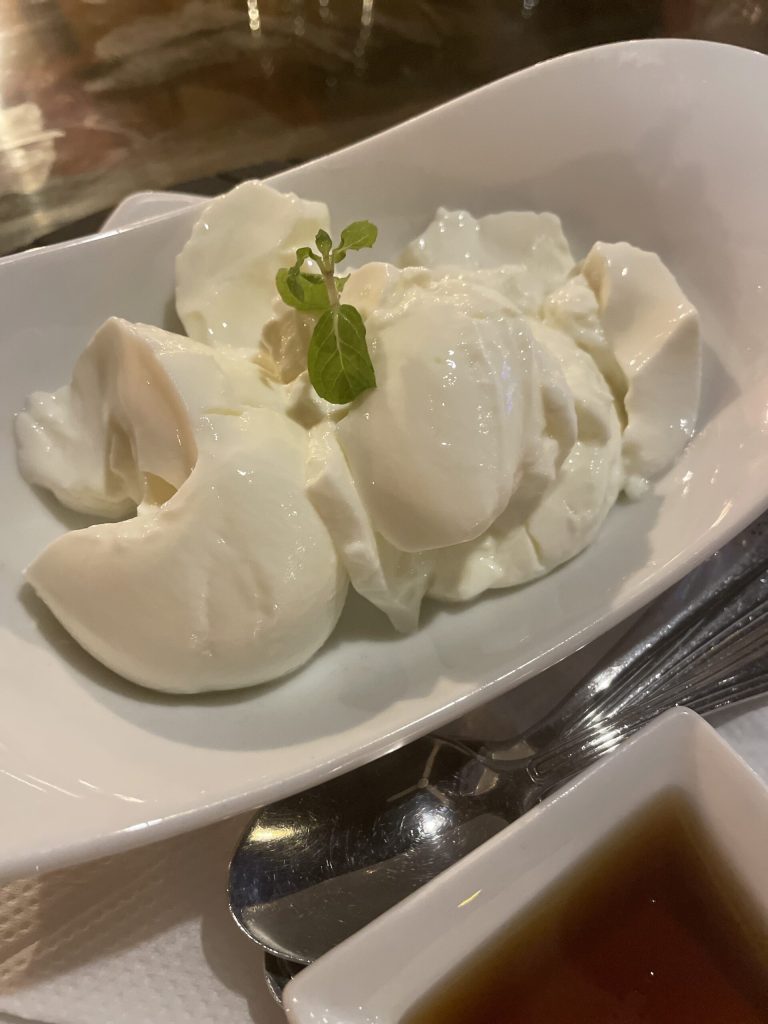
The color of mee kiri is whiter compared to curds made with cow’s milk, because buffalo milk contains less β-carotene (yellow pigment).
Local variations — in terms of flavor, texture, and aroma — depend on the milk strain, fermentation practices, geographical region, and type of starter used (e.g., previous curd culture).
Once solidified, the curd can be consumed with sweeteners like kithul treacle (kithul palm syrup) or jaggery, and it is sold in terracotta pots at markets or morning stalls along the roads.
Below is the homemade recipe.
This is what I tasted at the Rana Seafood Restaurant in Bentota during my trip in October 2025.
- Difficulty: Easy
- Cost: Very economical
- Rest time: 12 Hours
- Preparation time: 5 Minutes
- Portions: 4 People
- Cooking methods: Boiling
- Cuisine: Sinhalese
- Seasonality: All seasons
Ingredients
- 4.2 cups buffalo milk (preferably fresh)
- 2 tablespoons natural curd (Yogurt or fermented curd)
- 1 pinch salt
- to taste kithul palm syrup (or liquid jaggery)
Tools
- 1 Bowl terracotta
- 1 Thermometer kitchen
Steps
Bring the buffalo milk to a boil in a large pot, then lower the heat and let it simmer for 10-15 minutes, stirring often (this helps to make it thicker).
Let the milk cool to about 104-113°F (body temperature, it should feel warm but not scalding if you dip a finger in).
Add the starter (curd/yogurt): take a ladle of warm milk, mix it with 2 tablespoons of curd, then reincorporate it all into the milk.
Pour everything into a terracotta bowl or jar (optional but recommended for a more authentic taste).
Cover with a clean cloth and let it rest at room temperature (77-86°F) for 8-12 hours, until it solidifies.
Once ready, refrigerate for 1-2 hours before serving.Serve with kithul treacle (kithul palm syrup) or jaggery.
FAQ
What is the curd used as the starter? How can I substitute it?
The curd used as a starter is simply a portion of yogurt or fermented curd (already prepared), used to trigger the fermentation process in the new milk.
In practice:
It is similar to plain unsweetened yogurt, with live bacterial cultures (lactobacilli).
In Sri Lanka, it’s called “mee kiri” (when it’s made from buffalo milk), and a small amount of the already prepared one is used to produce more mee kiri.
How the starter works:
It contains microorganisms that convert lactose (milk sugar) into lactic acid, coagulating the milk and making it thick and creamy.
If you don’t have Sri Lankan curd, you can use:
Whole Greek plain yogurt
Homemade yogurt with active cultures
It just needs to be not pasteurized after fermentation, otherwise, the bacteria will be inactive.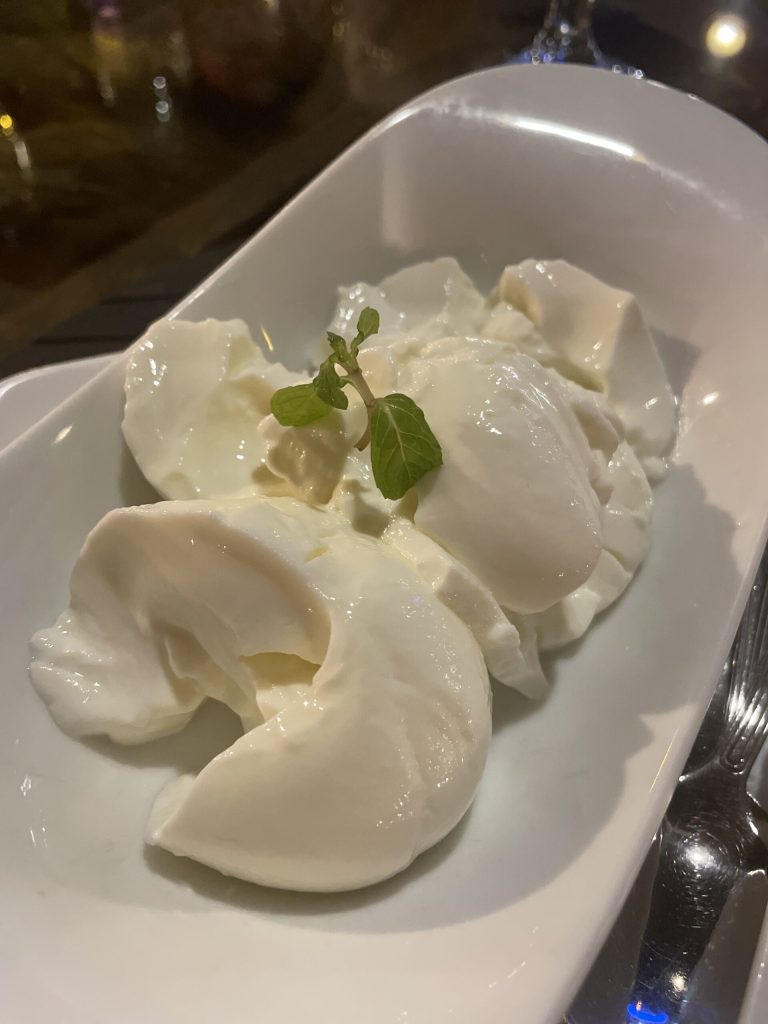
What is the traditional process of making Mee kiri?
Collection and filtration of milk: buffalo milk is milked and filtered to remove impurities.
Cooking / heating: the milk is poured into large containers (like cauldrons) and brought to a boil, stirring constantly to prevent it from sticking or burning. In some versions, it is boiled down to reduce volume for greater density.
Cooling: after boiling, the milk is left to cool to a suitable temperature for inoculating the culture (previous curd).
Inoculation / fermentation start: a small amount of starter (already fermented curd) is added to the cooled milk. This introduces the lactic microorganisms that will start the fermentation.
Placing into clay pots: the inoculated milk is poured into small terracotta pots (kiri hatti). The porous material of the pot helps thermal insulation and contributes to the final consistency.
Fermentation / maturation: the curd is left at room temperature for a period (e.g., overnight, 10-12 hours) until the gel / curd forms.What are the main positions of the Buddha?
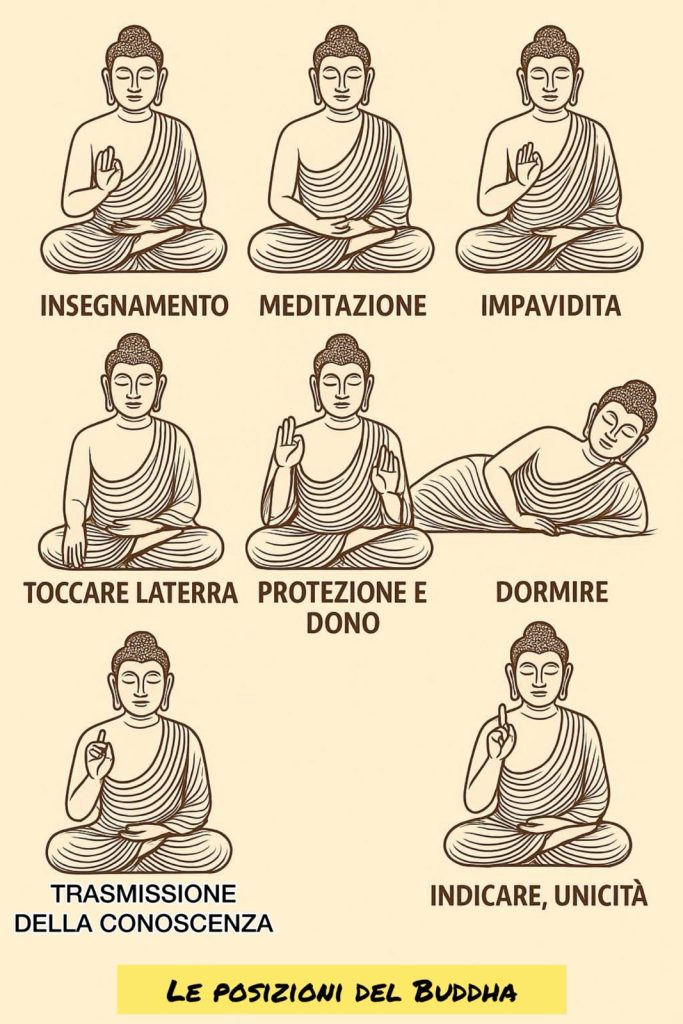
Dhyana (Meditation)
Hands in the lap, palms facing up → Symbol of concentration and inner peace
Bhumisparsha (Touching the earth)
Right hand towards the ground → The awakening of the Buddha, calling the Earth as witness
Abhaya (Fearlessness)
Right hand raised, palm forward → Symbol of protection and absence of fear
Vitarka (Teaching)
Right hand with thumb and index finger joined → Symbol of the transmission of wisdom
Varada (Compassion / Giving)
Hand downward, open palm → Symbol of generosity and welcoming. Represents charity, hospitality, and compassion.
Dharmachakra (Wheel of Dharma)
Hands in front of the chest, fingers intertwined in mudra → Symbol of teaching the Buddha’s path
Jñana Mudra – Gesture of knowledge, often with thumb and index finger joined, palm facing up, also used in meditation.
Reclining position (Parinirvana)
Body lying on one side, feet together → Symbol of the transition to Nirvana after death
Abhaya Mudra
Finger raised, palm outward, symbol of courage and protection.
Another common variant is where the left hand is on the lap with the palm facing up.
Namaskara Mudra (or Anjali Mudra) – Hands joined in front of the chest, symbol of prayer or respect. Widely used in Buddhist and Hindu art.