
The Sopa de Piedra (Caldo de Piedra) is one of the most ancestral and theatrical recipes in the world, originating from San Felipe Usila (Oaxaca, Mexico).
It is not just a dish, but a ritual of the Chinanteco community that honors roots and sharing.
Originating in San Felipe Usila, in the state of Oaxaca, this preparation is a central element of the cultural identity of the Chinanteco people.
Unlike most traditional soups, Sopa de Piedra stands out for its unique cooking method: the use of hot river stones immersed directly in the diners’ bowls.
This process allows fresh ingredients — usually fish, shrimp, and vegetables — to be cooked instantly, preserving flavors and nutrients through a rapid, violent boil.
Recognized as Intangible Cultural Heritage of Oaxaca, this recipe has pre-Hispanic roots and carries deep social meaning, historically linked to the division of tasks and respect for the territory’s natural resources.
Pre-Hispanic Origins: It is a cooking technique that goes back more than 500 years, born when indigenous communities did not yet use metal or fire-resistant ceramic pots.
By tradition, only men prepare this soup. Men used to fish along the Papaloapan River and cook for women and elders as a gesture of gratitude and honor.
The dish is dedicated to “Male Necessario,” the song presented at the Sanremo Festival 2026 by Masini and Fedez: if in “Male Necessario” the duo sings about how life’s hardest trials and scars are necessary steps for rebirth, in the culture of the Chinanteco people it is precisely the “harm” of fire — in the form of glowing stones — that transforms raw ingredients into a rite of communion.
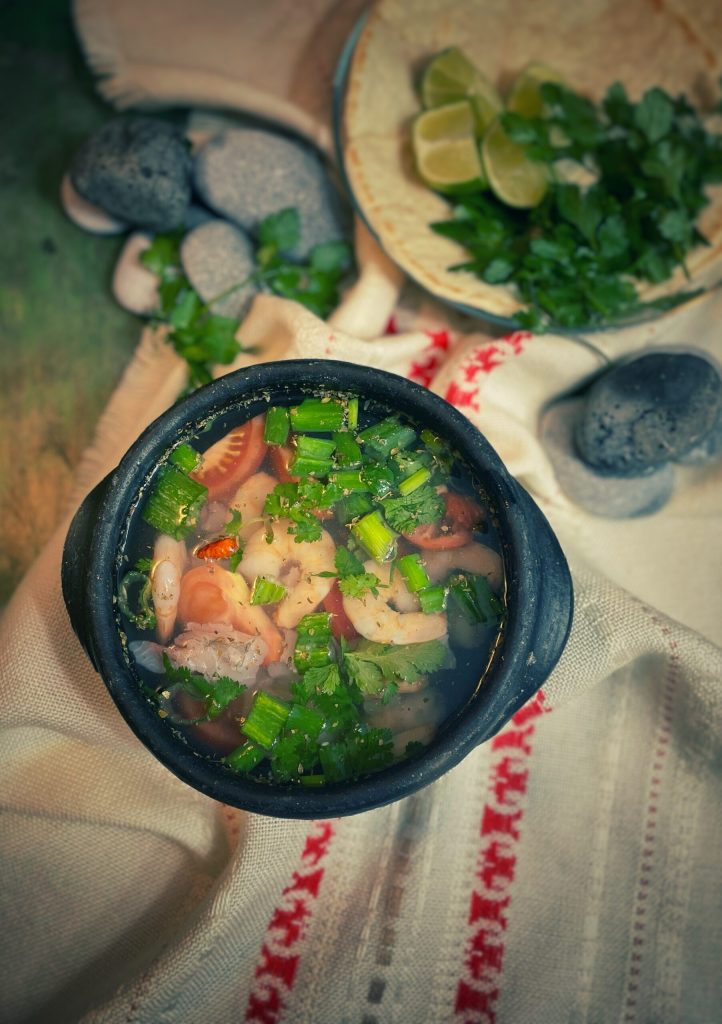
- Difficulty: Very easy
- Cost: Medium
- Preparation time: 5 Minutes
- Portions: 4 Servings
- Cooking methods: Other
- Cuisine: Mexican
- Seasonality: All seasons
Ingredients
- 14 oz white fish (sea bream, sea bass (about 400 g))
- 14 oz shrimp ((about 400 g))
- 3 tomatoes
- 1 onion
- 1 green chili
- to taste cilantro
- to taste Mexican oregano
- to taste salt
- to taste lime (for serving)
Tools
- 4 Bowls 5.5–6.3 in / about 2.1 cups (14–16 cm / 500 ml)
- 12 Refractory stones river stones
- 1 Tongs
Steps
The Fire (The Stones): Place the stones directly on the gas flame or in the oven at maximum temperature (482°F / 250°C+) for at least 45–60 minutes. They must become very hot (nearly glowing).
Mise en place in the Bowls: Divide evenly into 4 heatproof bowls (essential!) the raw fish, shrimp, tomatoes, onion, chili and herbs. Add a pinch of salt to each bowl.
The Water: Pour cold or room-temperature water into the bowls, barely covering the ingredients.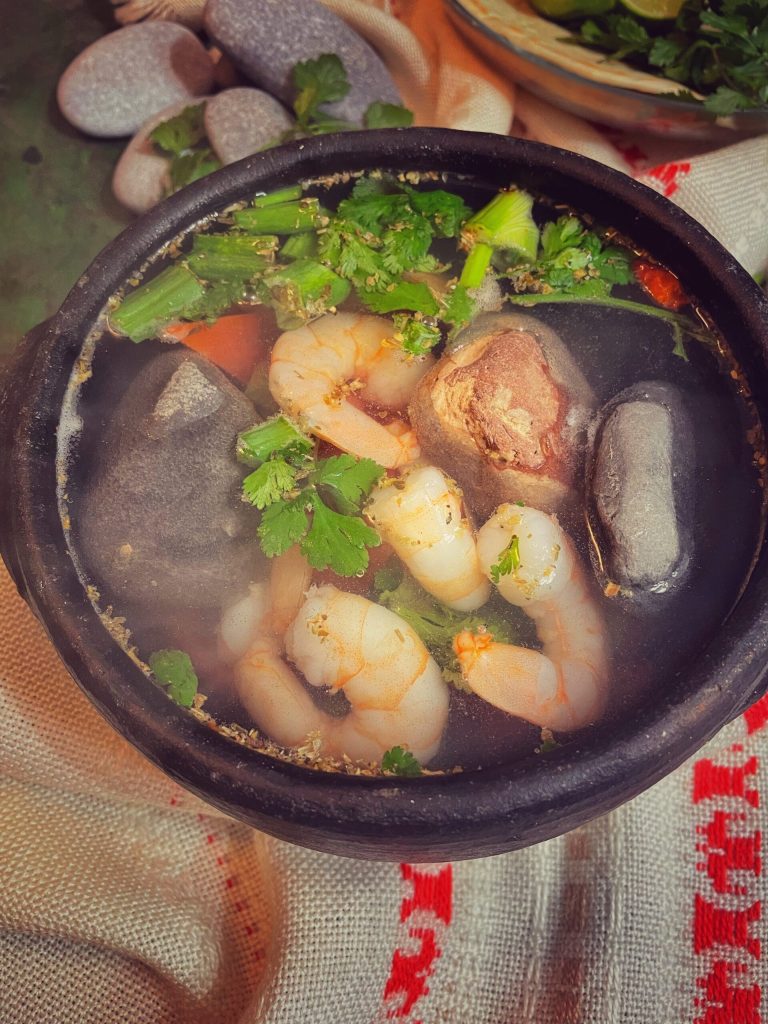
The Thermal Shock: Using professional metal tongs and great caution, remove one hot stone from the fire. Shake it once to remove any ash and immerse it directly into the bowl.
The Instant Boil: The water will start to boil violently immediately. Add a second stone if needed. In less than 3–4 minutes, the heat from the stone will perfectly cook the fish and shrimp, releasing the flavors of the vegetables.
Serving: Once the boiling subsides, the soup is ready. The stones can be carefully removed or left at the bottom to keep the soup hot (but warn your guests!).Serve with tortillas, lime (squeeze before eating the soup) and cilantro.
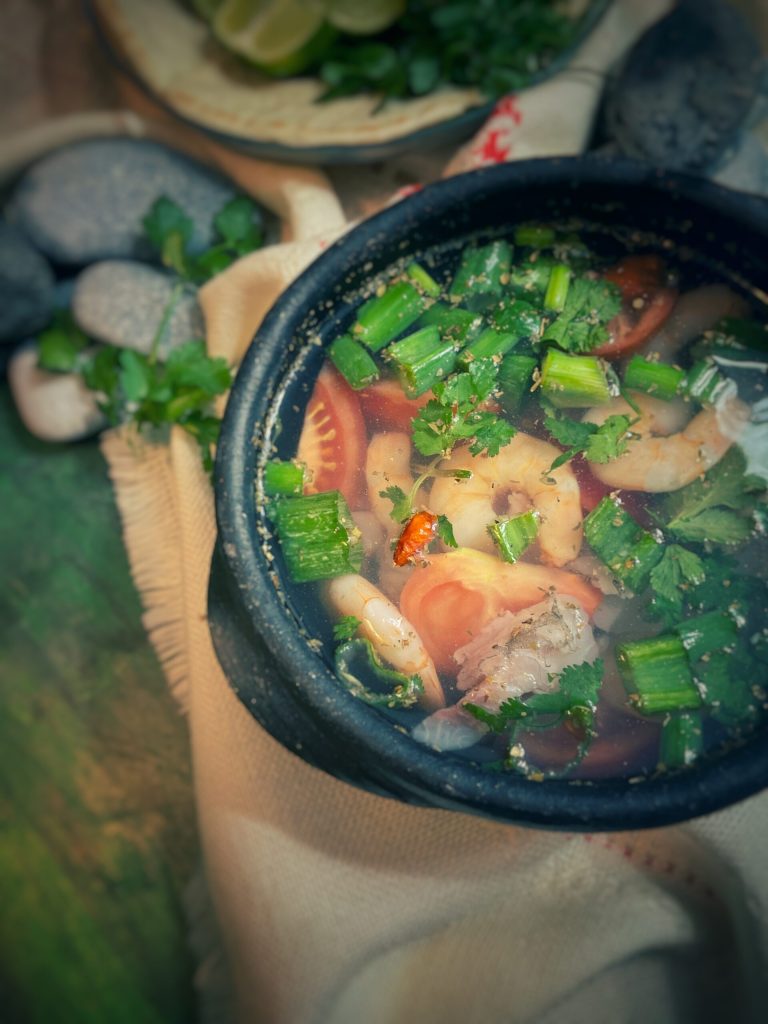
Choosing the right stones
Warning: You cannot use random stones (risk of explosion!).
Which to use: Smooth river stones and lava stones (basalt). They must be intact, without cracks or porosity that trap moisture.
Safety test: Before use, wash them thoroughly and heat them gradually. If you hear popping noises, discard them.
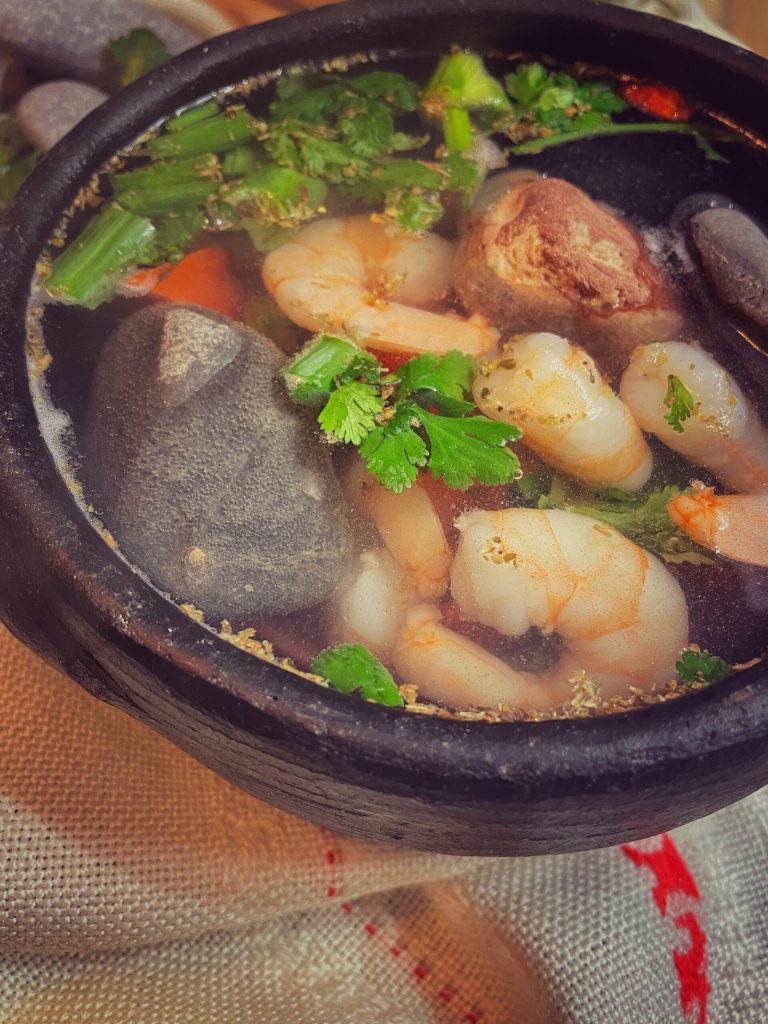
Recommendation: Heat the bowls slightly (for example in an oven at 122°F / 50°C) before adding the raw ingredients and water. This further reduces the risk of the container cracking when you immerse the hot stone.
FAQ (Questions & Answers)
Which bowls should be used for Sopa de Piedra?
Tradition strictly calls for the jícaro: a natural container made from the dried fruit of the Crescentia cujete tree.
The raw ingredients — fish, shrimp, tomato, onion, chili, epazote and cilantro — are placed in a bowl made from the tree’s gourd (jícaro).
Using modern bowls is considered a contemporary or tourist variation; the Chinanteco masters of San Felipe Usila use exclusively the natural version.
Capacity: Bowls should hold about 2.1–2.5 cups of liquid (500–600 ml). Bear in mind that half the space will be taken by solid ingredients (fish and shrimp) and by the stone itself.
Diameter: About 5.5–6.3 in (14–16 cm). A bowl that is too wide would dissipate heat too quickly; one that is too narrow would make inserting the stone with tongs difficult without touching the edges.
Depth: At least 3–4 in (8–10 cm). The water must fully cover the hot stone to generate the instant boil needed to cook the fish in 3 minutes.
Terracotta or Refractory Ceramic: This is the traditional choice in Oaxaca. It absorbs heat and helps keep the soup hot for longer.
Lava stone bowls: If you have stone bowls (like those used for Korean Bibimbap), they are ideal for the dramatic “stone-on-stone” effect.
AVOID: Common glass, thin porcelain or plastic, which would shatter or melt instantly on contact with a stone at 482°F / 250°C.
