
Nasi goreng, one of the national dishes of Indonesia, stands out from other Asian fried rice preparations for its distinct smoky aroma and caramelized yet savory flavor notes.
The term means “fried rice” in both Indonesian and Malay languages, and it is indeed a dish as common in Malaysia as it is in Singapore as a cultural food.
The origin of the dish is thought to trace back to the southern Chinese fried rice (炒飯, “chǎofàn”, meaning fried rice in Mandarin Chinese) and was probably developed as a way to avoid wasting rice.
It is traditionally served at home for breakfast and prepared with leftover rice from the night before, or served by street vendors.
Besides the cooked rice (nasi), it consists of at least three components: proteins (e.g., eggs, shrimp, meat, cooking oil), spices or bumbu (Indonesian spice mix), and condiments such as bawang goreng – fried shallot -, krupuk, acar – pickles -, slices of fresh cucumber and tomato.
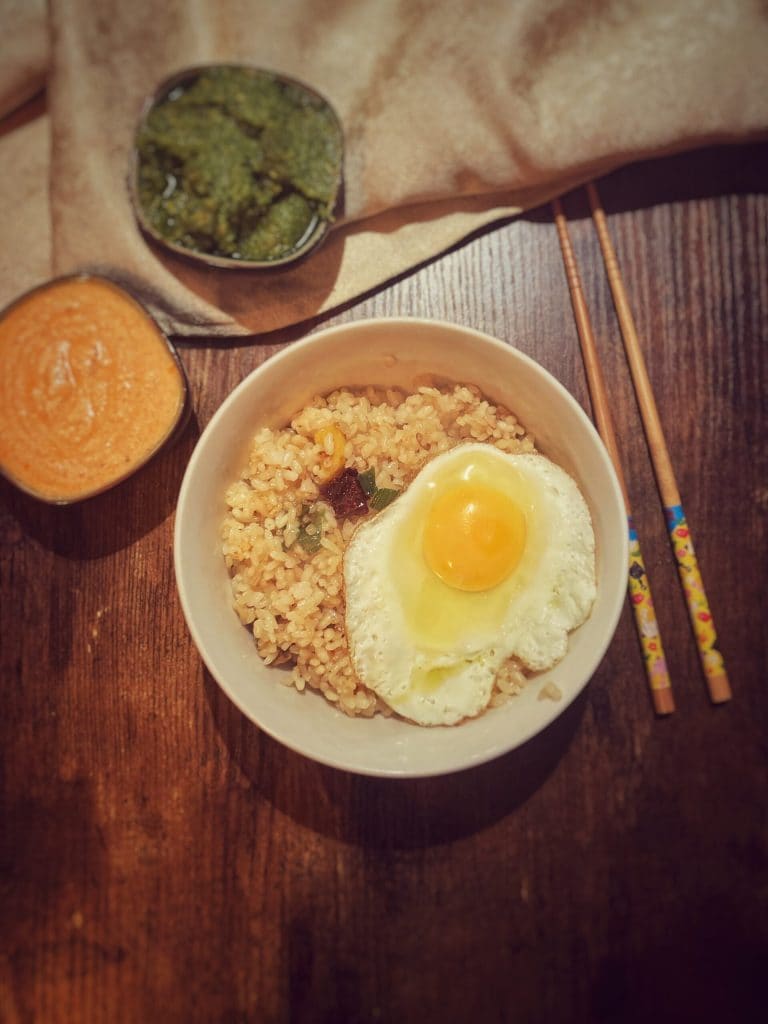
The following recipe is for nasi goreng telur, where a fried egg (telur) is placed on top of the dish to add savoriness.
As a condiment, kecap manis is used, literally “fermented sauce”. This term generically refers to soy sauce.
Indonesians also refer to foreign versions of fried rice simply as nasi goreng, so nasi goreng Hongkong and nasi goreng Tionghoa/Cina refer to Chinese fried rice, while nasi goreng Jepang refers to yakimeshi or chahan.
There is also a Nasi goreng Amerika version in Thai cuisine (khao phat amerikan): fried rice with American sides like chicken and fried egg and beef in chili sauce, bacon, and ketchup.
And on the blog, you will find some of these fried rice recipes: Japanese, Thai, Peruvian, and Taiwanese.
- Difficulty: Easy
- Cost: Inexpensive
- Preparation time: 10 Minutes
- Portions: 4 people
- Cooking methods: Stove
- Cuisine: Indonesian
- Seasonality: All seasons
Ingredients
- 1 1/2 cups glutinous rice (cooked)
- 1 onion
- 2 cloves garlic
- 2 dried red chilies (chopped)
- to taste fresh ginger (chopped)
- 2 tablespoons kecap manis (or sweet soy sauce)
- 1 teaspoon shrimp paste
- 4 eggs
- to taste vegetable oil
- to taste coriander
Steps
Mix the onion, garlic, chili, ginger, kecap manis (or soy sauce), and shrimp paste until forming a pasty mixture.
In a wok, add the oil, the formed paste, and the already cooked rice (preferably from the previous day).
Stir-fry for about 7 minutes.
Serve with a fried egg per bowl and fresh coriander.

Curiosities:
In 2011, an online survey with the participation of 35,000 voters conducted by CNN International chose Indonesian-style nasi goreng as number 2 in the list of “50 most delicious foods in the world” after rendang.
FAQ (Questions and Answers)
Is it eaten with chopsticks in Indonesia?
In Indonesia, chopsticks are also used; they are usually reserved for consuming Indonesian adaptations of Chinese cuisine, like in this case.
What is the difference between Nasi Goreng and Chinese fried rice?
The main difference is the shrimp paste and kecap manis, a sweet soy sauce.
