
The Neapolitan graffe are one of the cornerstones of Campanian pastry, born from the meeting between Austrian rule and local popular inventiveness.
Historically derived from the German Krapfen, which arrived in Naples in the 18th century during the Austro-Hungarian period, the Neapolitan version underwent a fundamental transformation by introducing boiled potatoes into the dough — a humble addition that greatly increased their softness and made them unique.
Originally prepared to celebrate Carnival, these fried doughnuts are now available every day in every café and pastry shop in the city.
The traditional recipe is distinguished by a balance of simple but technical ingredients: a mix of flours (often strengthened), eggs, sugar and, above all, lard (or suet), which gives the typical aroma and crumbly texture.
The dough is flavored with lemon zest and slowly leavened with brewer’s yeast, before being plunged into hot oil and finished with a generous coating of granulated sugar.
Mine is the instant-yeast variant, designed for the modern need for speed without giving up flavor.
In this version, the immediate chemical reaction of the instant yeast replaces the biological wait, allowing you to obtain soft and fragrant doughnuts in just a few minutes.
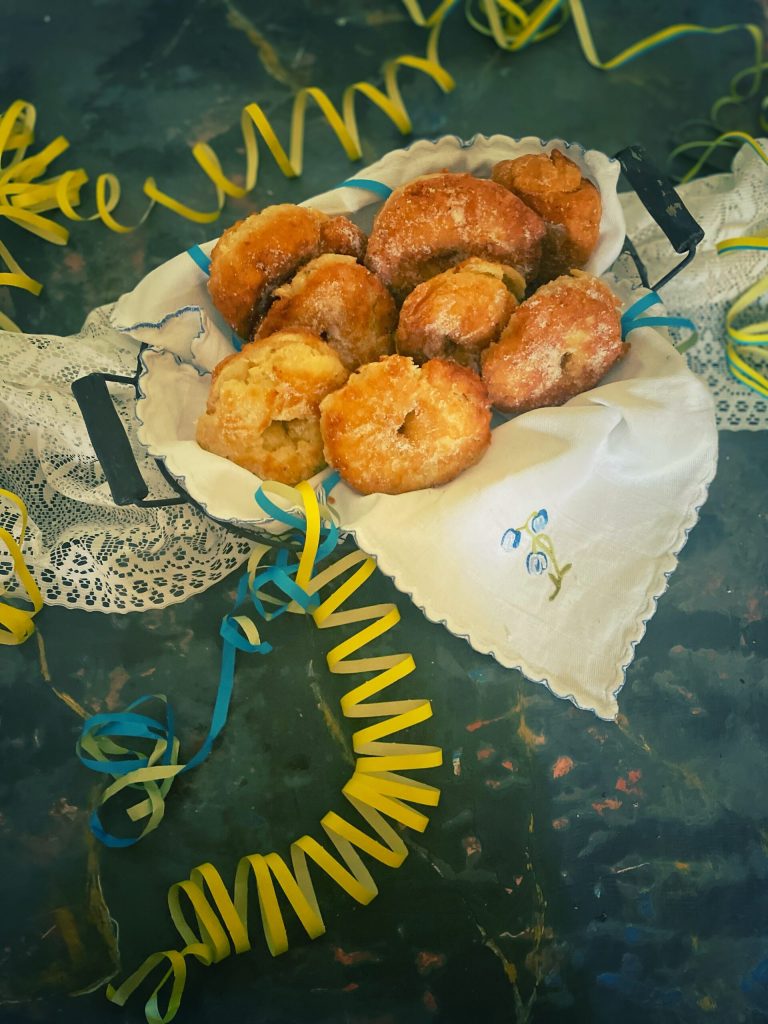
- Difficulty: Medium
- Cost: Very inexpensive
- Preparation time: 20 Minutes
- Portions: 15 pieces
- Cooking methods: Frying
- Cuisine: Italian
- Seasonality: Carnival
Ingredients
- 9 oz potatoes (boiled (about 1 1/4 cups mashed))
- 4 1/4 cups all-purpose flour
- 2 1/4 tsp instant yeast
- 1/4 cup sugar (+ for finishing (about 50 g))
- 2 eggs
- 3 1/2 tbsp milk (warm (about 1.7 fl oz / 50 ml))
- 4 tbsp lard (or suet (about 2.1 oz / 60 g))
- 1 lemon (zest only)
- 1 pinch salt
- as needed peanut oil
Steps
Basic Preparation: On a large work surface, make a well with the sifted flour together with the sachet of instant yeast. In the center place the previously boiled and mashed potatoes (cold), the sugar, the eggs, the warm milk, the grated lemon zest, the salt and small pieces of lard.
Quick Dough: Start working the ingredients by hand from the center. Gradually incorporate the flour. Work quickly: with instant yeast you don’t need to “develop” the dough for long, just obtain a homogeneous, smooth and non-sticky ball.
Cutting and Shaping: Without waiting, roll the dough out with a rolling pin to a thickness of about 1/2 inch (0.4–0.6 in). Cut the doughnuts with a cutter (or a glass) and pierce the center, or roll a rope and join the ends. Tip: As you form them, place them on small squares of parchment paper: they will help you lower them into the oil without deforming them.
Immediate Frying: Heat the peanut oil in a deep-sided pan. The ideal temperature is 338°F. If you don’t have a thermometer, dip the tip of a toothpick: if it sizzles vigorously, it’s ready.
Cooking: Immerse 2 or 3 graffe at a time. You’ll see them puff up immediately thanks to the heat. Turn them as soon as they become golden (about 2 minutes per side).
Sugaring: Drain the graffe briefly on paper towels and, while still very hot, roll them in granulated sugar. The sugar should adhere perfectly thanks to the residual heat.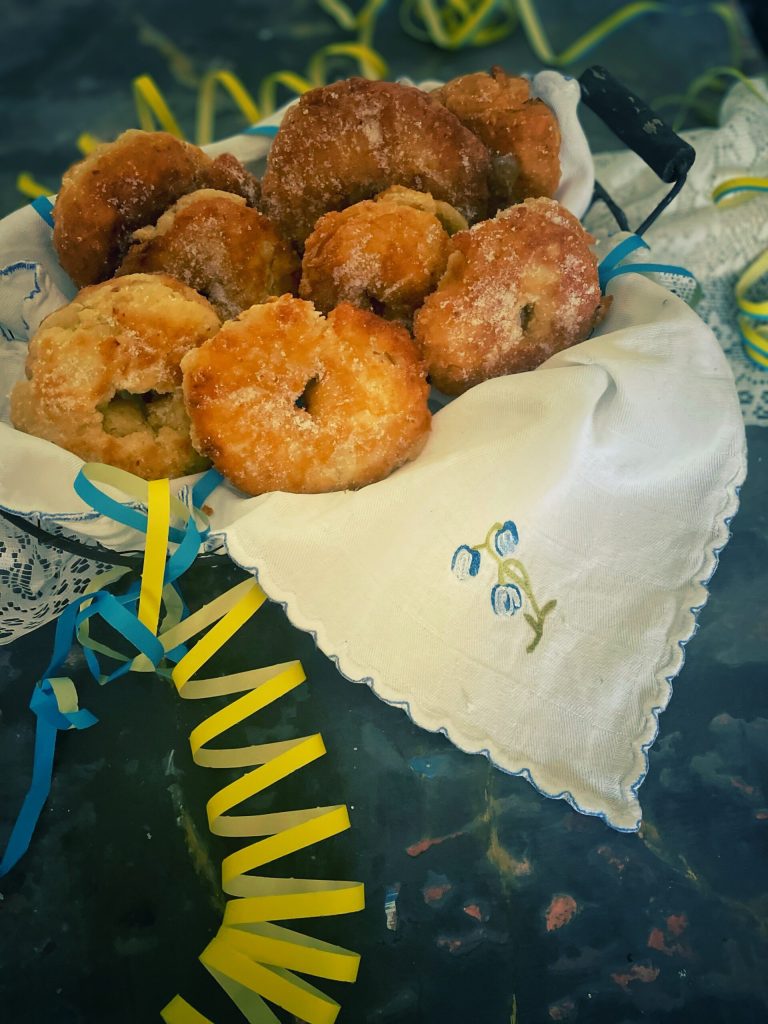
Sicilian Graffe
Sicilian graffe are very common in Palermo and are often eaten for breakfast.
How do they differ from the Neapolitan ones? They are often without potatoes and have a dough more similar to a very elastic fried brioche.
Also, in Sicily you often find a version “filled with cream” inside, while the authentic Neapolitan graffa is empty and shaped like a ring.
