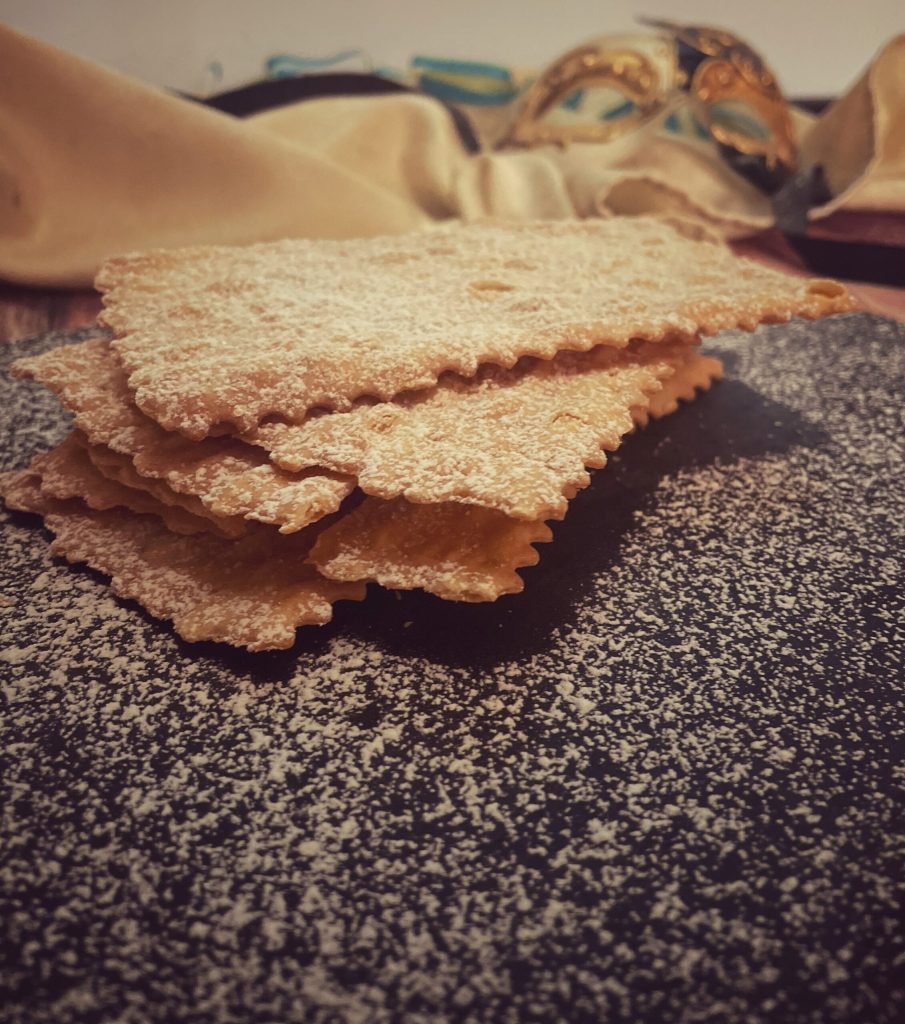
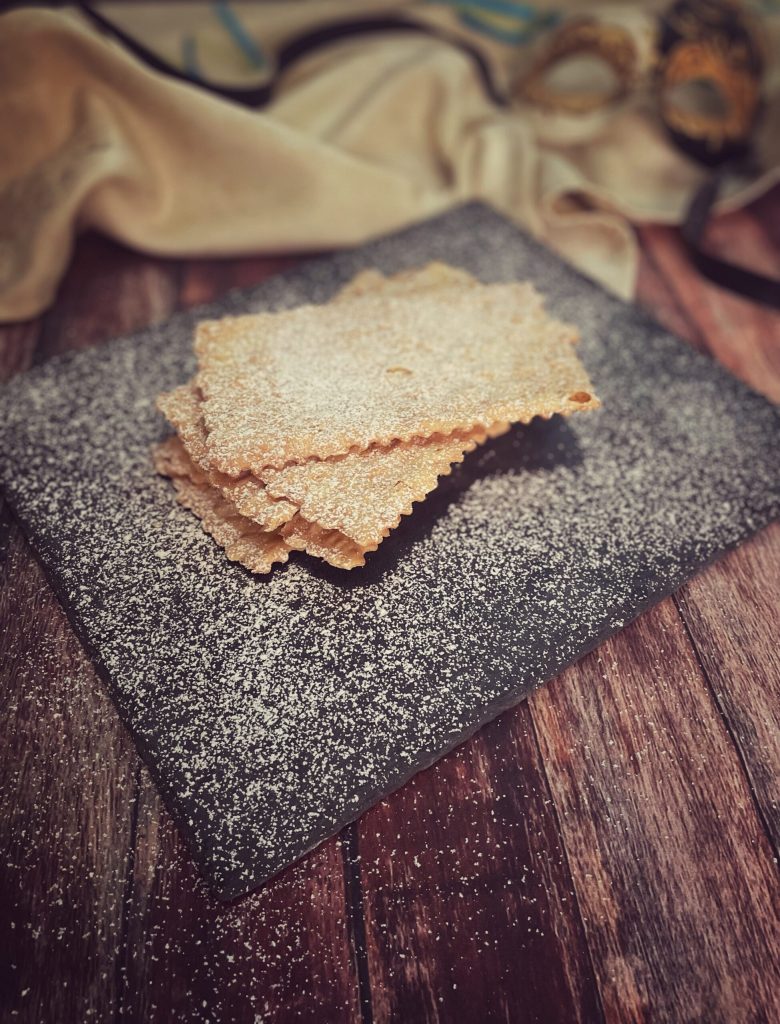
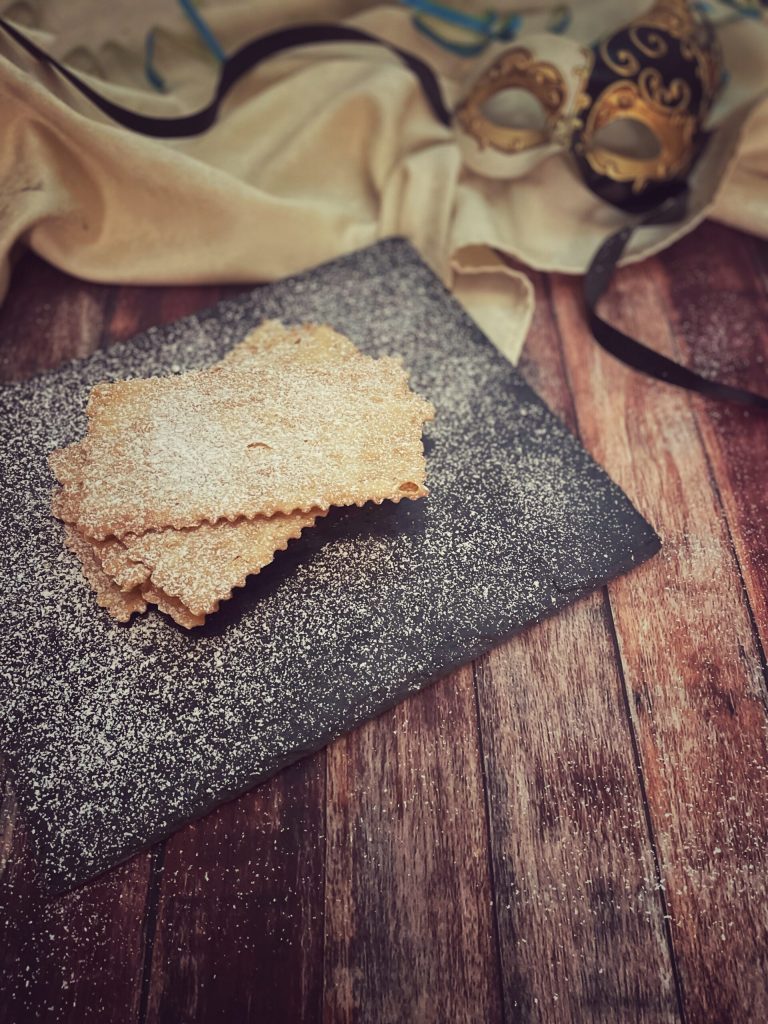
Oreillettes represent one of the most refined variants of the family of fried Carnival sweets typical of the Mediterranean area.
Although the preparation shows evident similarities with Italian fritters, this dessert boasts a specific identity rooted in the culinary tradition of Provence, Occitania, and Languedoc.
Historically, oreillettes were prepared on Mardi Gras. Like many festive sweets of the time, the recipe originated from the need to consume fat reserves (butter, lard) and eggs before the beginning of the Lenten period of dietary restriction.
The name “oreillettes” (little ears) derives from their oval and irregular shape, reminiscent of the auricle.
Unlike other regional French variants (such as the bugnes from Lyon, which are softer and leavened), oreillettes are distinguished by three fundamental technical elements:
Extreme thinness: The dough is rolled out until it becomes almost transparent. This ensures an extremely brittle consistency and rapid cooking.
Aromatic profile: The distinctive ingredient is orange blossom water, which gives the dessert the typical Provençal aroma, often accompanied by lemon zest or a touch of rum.
Absence of yeast: To achieve the characteristic surface dotted with micro-bubbles and the typical “cigarette” crispness, the traditional recipe does not include chemical leavening agents, relying on the elasticity of the gluten and the temperature shock of frying.
While the sweet version remains the standard during the Carnival period, the versatility of the dough has led to contemporary variants. Among these are the savory versions (flavored with Provençal herbs or aged cheeses) used in the baking sector as an aperitif snack.
- Difficulty: Medium
- Cost: Very cheap
- Preparation time: 10 Minutes
- Portions: 40 Pieces
- Cooking methods: Frying
- Cuisine: French
- Seasonality: Carnival
Ingredients
- 4 cups flour
- 3 eggs
- 5 tbsp butter (soft)
- 1/4 cup sugar
- 3 tbsp orange blossom water
- 1 tbsp liqueur (rum or brandy)
- 1 pinch salt
- 1 quart peanut oil
- to taste powdered sugar
Steps
The Dough: In a large bowl (or in a mixer), pour the flour and create a well. Add the eggs, sugar, soft butter, pinch of salt, and flavors.
Kneading: Knead vigorously until you obtain a smooth and homogeneous dough. If the dough is too hard, add a tablespoon of milk or water.
Rest (Essential): Wrap the dough in plastic wrap and let it rest at room temperature for at least 30-60 minutes. This step serves to relax the gluten, allowing you to roll out a very thin sheet without it shrinking.
Rolling: Take a piece of dough at a time and roll it out with a rolling pin or pasta machine. You should reach a thickness of 1/16 inch: the thinner, the lighter and more brittle the oreillettes will be.
Cutting: With a fluted pastry wheel, cut rectangles or diamonds. Make a small cut in the center of each piece (helps prevent them from inflating too much like a “balloon”).
Frying: Heat the oil to about 340-355°F. Immerse a few oreillettes at a time: 30-40 seconds per side will suffice. They should just turn golden, not brown.
Finishing: Drain them on absorbent paper, and once lukewarm, generously dust them with powdered sugar.
My advice: For a professional result, use the “double pass” trick with powdered sugar: once just drained and once before serving.