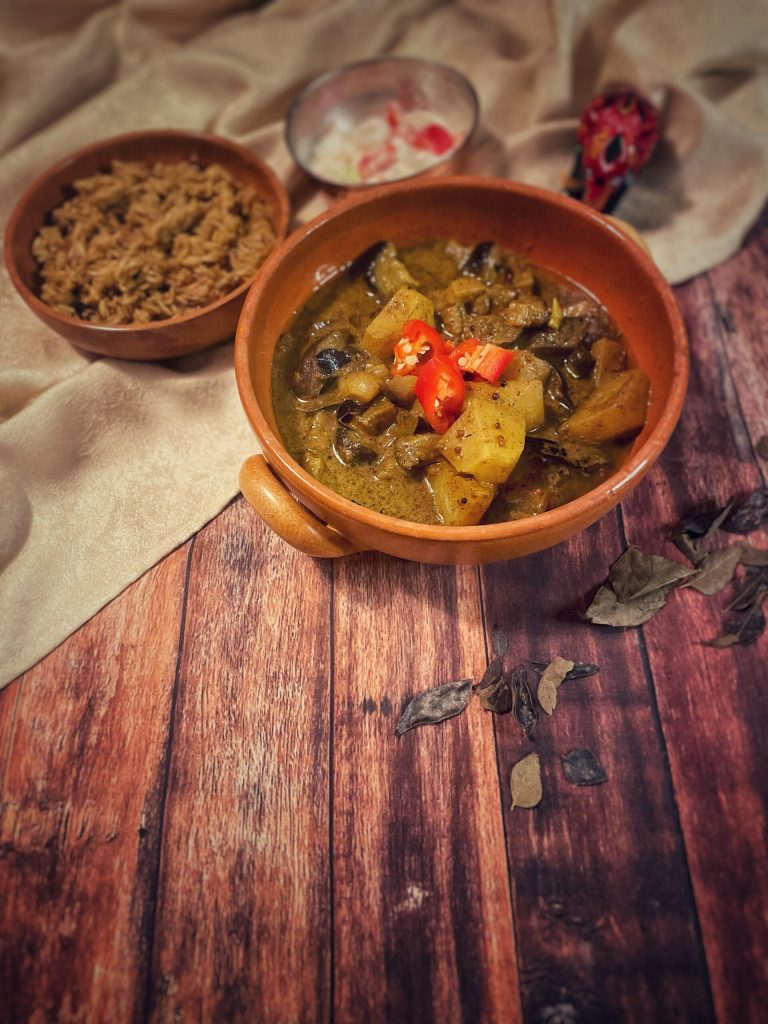
Rice and curry, white, vegetarian, is the national dish of Sri Lanka, where the ‘and’ makes the difference…
The main dish of Sri Lanka is rice and it is usually served with curry of vegetables, beef, fish, chicken, eggs, and mallum (a salad made with gotu kola, coconut, red onions, and spices).
▶Usually, the midday meal is rice and curry and everything is laid out on the table: fish, rice, curry (meat, fish, vegetables), soup, and vegetables.
The vegetarian curries – like mine – are made with: fruits or vegetables such as eggplants, carrots, beets, beans, pumpkin, ash plantain, or banana flowers.
▶Every meal must contain curries, always classified based on the type of spice or cooking method; they can be red, white, or black.
The red curries are based on few spices and a large amount of powdered or ground chili.
The white curries contain coconut milk, are more delicate and liquid.
For the black curries the dark color is given by coriander, fennel, and cumin.
▶Sri Lankan curries are much spicier than Indian ones and made with: powdered chili, cinnamon, fresh chilies, curry powder, curry leaves, turmeric, garlic, onions, ginger and often, indeed, coconut milk.
⏺Sri Lanka is famous for its spices, the most fragrant ones are: cardamom, cinnamon, cloves, and nutmeg.
⏺The beaches of Sri Lanka that stretch for hundreds of miles are lined with coconut plantations and palms. The coconut kernel provides a milky liquid which is the coconut milk in which the curries are cooked.
‼️All this to tell you to pay attention to words and recipes.
Rice and curry is NOT curry rice 😉.
There are many different types of curry in Sri Lanka, which you can discover in this article:
- Difficulty: Easy
- Cost: Economical
- Preparation time: 10 Minutes
- Portions: 4 servings
- Cooking methods: Stove
- Cuisine: Sinhalese
- Seasonality: All seasons
Ingredients
- 1 1/2 cups Basmati rice (or keeri samba)
- 3 leaves curry
- 2 tsps mustard seeds
- 1 2/3 cups coconut milk
- 4 cloves
- q.b. fresh ginger
- 1 onion
- 1 clove garlic
- 1 tbsp curry powder
- q.b. turmeric powder
- q.b. cinnamon powder
- q.b. chili pepper
- q.b. garam masala
- 1 lime
- q.b. vegetables (choice: potatoes, zucchini, eggplants…)
- q.b. salt
Steps
Boil or steam the keeri samba or basmati rice.
Blend the crushed garlic and ginger with the onion, turmeric, curry powder, and salt until it forms a paste.
Sauté the mustard seeds and curry leaves with the paste and coconut milk, then the cloves, chili, cinnamon, garam masala, add the vegetables, and squeeze the lime. Adjust salt.
Cook for about 10-15 minutes.
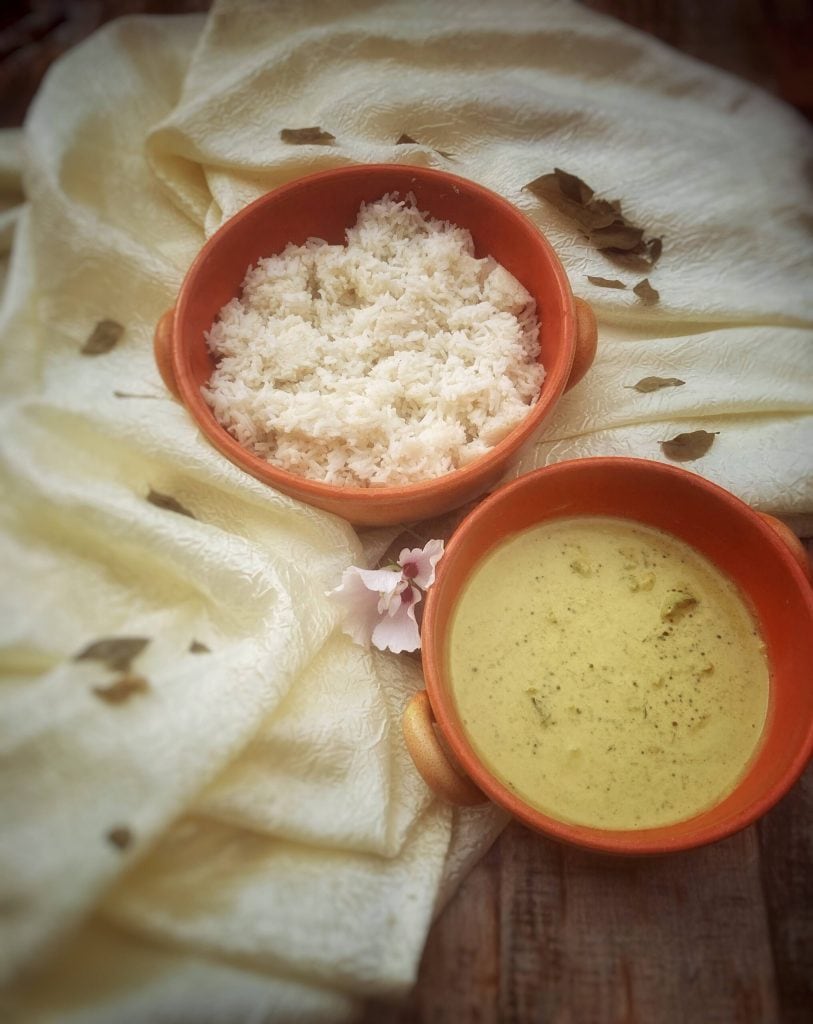
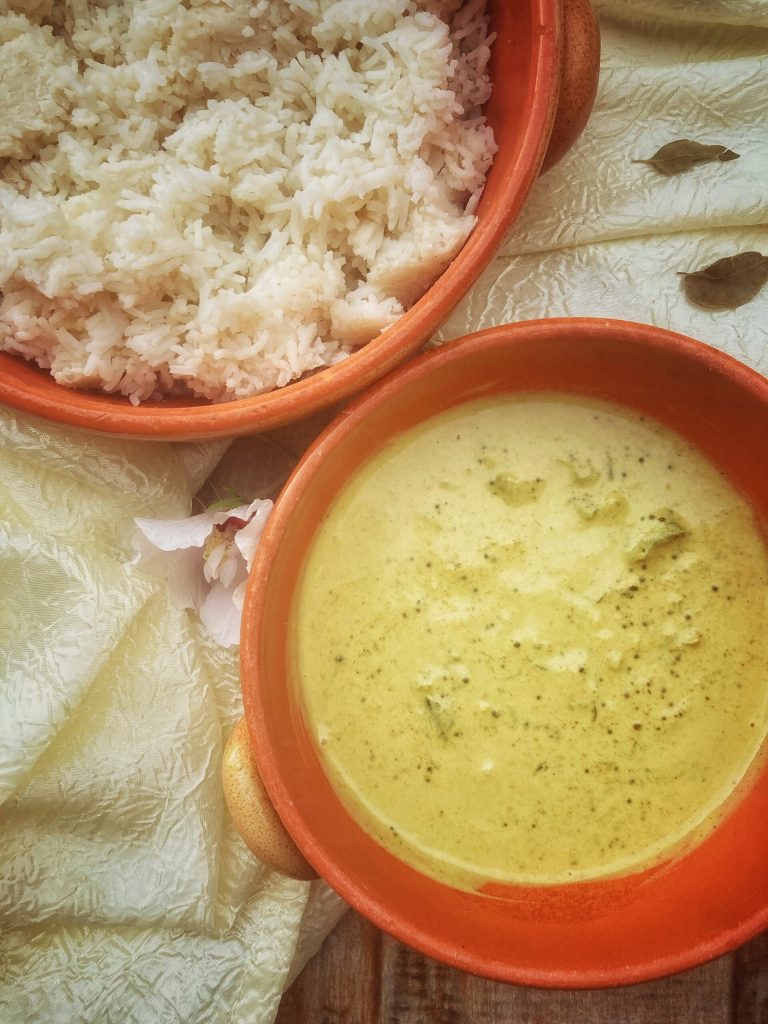
Serve the rice and curry in two separate bowls.
Difference between Curry and Masala:
In the West, we make a big confusion between Curry and Masala.
The Curry as we know it is a Western invention, which originates from Indian tradition, but adapting it to our tastes.
The Garam Masala is the “real curry” of India and Pakistan, it is prepared by toasting, grinding, and mixing some spices including cinnamon, cumin seeds, coriander, cardamom pods, cloves, black peppercorns, and turmeric.
Or purchased ready-made.
FAQ (Questions and Answers)
What are the most suitable vegetables for a dry vegetarian curry?
The most used vegetables for a dry vegetarian curry are:
• Potatoes (preferably firm flesh)
• Eggplants (cut into cubes or slices)
• Green beans
• Cauliflower (in florets)
• Pumpkin or zucchini
• Carrots
• Peas
• Spinach or other leafy greens
• Peppers
• Onions (often used as a base along with spices)
These vegetables are well-suited because they withstand prolonged cooking without falling apart and absorb the spices well, creating a flavorful dish with a variety of textures.
In the photo below curry with coconut milk, potatoes, and eggplants.