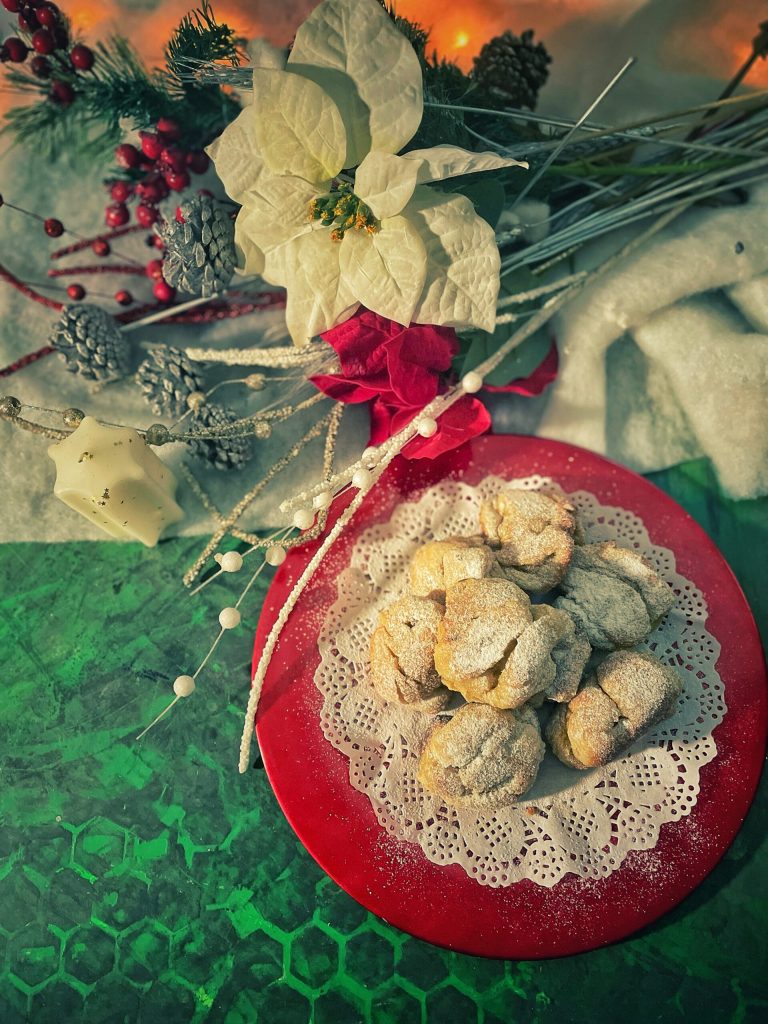
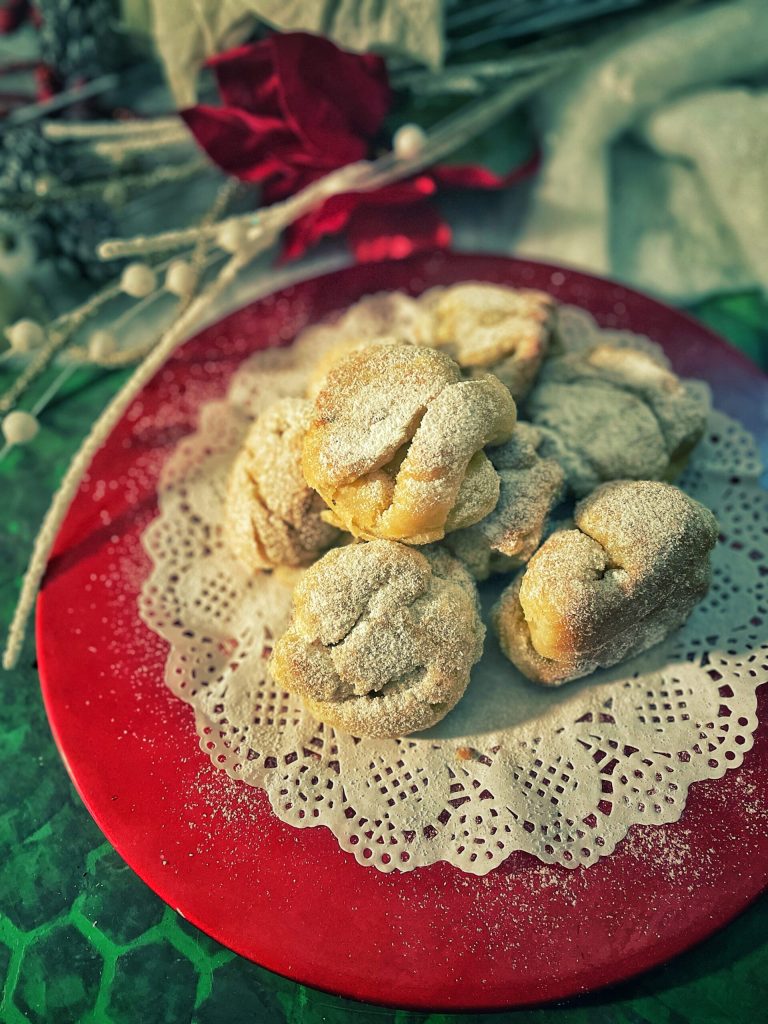
Schneeballen are fried pastries made from shortcrust dough, characterized by their dough being cut into strips, woven, and formed into a “ball” before frying.
Schnaps (plum brandy) or wine is often included in the dough to flavor the shortcrust pastry,
The shape resembles a snowball: hence the name “Schnee” = snow, “Ballen” = balls.
Schneeballen originate from the area of Rothenburg ob der Tauber (Franconia/Bavaria) and Hohenlohe — a tradition dating back at least 400 years.
They were once prepared for weddings and special occasions, given the richness of the ingredients and the laboriousness of the preparation.
In modern times, they have become a local confectionery specialty sold in the pastry shops of Rothenburg, especially at Christmas, but available all year round: an “edible souvenir” for tourists and lovers of traditional sweets.
To give the ball shape, the Schneeballeneisen (literally “snowball iron”) is used: a specialized tool in the shape of tongs.
The tool is immersed in hot oil and maintains the spherical shape (alternatively you can use a tea ball strainer).
Traditionally, they are dusted with powdered sugar after frying, but there are variations with chocolate coating, nut sprinkles, additional spices, glaze, honey, etc.
- Difficulty: Medium
- Cost: Economical
- Rest time: 1 Hour
- Preparation time: 10 Minutes
- Cooking methods: Frying
- Cuisine: German
- Seasonality: Christmas, All seasons
Ingredients
- 4 cups flour
- 2 tablespoons sugar
- 1 pinch salt
- as needed lemon and orange zest
- 1 egg
- 2 egg yolks
- 1 cup sour cream
- 2 tablespoons Zwetschgenschnap (plum liqueur)
- as needed peanut oil
Tools
- 1 Fluted pastry wheel
- 1 tea ball strainer
Steps
1. In a large bowl, combine flour + salt + sugar + zest. Add cold butter in cubes and “crumble” with fingers until a sandy mixture is obtained.
2. In another bowl, mix eggs, yolks, sour cream, and schnapps.
3. Pour the liquid mixture over the dry one and knead until a compact and smooth dough is obtained. Wrap in plastic wrap and let rest in the fridge for at least 1 hour.
4. Roll out the dough on a floured surface into a thin disc, cut into squares of 4.3 inches.
5. With a fluted pastry wheel (or knife), cut strips about 0.6 inches wide inside the disc, leaving an outer edge (about 0.4―0.8 inches) intact.
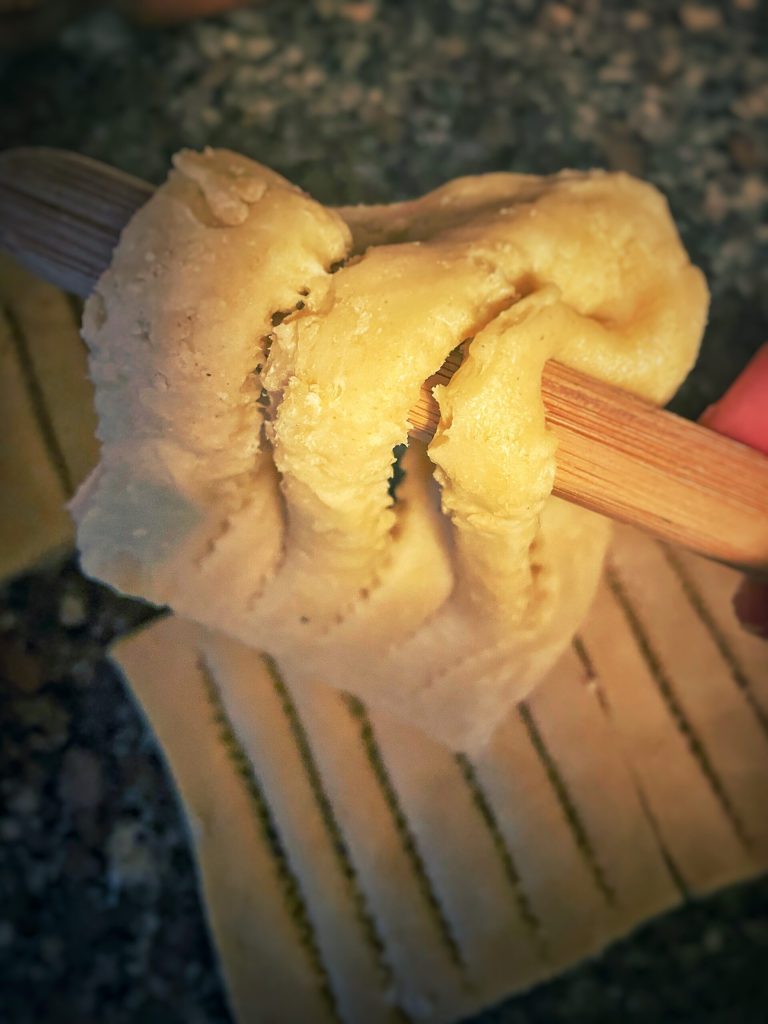
6. Lift the strips one by one with a wooden spoon handle (or a special tool called “Schneeballeneisen”) and then gently pull them: the strips will fall forming a sort of dough “skein”.
7. Shape the dough with your hands into a ball of 4 inches (1 oz) without compressing the dough too much. If you have the Schneeballeneisen, use it to maintain shape.
8. Heat abundant vegetable oil to about 340–356 °F
9. Carefully immerse each dough ball in the hot oil and fry for about 4–6 minutes, turning it occasionally, until it becomes evenly golden.
10. Drain on paper towels. While still hot (or once slightly cooled), dust with powdered sugar.
11. Allow to cool completely.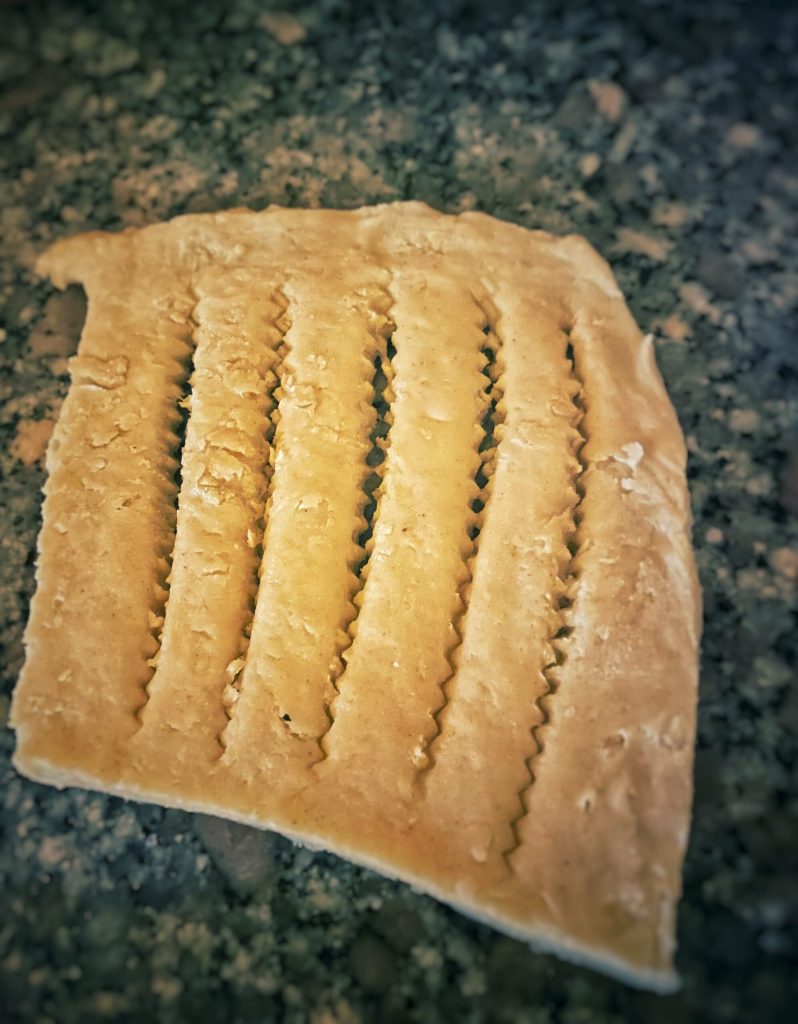
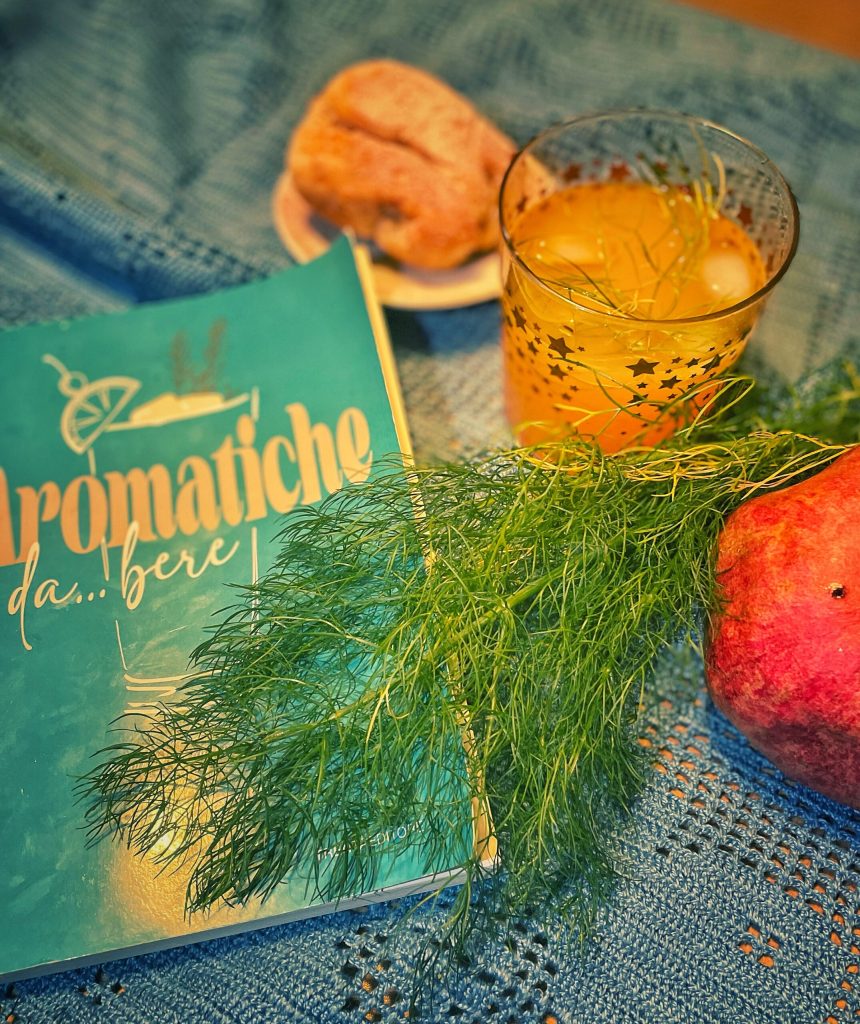
As I mention in the video, I recommend pairing it with the Abracadabra cocktail found in the book by Ottavia Castellaro: “Aromatiche da bere”