
The Sorrento Carnival Pizza is a sumptuous savory pie typical of the Sorrento Peninsula, traditionally prepared for Shrove Tuesday: a thin, crisp shortcrust shell — similar to a savory shortcrust pastry — that encloses a rich filling of eggs, sausage, fior di latte and aged cheeses.
Its history reads like a tale of ancient rituals and a refined gastronomic culture. It was born within Sorrentine homes as the “banquet of abundance” before the austerity of Lent.
In February, after the pig slaughter in January, pantries were full of fresh sausages and lard (sugna): the Carnival Pizza thus became the most glorious way to use these precious reserves of fat and protein.
Unlike the more rustic Neapolitan “Pizza Chiena,” which uses a leavened bread dough, the Sorrento version reveals a more aristocratic soul. Local families, influenced by the cuisine of the Monsù (the chefs of the Bourbon courts), adopted a non-leavened crust, very thin and crunchy.
The distinctive touch that still divides purists today is the addition of raisins and pine nuts: a legacy of Spanish and Arab dominations, able to create that sweet-and-sour contrast that softens the savoriness of the meat and pecorino.
In this gluten-free version, the recipe paradoxically returns to its origins: the absence of a gluten network, together with the use of natural flours and lard, allows you to obtain impeccable flakiness, paying homage to a dish that for centuries has celebrated the last joyful feast before Lenten silence.
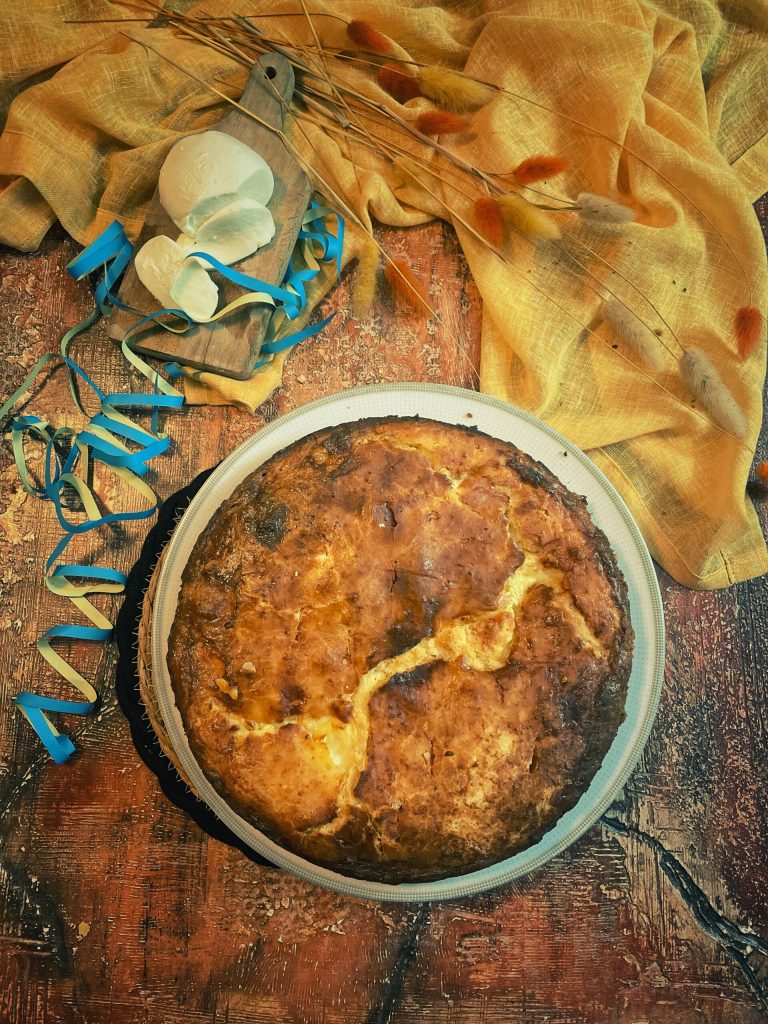
- Difficulty: Difficult
- Rest time: 30 Minutes
- Preparation time: 10 Minutes
- Portions: 6 Servings
- Cooking methods: Oven, Electric oven
- Cuisine: Italian
- Seasonality: Carnival
Ingredients
- 2 3/4 cups gluten-free flour mix
- 2/3 cup lard (strutto) (or sugna)
- 1 egg
- to taste salt
- 11 oz sausage, crumbled (crumbled)
- 5 eggs
- 1/2 cup grated Parmigiano-Reggiano
- 1/2 cup grated Pecorino Romano
- 11 oz mozzarella fior di latte (well drained)
- 3/4 oz raisins (optional)
- 3 tbsp pine nuts (optional)
- to taste black pepper
- 1 egg yolk
Tools
- 1 Baking pan 9 1/2–10 1/4 in
Steps
Base Preparation: If you make the dough at home, quickly knead the flour, lard, egg and water. Let it rest in the fridge for 30 minutes.
If you use ready-made pastry, take it out of the fridge 5 minutes before using.
The Filling: In a large bowl, beat the eggs with the pecorino, the Parmigiano and pepper. Add the crumbled, pan-browned sausage, the well-drained fior di latte and, if desired, raisins and pine nuts.
Assembly: Line a 10 1/4–11 in pan with the first disk of dough (use the included parchment if it’s ready-made). Pour in the egg-and-meat mixture.
Sealing: Cover with the second disk. Seal the edges by pressing with the tines of a fork and prick the surface to let steam escape.
Baking: Brush with an egg yolk. Bake in a static (conventional) oven preheated to 356°F for about 45–50 minutes, until the surface is a beautiful golden-brown color.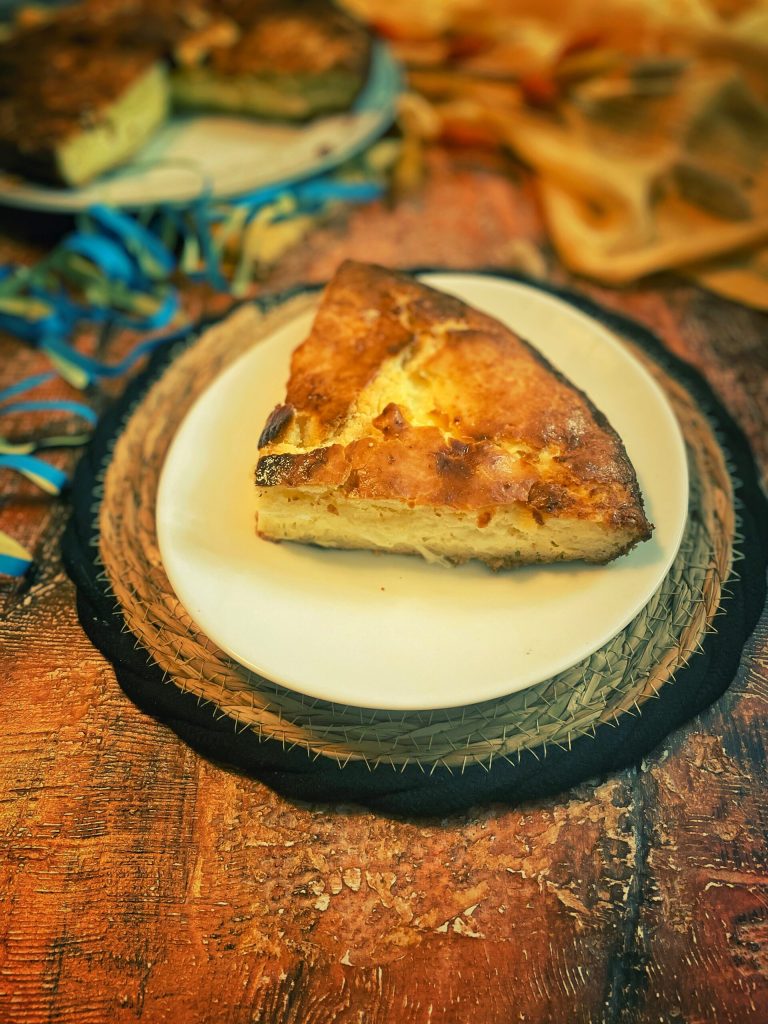
Pine Nuts and Raisins: yes or no?
The inclusion of raisins and pine nuts is the great dividing line among Sorrentine families: it’s the element that separates the “historical traditionalists” from the “modern” ones.
Why yes (The Ancient Tradition)
In the oldest recipes of the Sorrentine Peninsula and the Coast, the influence of aristocratic cuisine of the 18th and 19th centuries is very strong.
At that time, the use of raisins and pine nuts in savory dishes (as in meatballs or meat fillings) was a sign of refinement and prestige.
Many historic Sorrento families continue to include them precisely to preserve that typical sweet-and-sour contrast that distinguishes their pizza from the Neapolitan one.
Why no (Popular/Modern Tradition)
Today many prefer an exclusively savory version. If you don’t like the sweet-salty contrast, you can safely omit them: the pizza will still be considered “traditional” in its more rustic and modern sense.
FAQ (Questions and Answers)
What is the difference between Sorrento Carnival Pizza and Pizza Chiena?
Although they are “cousins”, the difference between the Sorrento Carnival Pizza and the Neapolitan Pizza Chiena mainly concerns the time of consumption, the dough and a key ingredient in the filling.
Here are the three main differences:
Period and Occasion: The Sorrento is the emblematic dish of Carnival (Shrove Tuesday).
The Chiena is the queen of Neapolitan Easter (prepared on Maundy Thursday or Good Friday to be eaten on Saturday).
The Dough (The shell): The traditional Sorrento uses a pâte brisée or a very thin, flaky savory shortcrust that should be “crisp”.
The Chiena more often uses a real leavened bread dough (enriched with lard), resulting in a taller, softer and more substantial pie.
The Filling: The Sorrento focuses on crumbled and browned sausage, bound by eggs and cheeses, with the distinctive touch (in historic versions) of raisins and pine nuts.
The Chiena, on the other hand, is dominated by diced cured meats (Naples salami, pancetta, prosciutto) and often includes ricotta in the egg mixture, making it more like a moist, compact savory cake.
In summary, while the Pizza Chiena is a rich leavened dish of salumi and cheeses intended to break the Lenten fast, the Sorrento Carnival Pizza is a more refined savory pie that plays on the contrast between a flaky shell and the savoriness of the sausage.
