
Sous Vide Beef Cheek is one of the recipes from the Slow Cooking Menu in the column “Building the Menu”.
Beef cheek is a cut that comes from the animal’s jaw (in English, they are called “beef cheeks”), it’s very tender and gelatinous meat, rich in collagen between the fibers, making it suitable for slow cooking.
Cooking at temperatures below 212 °F allows the collagen to dissolve into gelatin, making the meat very tender.
I used my slow cooker for cooking on HIGH for 4 hours, but you can also cook it sous vide using a rooner by maintaining the water temperature at 158 °F for 3 and a half hours.
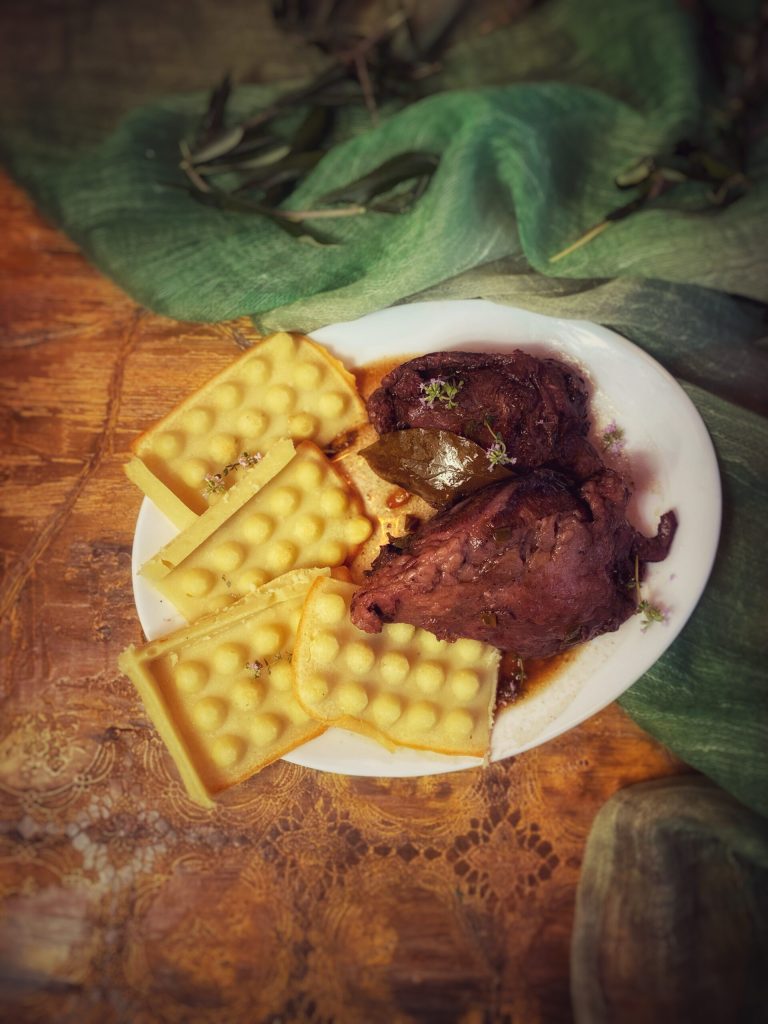
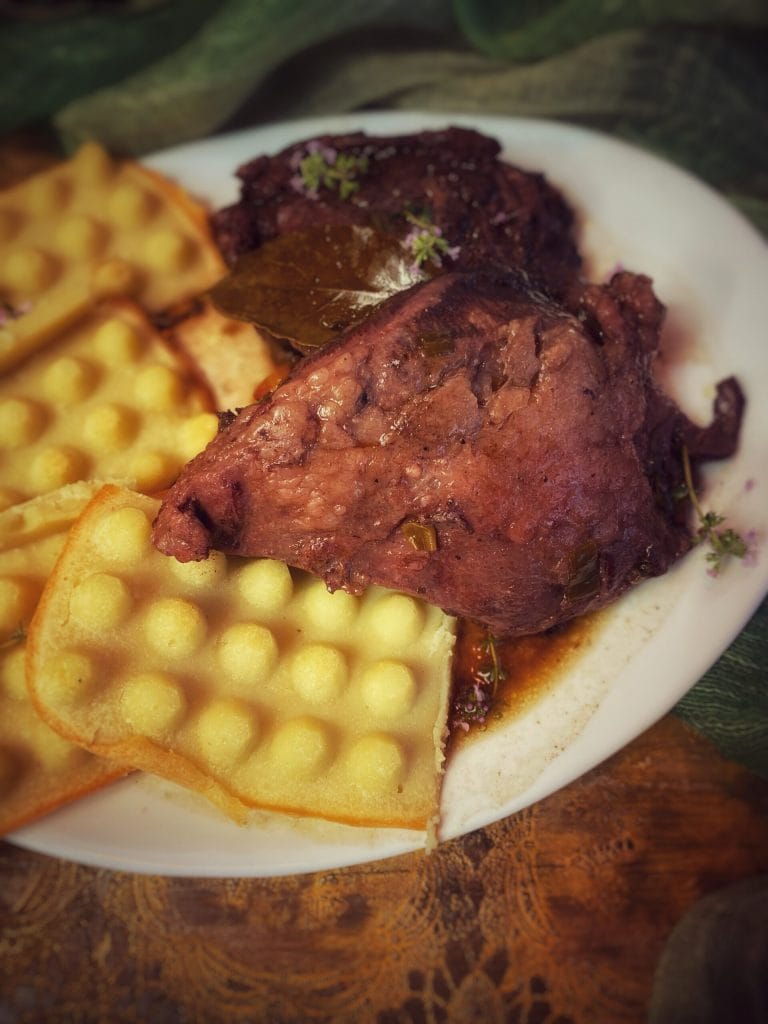
Finally, I served the sous vide beef cheek with a gluten-free savory waffle, baked in the oven.
- Difficulty: Medium
- Cost: Medium
- Preparation time: 5 Minutes
- Portions: 4 servings
- Cooking methods: Slow Cooking, Other
- Cuisine: Contemporary
- Seasonality: All seasons
Ingredients
- 2.2 lbs beef cheek
- 1 carrot
- 1 onion
- 4 cloves
- to taste pepper
- to taste juniper
- 3 leaves bay leaf
- 1.3 cups red wine
- 1.3 cups beef broth
- 1.25 cups rice flour
- 2 egg whites (beaten)
- 5 tbsp butter (melted)
- 2 teaspoons baking powder
- to taste salt
Tools
- 1 Pot crockpot
- 1 Mold waffles
Steps
Sauté the vegetables with the spices, then add the cheek for a few minutes to seal its juices.
Bring the wine to a boil.
Transfer the meat to the crockpot with the sauté, cover with wine and broth. Add the bay leaf.
Cook in crockpot on HIGH for 4 hours.
or sous-vide settings
• Water Temperature: 158 °F
• Cooking Time: 3 hours and 30 minutesReduce the cooking sauce for ten minutes over high heat.
For the savory waffles: create the batter by first mixing the wet ingredients, then the dry ones, and finally combining them.
Transfer to the silicone mold and bake in the oven at 392 °F for 13 minutes.
Alternatively, you can use an electric waffle iron.
FAQ (Frequently Asked Questions)
What is the difference between waffle and gaufre?
Identical in shape, but different in dough, they are both cooked on the classic honeycomb iron; for waffles you make a kind of semi-liquid batter with baking powder (sometimes without it, but with only beaten egg whites), while gaufres, richer in butter, require yeast and a key ingredient to achieve a product as close as possible to the original Belgian (from Liège): pearl sugar.
Pearl sugar resembles granulated sugar for sweets, but it is made of irregular, quite hard grains.
The “sucre perlé” does not dissolve in the dough until it begins to melt at 302 °F, leaving the inside of the gaufre very soft and the outside caramelized.
