
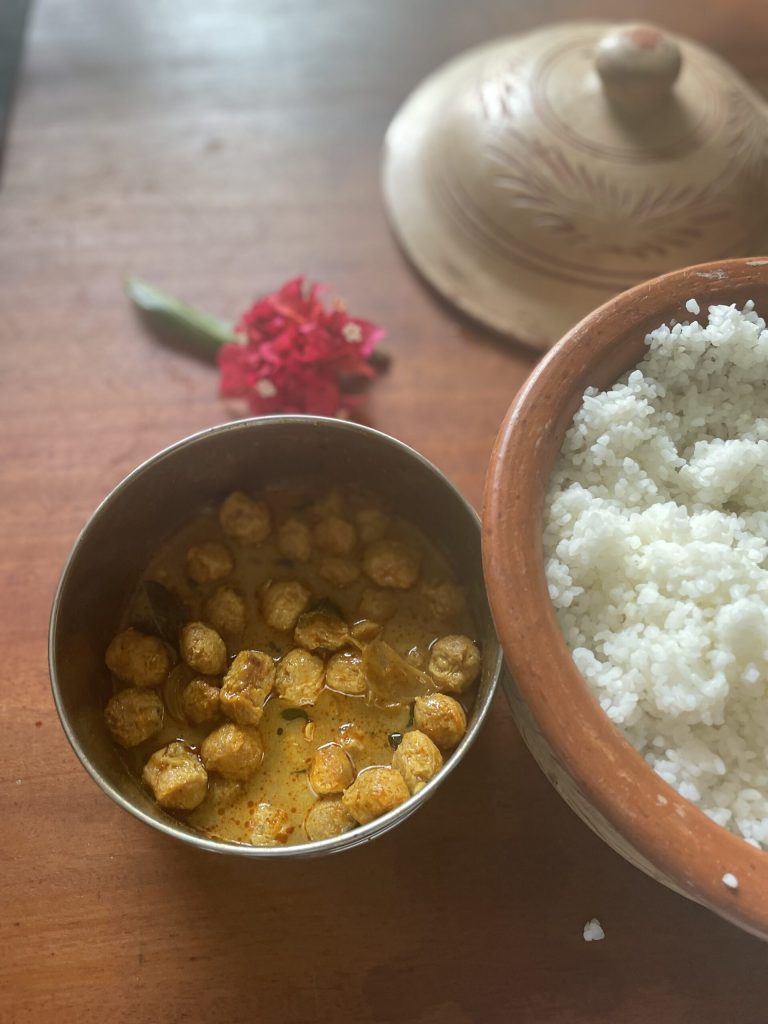
The soy curry (in Sinhalese “Soya maaluwa” or “Soy meat curry”), is a very common dish in Sri Lanka, especially in Ayurvedic resorts and vegetarian homes.
The balls or chunks you see are dehydrated soy protein (TVP – textured vegetable protein), rehydrated in hot water and then cooked in a rich coconut and spice curry.
The spices usually include turmeric, curry powder, chili, mustard seeds, curry leaves, garlic, and onion.
The sauce is based on coconut milk, which gives that golden color and velvety texture.
It is a vegan, high-protein dish and is also very popular in Ayurvedic meals because it replaces meat while maintaining a balance between lightness and nourishment.
It belongs to the category of Kiri hodi curry — that is, coconut milk-based curries, typically delicate, creamy, and not too spicy, but depending on the spice mix used, it can also approach a “Badapu Thuna Paha curry”, that is, curries with roasted and ground spices.
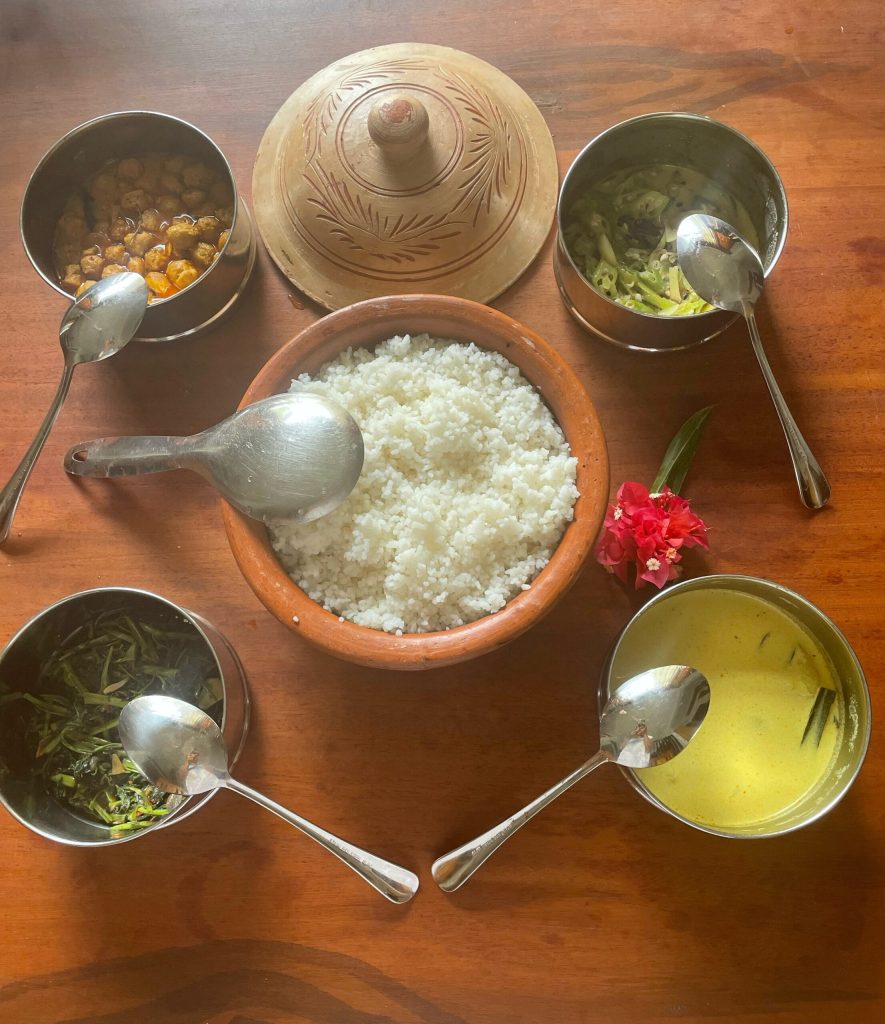
This was tasted during my Ayurvedic week in Sri Lanka in October 2025 like the:
- Difficulty: Very easy
- Preparation time: 10 Minutes
- Portions: 4People
- Cooking methods: Stovetop
- Cuisine: Italian
- Seasonality: All seasons
Ingredients
- 3.2 oz dry soy chunks (dry soy chunks)
- 1 onion
- 1 tsp garlic paste (with ginger)
- 1/2 tsp turmeric powder
- 1/2 tsp Sri Lankan curry powder
- to taste curry leaves
- 1/2 tsp mustard seeds
- 1/2 cup thick coconut milk
- 1/2 lemon
- to taste coconut oil
- to taste black pepper
Steps
Place the soy chunks in 300 ml (10 oz) of boiling water with a pinch of salt, let them soak until they puff up (∼5–10 minutes). Drain and rinse.
In a pan, heat some oil. Add the mustard seeds and let them pop.
Add the chopped onion and curry leaves, sauté until the onion becomes translucent.
Introduce the garlic + ginger paste, mix well.
Add turmeric, black pepper, and curry powder. Stir for a minute so the spices release their aroma.
Pour in some water (either from the soy broth or fresh) to create a base.
Add the soy chunks, mix well to combine with the spices.
Pour in the coconut milk, adjust salt. Simmer on low heat for 10–15 minutes until the sauce thickens and the flavors meld.
At the end of cooking, squeeze some lime juice for a tangy touch.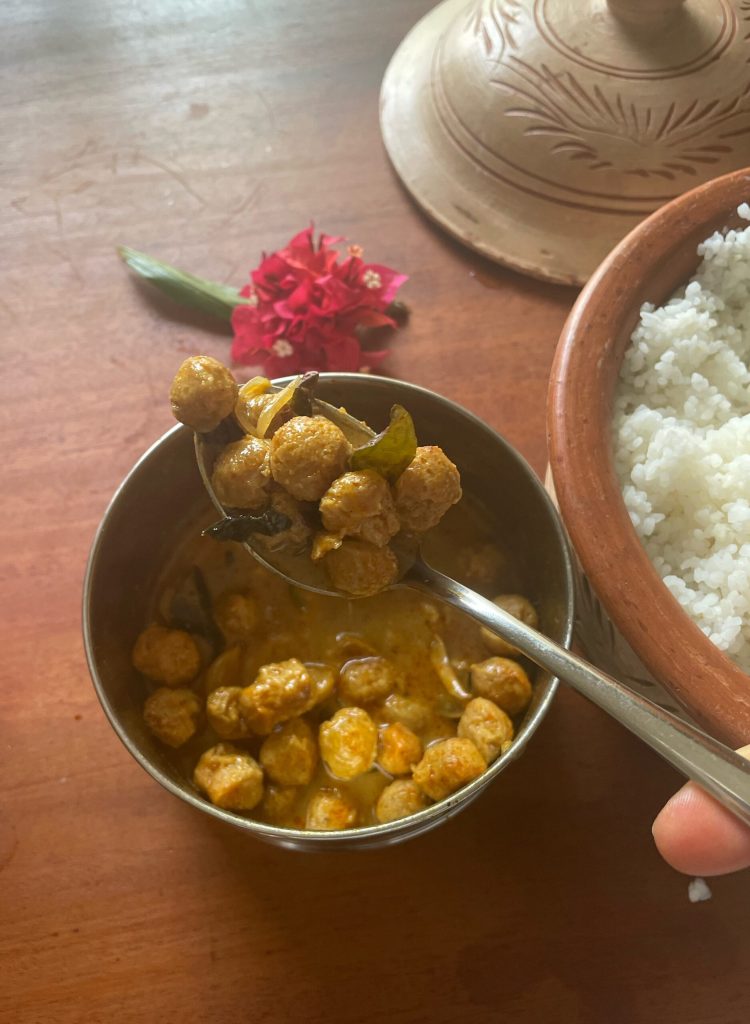
Sri Lankan Ayurvedic Cuisine
Sri Lankan cuisine has long used plant-based foods as meat substitutes, especially in vegetarian or Buddhist contexts.
The “soyameat curry” is a modern version born with the introduction of textured soy as a protein alternative.
The spices used (turmeric, pepper, curry leaves) reflect the local tradition and the fusion of cooking and medicine in Sri Lankan Ayurvedic practices.
🌿 Ayurvedic properties of the recipe
Soya meat — a plant-based protein source, considered slightly “cooling” if well prepared and seasoned with warming spices.
Turmeric and pepper — help to stimulate the digestive fire (Agni), have anti-inflammatory and purifying properties.
Curry leaves, garlic, ginger — warming, aid digestion, and stimulate circulation.
Coconut milk — sweetening and soothing, useful for balancing the fire and giving softness to the sauce.
In the context of an Ayurvedic diet, this type of curry can be useful for rebalancing Kapha and Vata, but should be used in moderation if Pitta is aggravated.
🌿 Ayurvedic properties of the recipe
Soya meat — a plant-based protein source, considered slightly “cooling” if well prepared and seasoned with warming spices.
Turmeric and pepper — help to stimulate the digestive fire (Agni), have anti-inflammatory and purifying properties.
Curry leaves, garlic, ginger — warming, aid digestion, and stimulate circulation.
Coconut milk — sweetening and soothing, useful for balancing the fire and giving softness to the sauce.
In the context of an Ayurvedic diet, this type of curry can be useful for rebalancing Kapha and Vata, but should be used in moderation if Pitta is aggravated.
In Sri Lanka, Ayurveda has profoundly influenced cooking, balancing flavors and doshas read my article dedicated to my Ayurvedic week.
FAQ (Questions and Answers)
Is Sunday a holiday in Sri Lanka?
Yes, in Sri Lanka, Sunday is considered a holiday and a day of rest for most people, as in many countries with a British colonial tradition.
However, being a multi-religious state, other days of the week can also be holidays or significant depending on the Buddhist, Hindu, Muslim, and Christian calendars.
In particular:
The full moon (Poya Day), which occurs once a month, is always a national holiday, even if it does not coincide with Sunday.
Some businesses and offices also close on Saturday afternoons or are less operational.
So yes: Sunday is a holiday, but it is not the only regular rest day in Sri Lanka’s cultural and religious context.
