
I went to Vienna in December 2007 with my mother: a beautiful trip, a splendid city, undoubtedly in my top ten!
The charm of Vienna is felt at every corner, and when you wander through the streets of Hofburg, you are suddenly catapulted back in time to the imperial Vienna of Maria Theresa.
It’s an elegant and noble city, full of history, with much to visit. I have fond memories of both the Belvedere and Schönbrunn, and the Christmas markets outside visited under small snowflakes that made everything even more magical.
Austrian cuisine isn’t among the most appreciated, so I chose international restaurants through Lonely Planet, one very expensive where we had dinner accompanied by the piano.
And another very trendy, served by beautiful waiters (they looked like models!) sitting on white fur chairs… an unforgettable dinner.
Vienna is Wiener Schnitzel, Sacher torte, krapfen, and of course Knödel (from the term “Knot”, lump), specifically Semmelknödel, or bread dumplings.
I ate them for the first time right in Vienna (see photo below), but then I indulged in them during a subsequent trip to Trentino, where they are called canederli.
They appear as large dumplings made from a variably composed dough. They can be cooked in broth or boiled in salted water and seasoned with butter and sage.
A sweet variety also exists.
The following recipe is with speck (Speckknödel), because it is Italo-Austrian and because it is my favorite cured meat.
Canederli or knödel actually originate as a poor peasant dish in Southern Germany (Bavaria), originally consisting simply of balls of stale bread cubed and held together with milk or water and eggs, following the best tradition of reusing leftovers.
Besides in Tyrol (including Trentino Alto Adige and the Federal State of Tyrol in Austria), today we can also find them on the tables of Germany, Switzerland, Poland, the Czech Republic (where they are called knedliky), and Slovakia.
You can find the recipe also in my book “In Cibo Veritas, Creative and Ethnic Cooking“, available in the shop.
This is the “in broth” version, but you can also season the knödel with simple melted butter after boiling them in hot water.
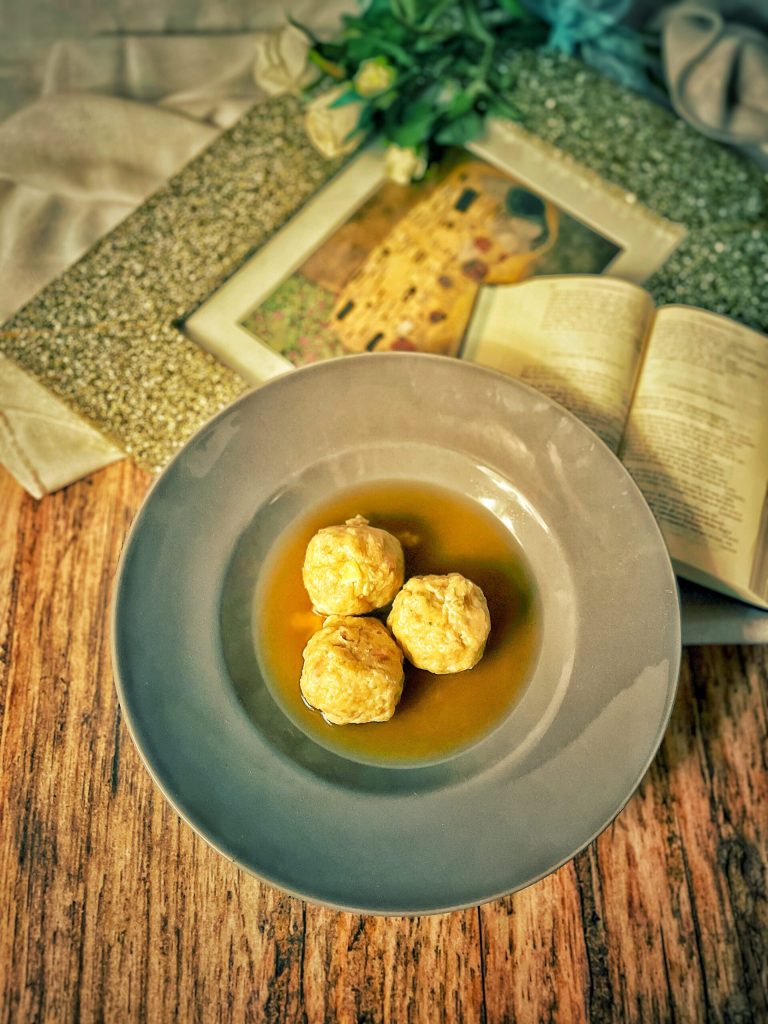
- Difficulty: Medium
- Cost: Cheap
- Rest time: 1 Hour 30 Minutes
- Preparation time: 10 Minutes
- Portions: 6 people
- Cooking methods: Boiling
- Cuisine: Austrian
Ingredients
- 18 oz stale white bread
- 1 1/2 onion
- 3 tablespoons flour (+ for dusting)
- 5 oz speck (well-aged)
- 3 eggs
- 1 cup milk
- 1 bunch chives
- to taste parsley
- to taste extra virgin olive oil
- to taste nutmeg
- to taste breadcrumbs
- to taste salt and pepper
- to taste meat broth or water
Preparation
Take each piece of bread and cut it into squares about half an inch. Put it all in a large bowl and add the cold milk.
Separately, mix the whole eggs with a grind of pepper and a good dose of nutmeg. Lightly salt and beat everything with a fork for about a minute.
Add the beaten eggs to the stale bread, salt the mixture, mix well, and let it rest for about an hour and a half. Occasionally turn the mixture so that the milk soaks all the bread well.
Prepare a sauté with oil and finely chopped onion. Let it wither and add the speck cut into strips a few millimeters wide.
Add the sauté to the mixture and complete with a few sprigs of washed, dried, and finely chopped parsley. Mix everything well and add the flour and some breadcrumbs. At this point, start making balls about 2-3 inches in diameter. If the dough turns out too soft, you can compact it a little with breadcrumbs.
Take each knödel ball and quickly roll it in flour, keeping them well apart. Let them rest in the fridge until it’s time to cook.
Bring plenty of meat broth (or water) to a boil, add the knödel as it boils, and cook for about 15 minutes. When they start to rise to the surface, they are ready. Remove them from the cooking water, place them in deep plates, adding the broth.
Serve hot with a sprinkle of chives on top.
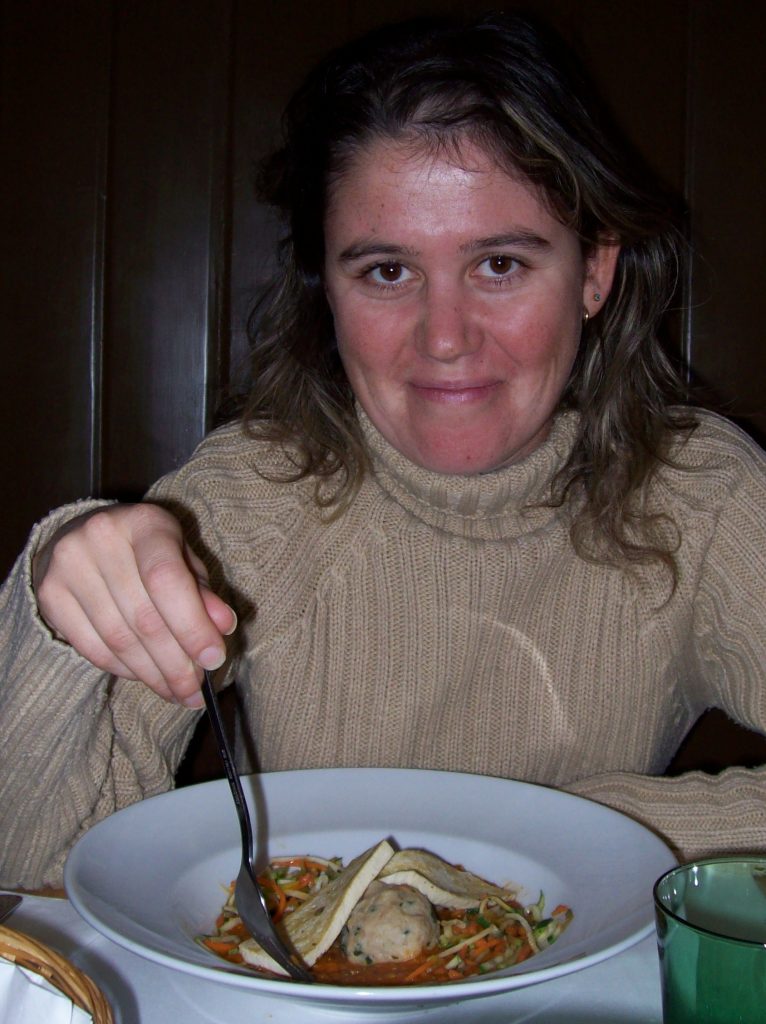
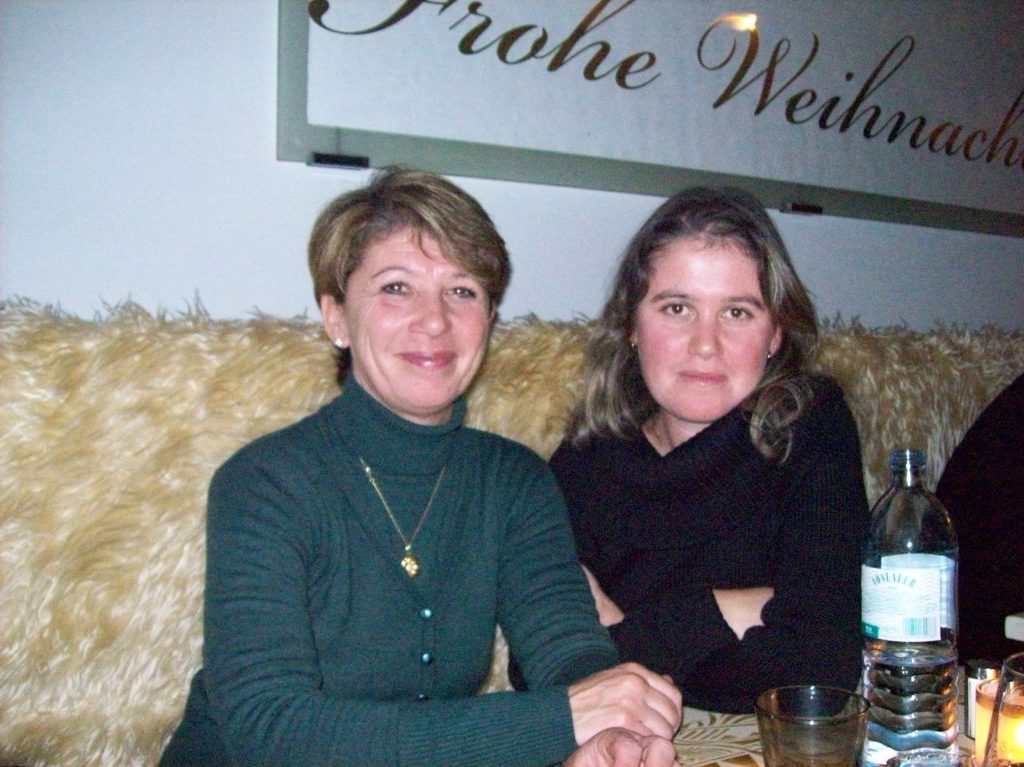
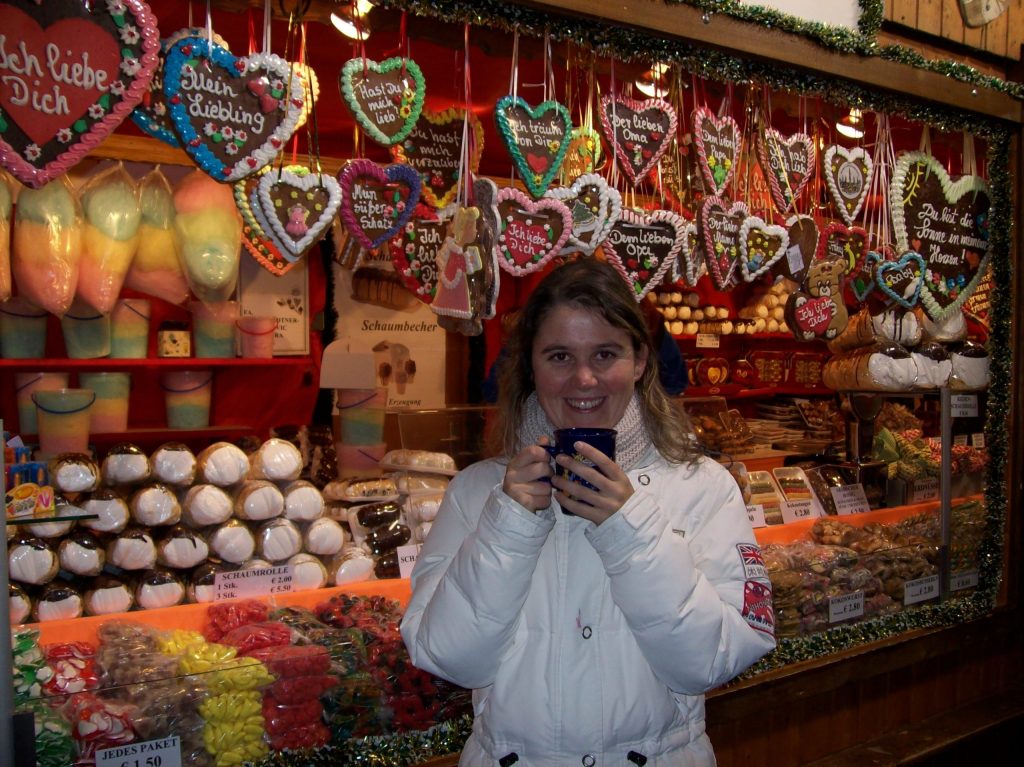
Above some photos of the trip to Vienna from November 30 to December 2, 2007
The sweet version:
There are also sweet versions of knödel: Marillenknödel are apricot-based, and Zwetschgenknödel are with plums. The same potato and flour dough used to make gnocchi is prepared, then it is rolled out to make a sheet that is then wrapped into a sphere with the filling inside; the “balls” are then cooked in butter and served with a sprinkle of icing sugar.
The Germknödel is a similar dessert in shape and covered with a vanilla sauce.
There are also sweet versions of knödel: Marillenknödel are apricot-based, and Zwetschgenknödel are with plums. The same potato and flour dough used to make gnocchi is prepared, then it is rolled out to make a sheet that is then wrapped into a sphere with the filling inside; the “balls” are then cooked in butter and served with a sprinkle of icing sugar.
The Germknödel is a similar dessert in shape and covered with a vanilla sauce.
Affiliate Link #adv
In the book “Tirolean” you will find more recipes from Trentino Alto Adige, the Federal State of Tyrol and Austria.
