
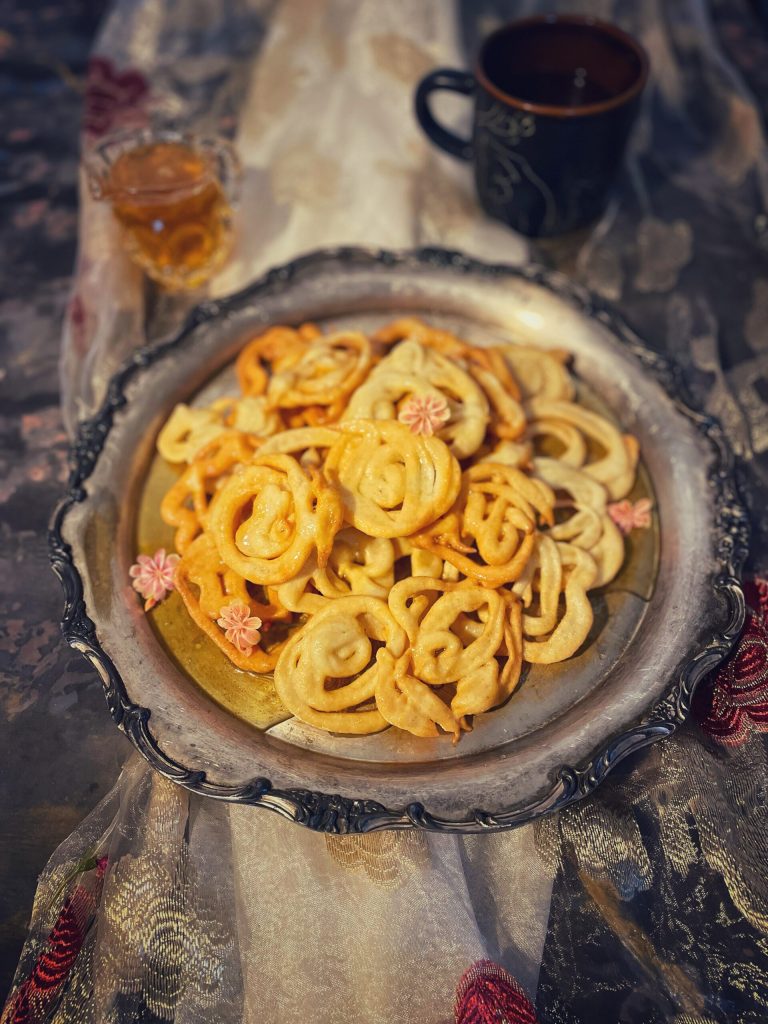
The Pani Walalu is a traditional Sri Lankan dessert, typical of the Kandy celebrations. Traditionally prepared for the Sinhalese and Tamil New Year (Aluth Avurudu), it represents the perfect union between land (through lentils and rice) and trees (thanks to the precious palm treacle).
Its preparation is based on a dough of undu (white urad dal/black mung bean skinned*) and rice flour, fried and then soaked in palm syrup.
The name itself reveals its essence: “Pani” means honey or syrup, while “Walalu” translates to “bracelets”, referring to the spiral shape reminiscent of the typical jewelry of Sri Lankan women.
Originally created for noble tables, this dessert required hours of preparation and days of fermentation, but over time it has evolved into more accessible versions without losing its charm.
For this recipe, I chose the more modern version that uses more rice flour (1:1 ratio with lentils) to make the dessert quicker to fry and completely gluten-free.
This variant is designed for those who prefer a firmer and very crunchy dessert, capable of retaining a clear and defined spiral shape compared to the ancient version, which is more spongy.
Another essential point is the 1-hour rest, using a short rest combined with vigorous dough processing. This allows for proper hydration of the rice flour, making the mixture ready for frying quickly, without waiting for natural leavening processes.
Finally, for the sweet part, Kithul Pani (palm syrup) is used. This can be heated directly if available in liquid form, or obtained by dissolving Jaggery (solid palm sugar) in water.
In both cases, the syrup must be hot when immersing the hot Pani Walalu, to allow the core of the dessert, made dense by the rice, to absorb all the flavor correctly.
- Difficulty: Medium
- Cost: Economical
- Rest time: 9 Hours
- Preparation time: 10 Minutes
- Portions: 8People
- Cooking methods: Frying
- Cuisine: Sinhalese
- Seasonality: New Year, All seasons
Ingredients
- 8.8 oz Undu
- 8.8 oz rice flour
- 1 cup coconut milk
- 2 cups Pure Kithul Treacle (or 8.8 oz jaggery and 0.4 cup water)
- as needed coconut oil (or seed oil)
Tools
- 1 Piping bag
Steps
Soak the skinned black lentils/Urad Dal (Undu) for 8 hours/overnight.
Blend the Undu adding coconut milk little by little. You need to obtain a smooth, dense, and very white paste. If you add too much liquid, the spirals will fall apart in the oil.
In a bowl, combine the rice flour and salt with the Undu cream. Stir vigorously by hand to incorporate air.
Beat the dough by hand vigorously for at least 10 minutes after adding the flours.
Let it rest for 1 hour in a warm place (for example, the oven turned off with the light on).
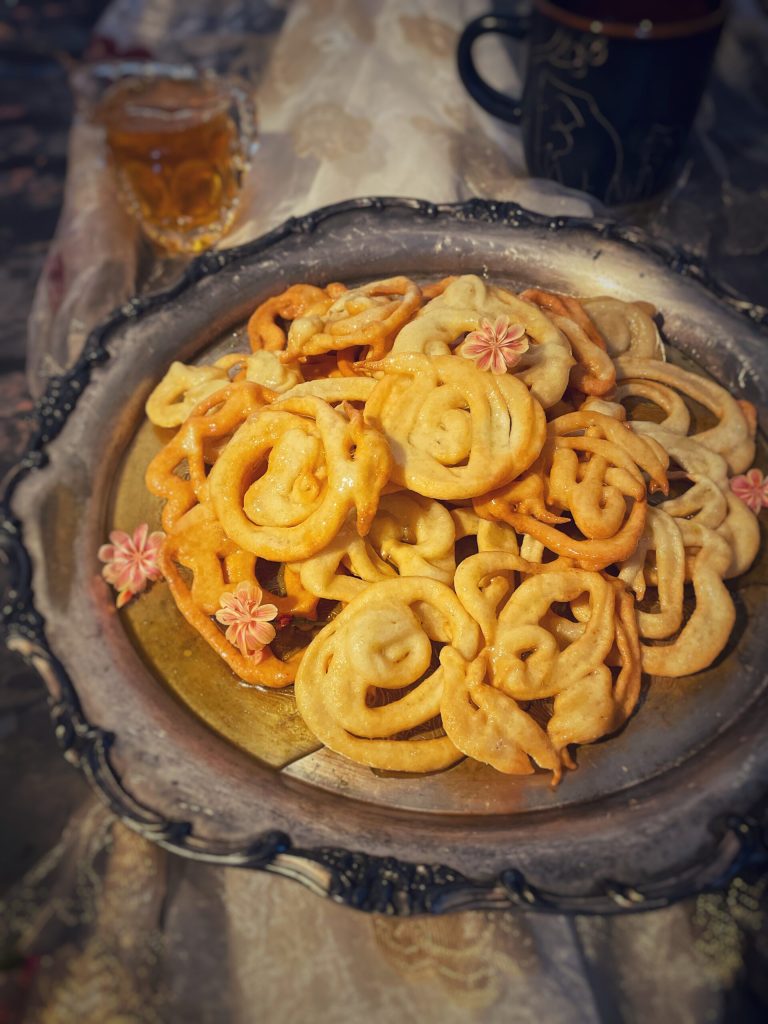
Frying: heat the coconut oil (or seed oil). Use a cloth with a hole in the center or a piping bag with a 1 cm plain nozzle. Form double circles (in the shape of a spiral donut).
You can heat the pure Kithul Pani directly. There is no need to add sugar or water if you have the original syrup in a bottle.
Or:
Syrup: While frying, heat the palm sugar with water until it becomes a thick syrup. Boil for 5/8 minutes.
As soon as the spirals are golden, immerse them hot in the syrup for about 10 seconds, then let them cool on a rack.
FAQ
*Is Undu synonymous with white Urad dal?
Exactly.
Undu is simply the Sinhalese name for Urad Dal.
To be 100% accurate:
Undu: It is the term used in Sri Lanka .
Urad Dal: It is the term used in India (Hindi language)
When buying ingredients for your Pani Walalu, look for the label “Urad Dal Whole White” or “Urad Dal Gota”. It should appear as a small white, smooth grain without the black hull, as The Spruce Eats describes.
This “white” variety (meaning skinned) is the one that allows for obtaining that elastic dough that Sri Lankans call Undu dough.
In Italian, the main ingredient is correctly called skinned black mung bean.
However, since it is an imported product, in ethnic or organic shops in Italy you will find it labeled as:
White Urad Dal: The most common commercial name
Skinned Black Mung Bean: The technical description in Italian
White Lentil: Even though botanically it is a bean, many Italian shopkeepers call it this for its small, round shape
Warning: Do not confuse it with common cannellini beans or white lentils of different varieties.
The Undu (Urad Dal) is unique because, when soaked and blended, it becomes extremely viscous and sticky. It is precisely this natural “glue” that holds the rice flour together, preventing the dessert from crumbling during frying.
