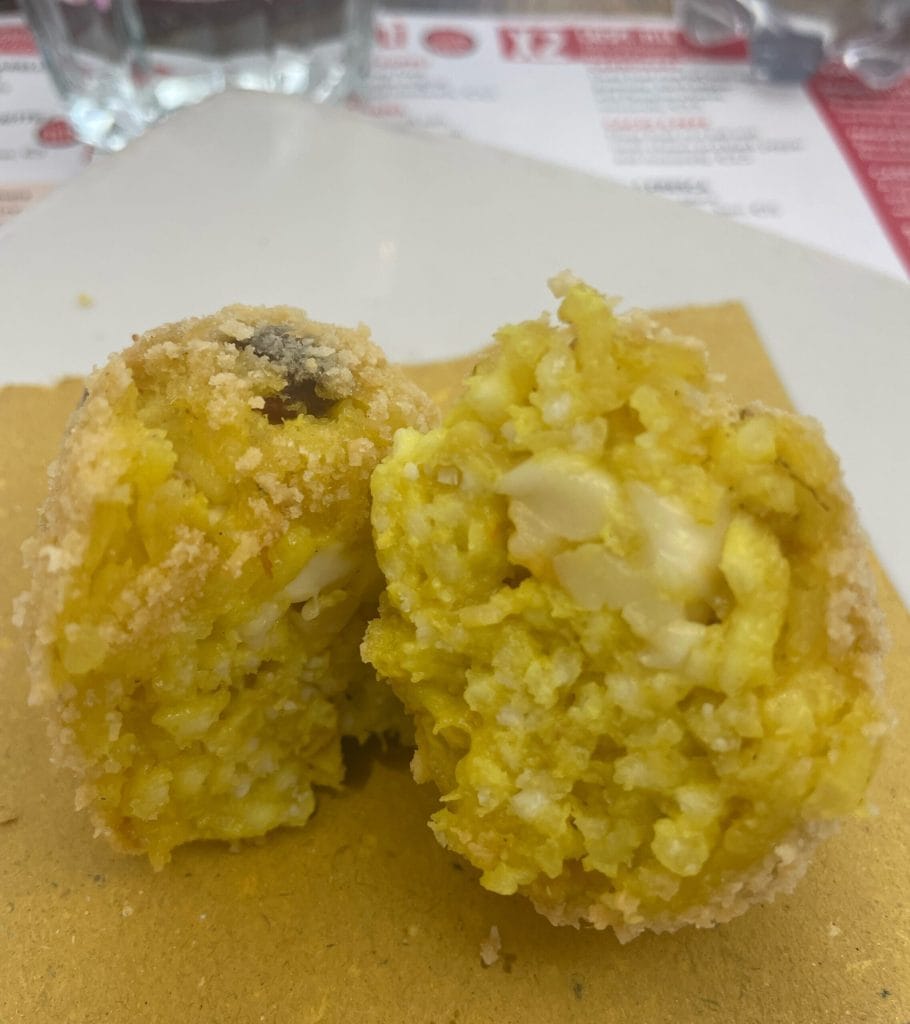
Arriving in Rome, at the end of our journey, we spent the evening in Trastevere and dined at the restaurant “Belli all’angolo“.
Among our appetizers, a Roman specialty that in some way recalls the often-mentioned cuoppo napulitano, are the supplì.
The term “supplì” derives from the French “surprise”, referring to the surprise of the melted mozzarella hidden inside.
One of its most common names is “supplì al telefono“, derived from the fact that when eaten hot, as is traditional, it is split in two and the melted mozzarella creates a “line” between the two halves of rice, making it look like a phone.
Very similar to the Sicilian arancino recipe, and therefore to the Neapolitan rice balls (e pall ‘e riso), it differs in its characteristic oval (or torpedo) shape and filling: the original supplì contains only ragù and mozzarella; no ham, no peas, and they must be red.
In the original supplì recipe, chicken giblets were also included, which nowadays are replaced by the simpler and more common ground meat used to prepare regular ragù.
The outer breading involves two different recipes: the first consists of an initial flouring, then a pass through egg, and finally a pass through breadcrumbs. The second uses only breadcrumbs and is the more widespread recipe.
Very often, leftover rice from the day before is used. Some people boil the rice and then add it to the ragù, while others let it absorb the sauce directly.
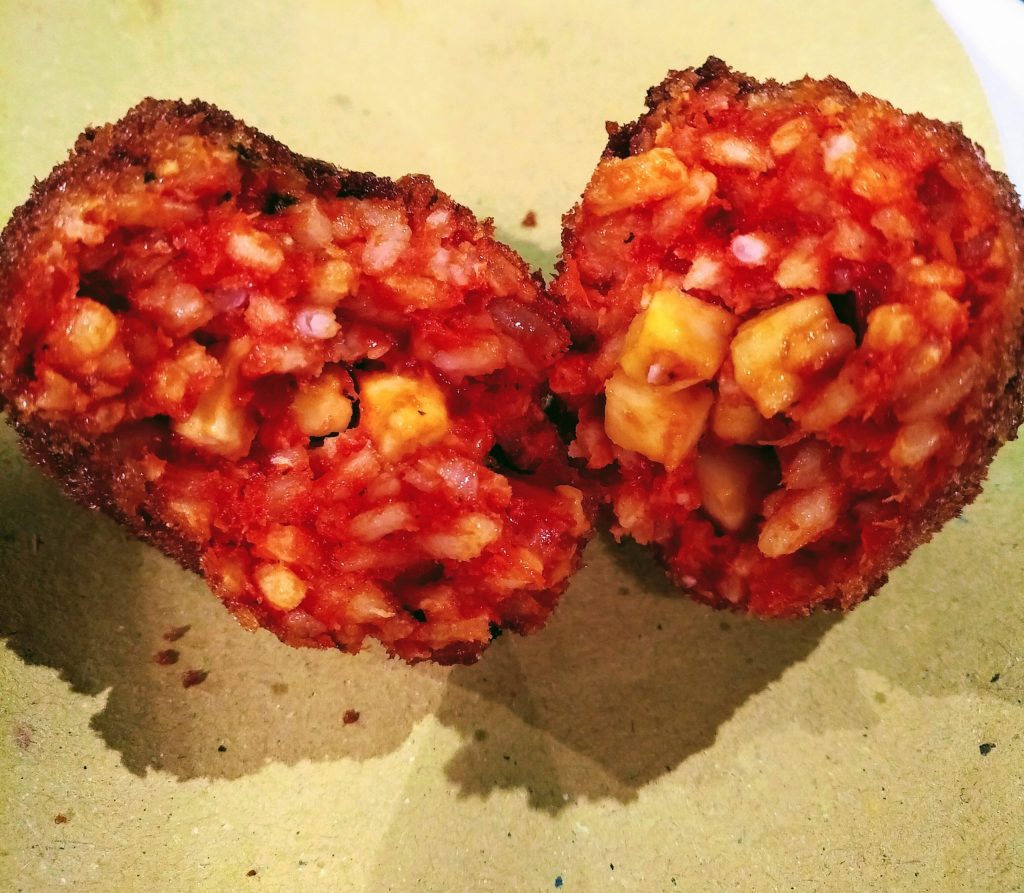
- Difficulty: Very easy
- Cost: Very cheap
- Preparation time: 10 Minutes
- Portions: 12 supplì
- Cooking methods: Frying
- Cuisine: Italian
Ingredients for the traditional Roman supplì recipe
- 7 oz rice (carnaroli, arborio and vialone nano)
- 10.5 oz tomato sauce
- 5.3 oz ground meat
- 5.3 oz mozzarella
- to taste pecorino romano
- 2 eggs
- 1 1/2 glass wine
- to taste salt and pepper
- to taste breadcrumbs
- to taste seed oil
Preparation of the traditional Roman supplì recipe
Prepare the ragù with ground meat, red wine, and tomato sauce: in a saucepan, pour a drizzle of extra virgin olive oil and brown the ground beef for a few minutes, until it changes color and becomes lighter. At this point, deglaze with half a glass of red wine and wait for it to evaporate completely.
Add the tomato sauce, stir, and adjust the salt.
Let it cook for about 30 minutes over low heat.Cook the rice, preferably al dente. Add it to the ragù and add the pecorino.
Pour the cooked rice into a bowl and let it cool.
Beat the eggs, dice the mozzarella, and let the excess water drain.
Take a little rice in one hand, placing some mozzarella in the center. Cover with more rice and close, trying to give it an oval shape.
Pass the supplì through the egg and then the breadcrumbs. The finer the breadcrumbs, the less likely you are to taste the oil inside.
Heat the oil (356°F) and immerse the supplì.
Add 2 pieces at a time and let them cook for 1 minute on each side, turn and let them cook for another 1 minute on each side until golden brown.
Drain them and place them on absorbent paper to dry the cooking oil.
This is the gluten-free one tasted at the restaurant “Il Tulipano nero” during our trip to Rome in September 2022.

Alternatives to the classic:
Supplì can also be baked in the oven on a buttered baking sheet with a drizzle of oil. Bake in a static oven at 356°F for about 20 minutes in the middle part, turning on the grill for the last few minutes.
Like the Sicilian arancini (or arancine depending on the area), sometimes vegetables (especially spinach or chicory), bacon, mushrooms, peas, etc., can be included in the mix.
On the Roman coast, fry shops also offer supplì made with shrimp or seafood risotto. It’s a dish that is hard to find in other regions of Italy.
In recent years, several Roman pizzerias and fry shops have started offering a variety of flavors within the supplì: from gricia (pecorino, pepper, and guanciale) to amatriciana. These new interpretations of the traditional supplì are becoming new typical dishes of Roman cuisine.
As tasted at the restaurant “Pasta in corso”, gluten-free, during my trip to Rome in April 2025.