
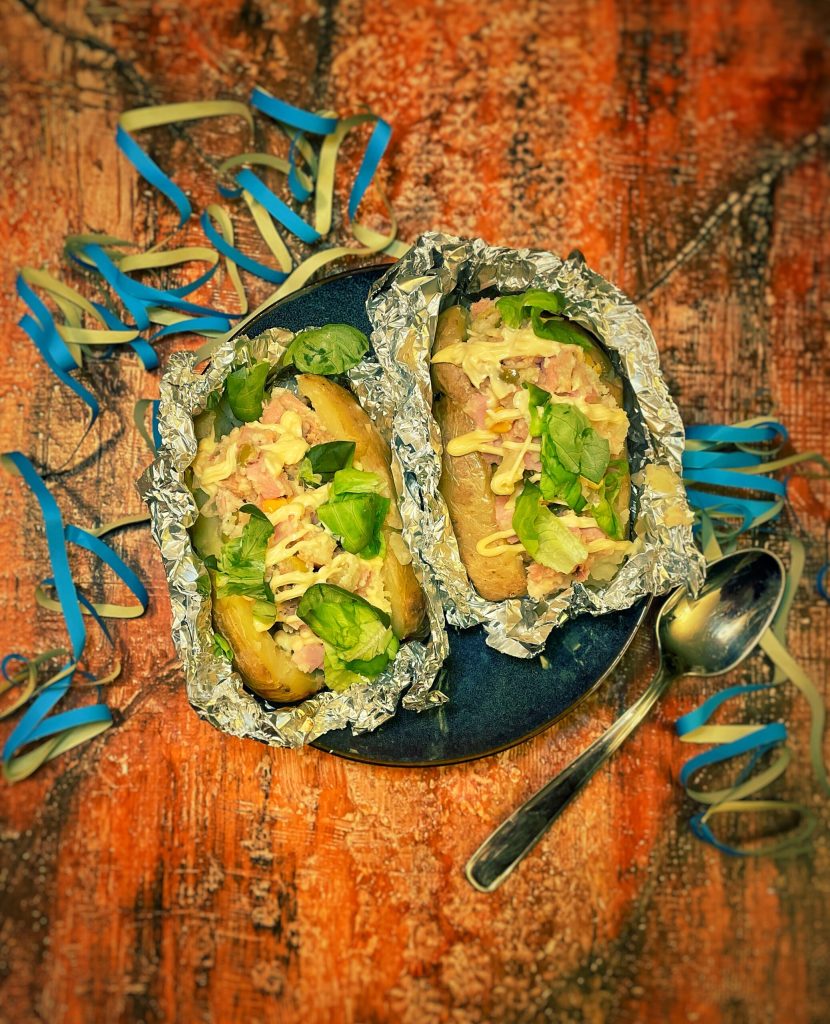
The Carnival of Santa Cruz de Tenerife, considered one of the most lavish in the world after Rio de Janeiro, finds its culinary peak in the Papona (or Stuffed Baked Potato)
During the long nights of parades and dances that enliven the streets of the Canary Islands, the ventorrillos (characteristic mobile kiosks) work tirelessly to churn out this monumental roasted potato, which has become the symbol of the island’s street food.
The connection between this recipe and the festival lies in its convivial and practical nature: a large yellow potato is baked whole in the oven or under the coals, protected by its own skin and an aluminum wrapper.
Once ready, the potato is slit open and its flesh mixed with butter and cheese until it becomes a velvety cream. The traditional version features a rich filling reflecting the Atlantic influences of the archipelago: tuna in oil, diced cooked ham, sweetcorn, and green olives, all bound by a generous dose of mayonnaise and finished with strips of iceberg lettuce.
Served piping hot and eaten with a spoon between one parade float and another, the Papona epitomizes the essence of Carnival: an explosion of flavors, colors, and abundance.
Not to be confused with:
- Difficulty: Easy
- Cost: Economical
- Preparation time: 10 Minutes
- Portions: 2 People
- Cooking methods: Oven, Electric oven
- Cuisine: Spanish
- Seasonality: Carnival, All seasons
Ingredients
- 2 large potatoes (about 14 oz each)
- 2 tbsp butter
- 1/2 cup grated cheese (like Gouda or Edam)
- 3 oz tuna in oil
- 2 oz cooked ham (diced)
- 1/3 cup sweetcorn
- 12 green olives (sliced)
- 4 tbsp mayonnaise
- to taste iceberg lettuce
Steps
Cooking the base: Wash the potatoes thoroughly, leaving the skin on. Prick them with a fork, wrap each in aluminum foil, and bake at 400°F for about 60-70 minutes. They are done when they feel very soft to the touch.
Mashing: Open the foil only on the top part, slit the potato lengthwise without separating the two halves. With a fork, mash the inner flesh, mixing it with the butter, cheese, salt, and pepper, until you get a creamy puree that remains attached to the skin.
Stuffing: Add into the potato the tuna, ham, corn, and olives. Lightly mix the toppings with the hot flesh.
Final touch: Generously cover with mayonnaise and finish with a handful of fresh iceberg lettuce on top. Serve immediately in the original foil with a spoon.
Extra Tip: To make it truly “Canarian,” many also add a bit of finely chopped red onion previously soaked in water and vinegar to make it more digestible.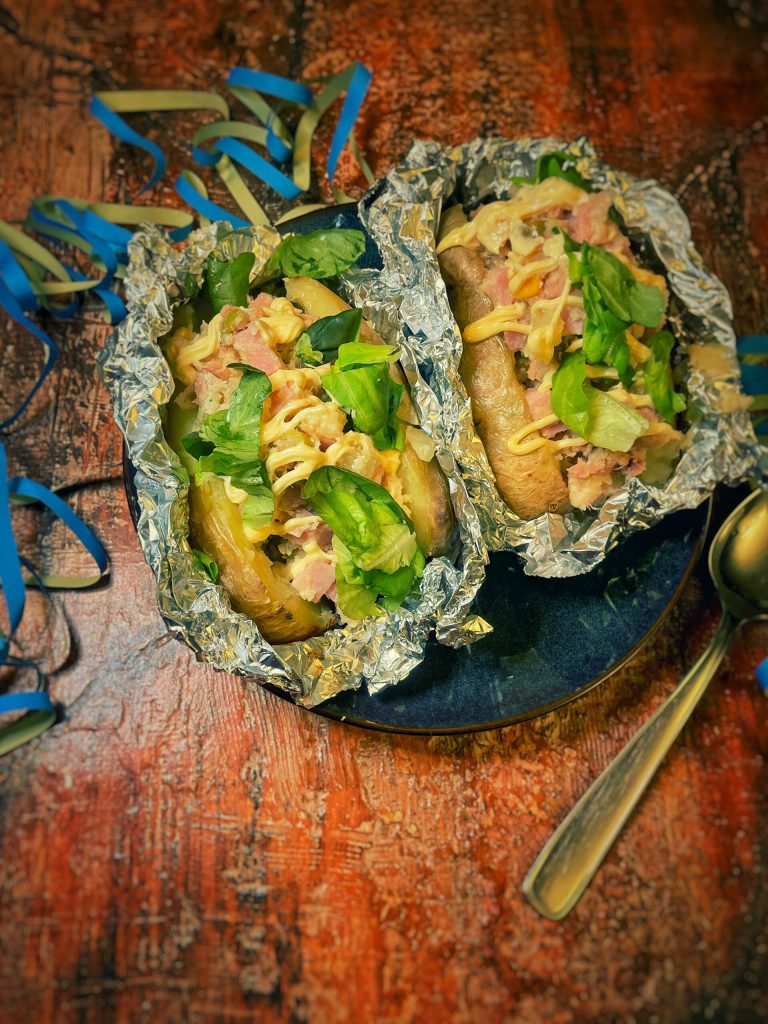
💡 Fun Fact: Papona, Jacket, or Baked Potato? Let’s clarify!
Often confused with each other, these three preparations have very different souls and traditions. Here’s how to distinguish them:
Baked Potato (USA): It is the generic term for a baked potato. Traditionally, it is served simply, with a central slit filled with a dollop of sour cream, chives, and sometimes crispy bacon. It is often a side dish for meat.
Jacket Potato (UK): It is the British version, so-called because the skin becomes a crispy “jacket.” It is cross-cut and filled with iconic ingredients like baked beans or abundant melted Cheddar cheese on top. The flesh inside remains firm.
Papona (Tenerife): It is the “giant” version of the Canary Islands. Unlike the others, the flesh is completely mashed and mixed with butter and cheese until it becomes a creamy puree. The filling is a rich mix of tuna, corn, ham, and olives, all topped with mayonnaise and crunchy salad. It’s a true street food dish.
