
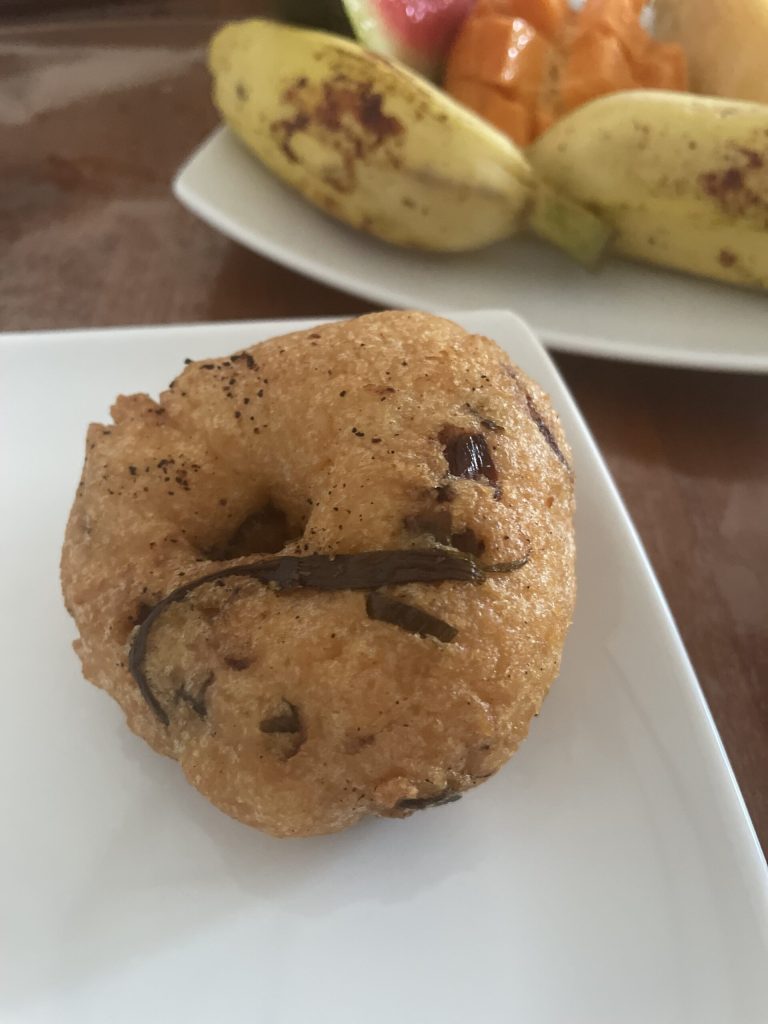
Ulundu Vadai (or Ulundu Wade), a savory fried doughnut very common in Sri Lankan and South Indian cuisine, often served for breakfast or as a snack.
Made with urad dal (skinned black mung beans).
It has the shape of a doughnut.
It’s flavored with black pepper, curry leaves, ginger, onion, green chilies.
Crispy outside, soft inside.
Often served with coconut sambol or chutney.
It is one of the most beloved vegetarian options for traditional Sri Lankan breakfast.
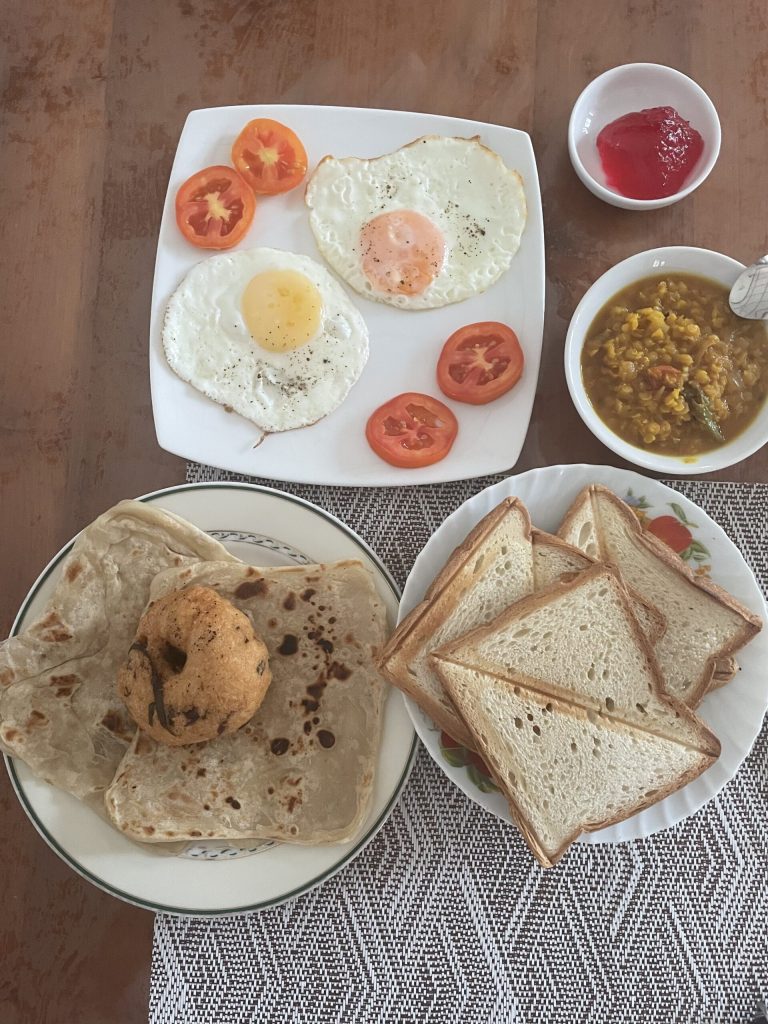
This is what I tasted for breakfast at Sahana Sri Villa in Bentota during my October 2025 stay (see photo below).
It resembles an Indian recipe, from which it actually derives…
- Difficulty: Medium
- Cost: Very Cheap
- Rest time: 5 Hours
- Preparation time: 10 Minutes
- Portions: 4People
- Cooking methods: Frying
- Cuisine: Sinhalese
- Seasonality: All seasons
Ingredients
- 1 cup urad dal (skinned black mung dal)
- 1 green chili
- 1 onion
- 1 teaspoon fresh ginger (grated)
- to taste curry leaves
- to taste black pepper
- to taste salt
- to taste vegetable oil
Steps
Soaking: Soak the urad dal in water for 4-5 hours. Then drain it completely.
Blending: Blend the dal with very little water (only if necessary) until you get a smooth and thick paste. It should be workable by hand.
Seasoning: Add finely chopped onion, chili, ginger, curry leaves, black pepper, salt, and mix well.
Shaping: Grease your hands with some water. Take a small amount of dough, form a ball, flatten it slightly, and make a hole in the center (like a doughnut).
Frying: Fry in hot oil (but not too hot) until golden brown, turning them for even cooking.Place on absorbent paper.
Serve hot, traditionally with coconut sambol, mint or coriander chutney, or even a simple spiced black tea.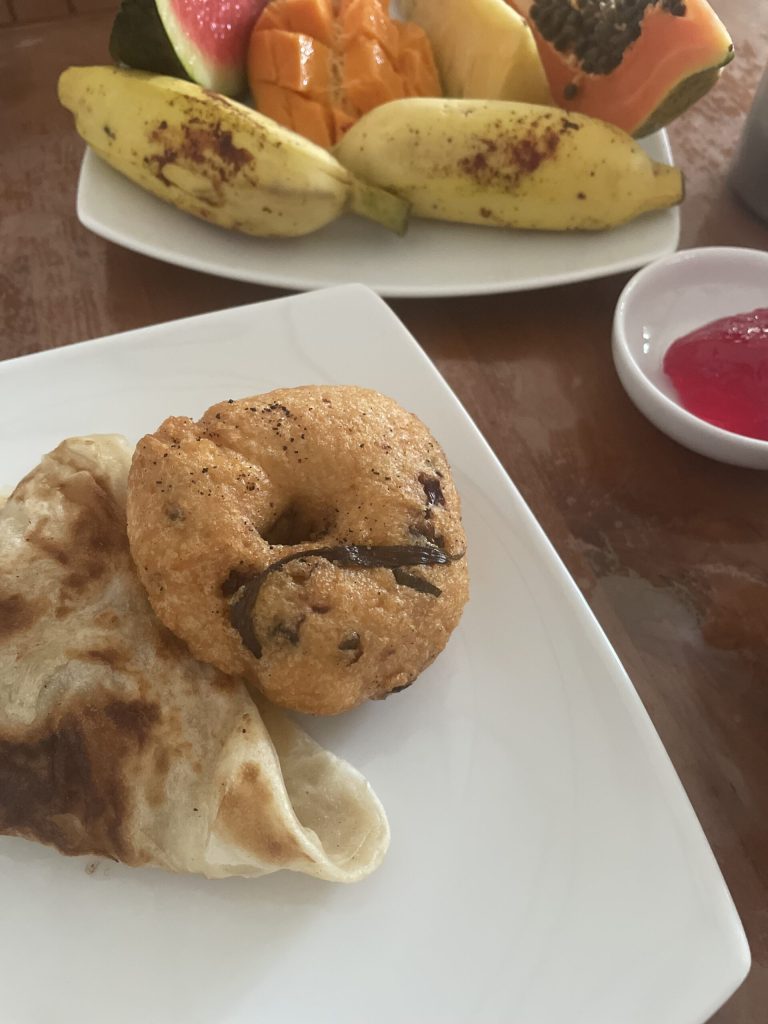
FAQ (Questions and Answers)
What is the difference between Ulundu Vadai and Medu Vada?
Medu vada is almost identical to the Sri Lankan Ulundu Vadai:
Same base ingredients: urad dal, spices, onion, ginger, curry leaves
Same shape: doughnut-shaped, crispy outside, and soft inside
Served for breakfast or as a snack, often accompanied by coconut chutney or sambar.
The difference is more cultural and in the spice profile, but it is practically the Indian version of your Sri Lankan fritter.
Spices and aromas
Ulundu Vadai (Sri Lanka)
Milder spices, often uses black pepper, curry leaves, red onion, ginger.
Less spicy, cleaner profile.
Medu Vada (India)
Sometimes includes asafoetida (hing), green chili, cumin seeds, or mustard seeds.
Generally spicier and more fragrant.
Accompaniments
Ulundu Vadai
Often served alone or with tea, perhaps with a simple coconut chutney.
Medu Vada
Almost always served with sambar (spiced lentil soup) and various chutneys (coconut, mint, tomato…).
Texture
Ulundu Vadai
A bit denser and more compact.
Medu Vada
More airy and fluffy, thanks to extensive dough preparation.
Occasions of use
Sri Lanka: more common for breakfast or Buddhist religious festivals.
South India: breakfast, brunch, or tiffin (afternoon snack), also during weddings.Which came first, Medu vada or Ulundu vadai?
The Indian Medu Vada is considered the original and older compared to the Sri Lankan Ulundu Vadai.
Historical origin:
The Medu Vada comes from South India, particularly Tamil Nadu, with roots dating back over a thousand years in Dravidian culinary texts.
Sri Lanka, especially in the Tamil areas of the north and east, adopted many Indian preparations due to:
Historical migrations of Tamil populations.
Cultural and religious influence (Hinduism and Buddhism).
It is very likely that Ulundu Vadai is a Sri Lankan variant of Medu Vada, adapted over time to local ingredients and tastes.
In summary: born in India → evolved in Sri Lanka.
