Lagàna Greek bread: the ancient Greek bread of “Clean Monday”.
Some recipes are more than food; they are true bridges to distant traditions.
Lagàna, the typical Greek bread, is one of them.
This leavened bread is traditionally eaten on “Clean Monday” (Kathari Deftera), the first Monday of Lent.
It is a symbolic day in which people purify themselves from the excesses of Carnival and prepare spiritually and physically for the journey toward Easter.
According to ancient tradition, lagàna should be prepared like unleavened bread, i.e. without yeast, to respect the ritual fasting.
However, in modern recipes (as I did for this version), a pinch of yeast is added.
Why this choice? Simply because the yeast gives us that soft interior that makes the bread irresistible, while still keeping the outer crust typical of rustic focacce.
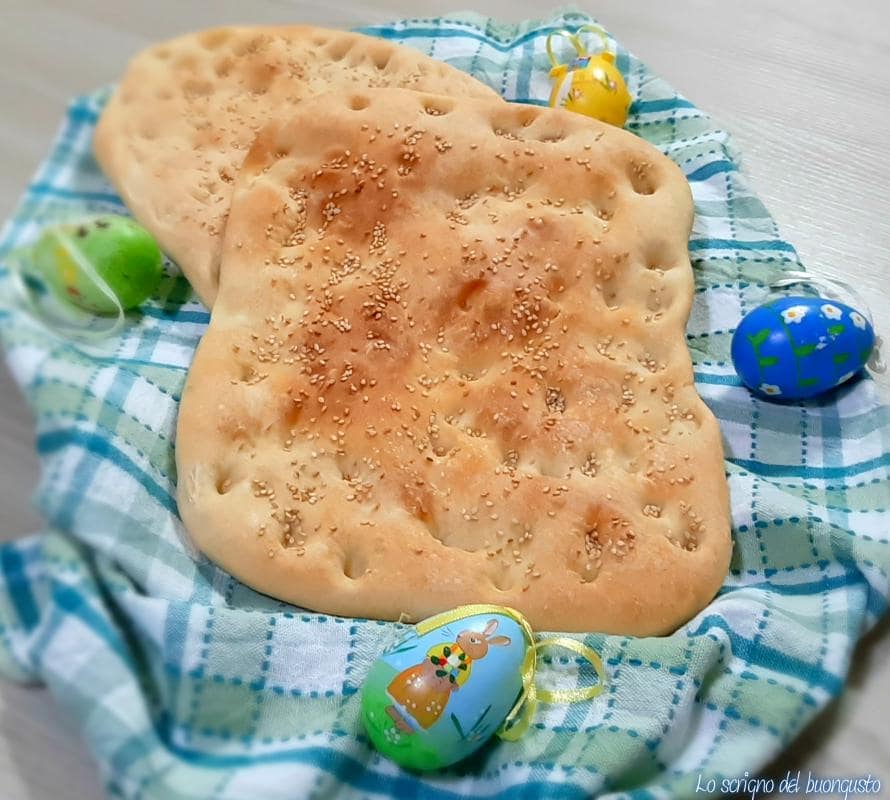
Whether you want to call it bread or focaccia, I assure you it’s absolutely worth it: the result is a baked product that wins you over at first bite.
The preparation of Lagàna is really simple and within everyone’s reach.
The sensation, when you bite into it, is like eating a homemade pizza-bread, but much more aromatic and fragrant.
The true protagonist here is sesame: the seeds generously sprinkled on the surface are not just decoration, they release a toasted and tasty flavor during baking that is the trademark of this Greek bread.
Although created for Lent, Lagàna is perfect to bring to the table all year round, perhaps to accompany dips like hummus or tzatziki, or simply to enrich the bread basket during a dinner with friends.
It’s a recipe that speaks of sharing and good handmade food.
So, let’s get to work right away—follow my steps and prepare to travel with your taste to the coasts of Greece. Enjoy your meal!
Calories approximately 917 per lagàna
- Difficulty: Easy
- Cost: Inexpensive
- Rest time: 3 Hours 30 Minutes
- Preparation time: 20 Minutes
- Cooking time: 20 Minutes
- Portions: 2 lagàna
- Cooking methods: Electric oven
- Cuisine: Greek
- Seasonality: Easter
Ingredients to make Lagàna Greek bread
- 4 cups Manitoba (strong) flour
- 1 1/4 cups Warm water
- 1 packet Active dry yeast (about 2 1/4 tsp / 7 g)
- 1 tbsp Honey
- 2 tsp Salt
- 2 tbsp Extra virgin olive oil
- to taste Sesame seeds
Tools
- Baking trays oven
Preparation of Lagàna Greek bread
In a bowl put the warm water, the dry yeast, the honey, 200 g (about 1 2/3 cups) of Manitoba flour and mix everything well until you obtain a thick, lump-free batter.
Cover with plastic wrap and let rest in a warm place for 40 minutes.
After that time, take the mixture and add the remaining 300 g (about 2 1/3 cups) of Manitoba flour, the extra virgin olive oil and the salt, and mix everything well, then finish kneading on a lightly floured work surface until you obtain a soft, non-sticky dough ball.
Place the dough ball to rise in a bowl covered with plastic wrap in a warm place for 2 hours.
After the time has passed, take the dough out and place it on a work surface, work it just enough to form a ball, then divide it in half and roll each half out to create two rectangular sheets, not too perfect in shape.
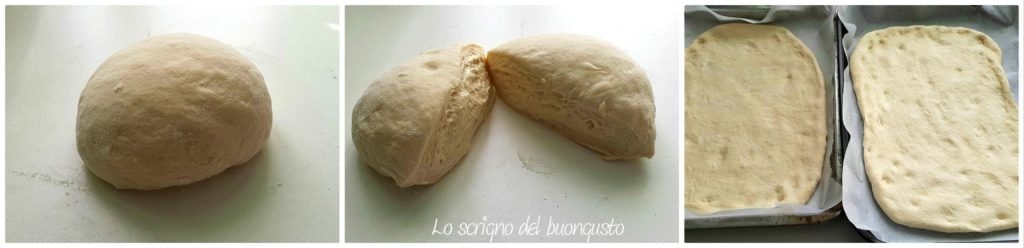
Take two rectangular baking trays, line them with parchment paper and transfer the two focacce to the trays, shaping them a little with your hands as in the photo.
Let them rise again covered (optionally with a cloth) for 1 hour, then take the risen focacce, wet your hands and dimple the surface with your fingers to slightly moisten it, then sprinkle with sesame seeds.
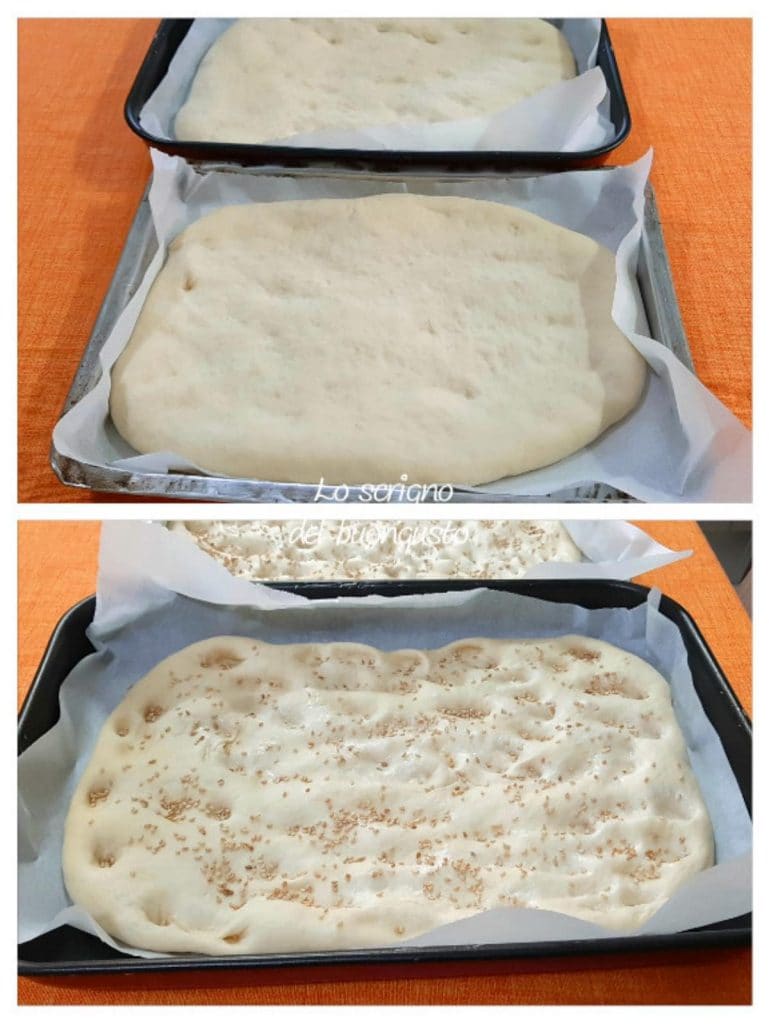
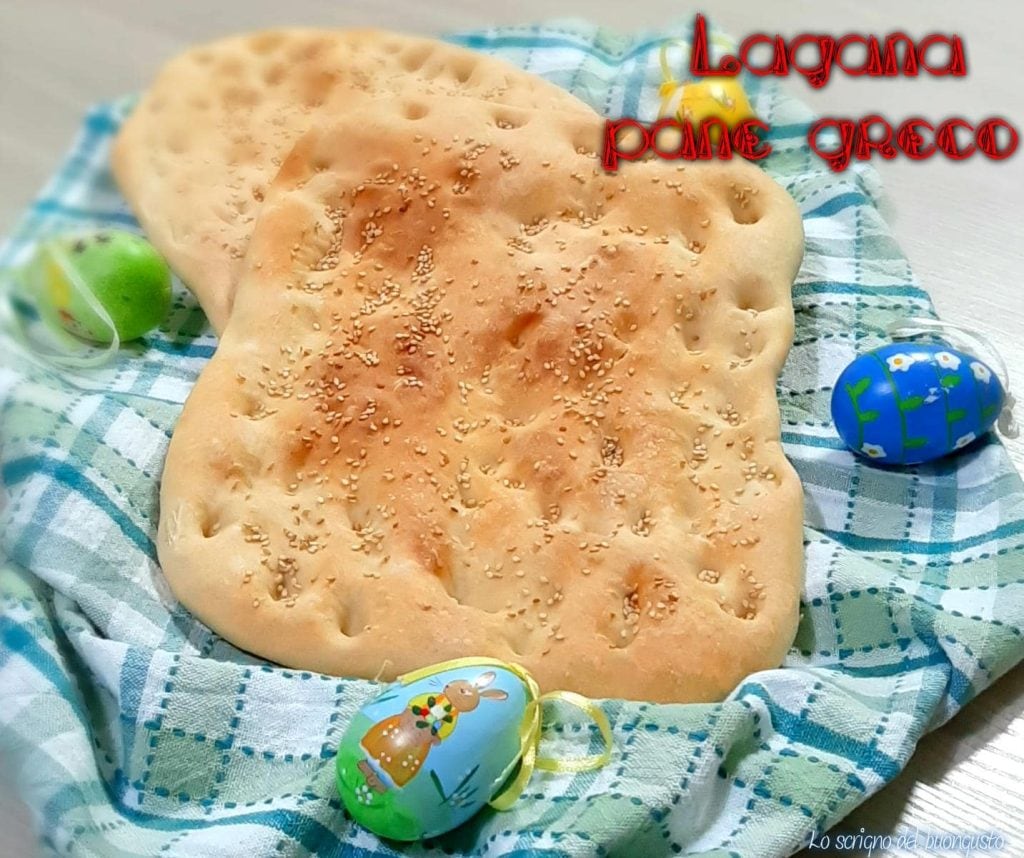
A small tip: for an authentic Lagàna, before baking, press with your fingers over the entire surface to create the typical deep ‘holes’, just like you do with focaccia.
This will help the bread cook evenly and better hold the sesame seeds!