
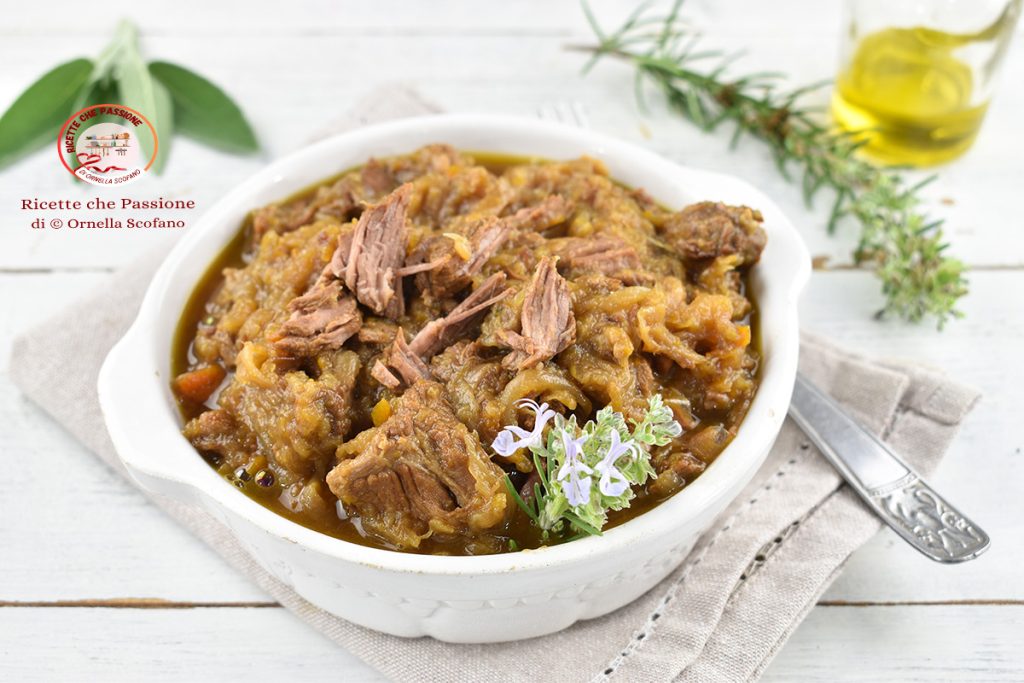
Neapolitan Genovese, a delicious onion-based sauce with beef typical of Neapolitan cuisine. The name “Genovese” shouldn’t confuse us, although a connection with Genoa probably exists. There are various legends and theories; the most likely is that in the past Genoese cooks worked in the many inns scattered around early Naples, probably preparing a dish similar to this one (tocco), and Neapolitans, smelling it from afar, simply called it “Genovese,” referring to their cuisine. Over the centuries it became a hallmark of Neapolitan cooking: saying “Genovese” evokes a delightful savory stew, essentially an onion jam slowly cooked with beef. Prefer cuts with lots of connective tissue such as beef shank, eye round, brisket, or shoulder, which with long, slow cooking release their flavor and become meltingly tender. This sauce is traditionally served with pasta — hand-broken ziti are classic — a format my father adored (I prefer another), and Genovese is also delicious on a slice of rustic bread. Let’s see how to prepare it.
- Difficulty: Very easy
- Cost: Medium
- Preparation time: 15 Minutes
- Cooking time: 5 Hours
- Portions: 4
- Cooking methods: Slow cooking
- Cuisine: Italian
- Seasonality: All seasons
Ingredients for Neapolitan Genovese
- 3 lb 5 oz golden onions
- 1 lb 12 oz beef shank (or other tough cut such as chuck, brisket, or eye round)
- 1/2 carrot
- 1/2 stalk celery
- to taste extra virgin olive oil
- to taste salt
- to taste pepper
- as needed white wine
Tools for Neapolitan Genovese
- 1 Cutting board
- 1 Knife
- 1 Pot
- 1 Spatula
- 1 Peeler
Preparation steps for Neapolitan Genovese
Peel the carrot and, together with the washed celery, finely chop them on the cutting board. Put them in the pot with a little extra virgin olive oil. Then cut the meat into pieces about 1 5/8 in x 1 5/8 in (approximately 4 cm x 4 cm) and brown over low heat, taking care not to burn the vegetables.
Slice the onions thinly and add them to the pot. Yes, it may look like an excessive quantity, but this abundance of onions is essential for the success of the dish. Use golden onions (Rame di Montoro are ideal); if unavailable, Tropea red onions also work well.
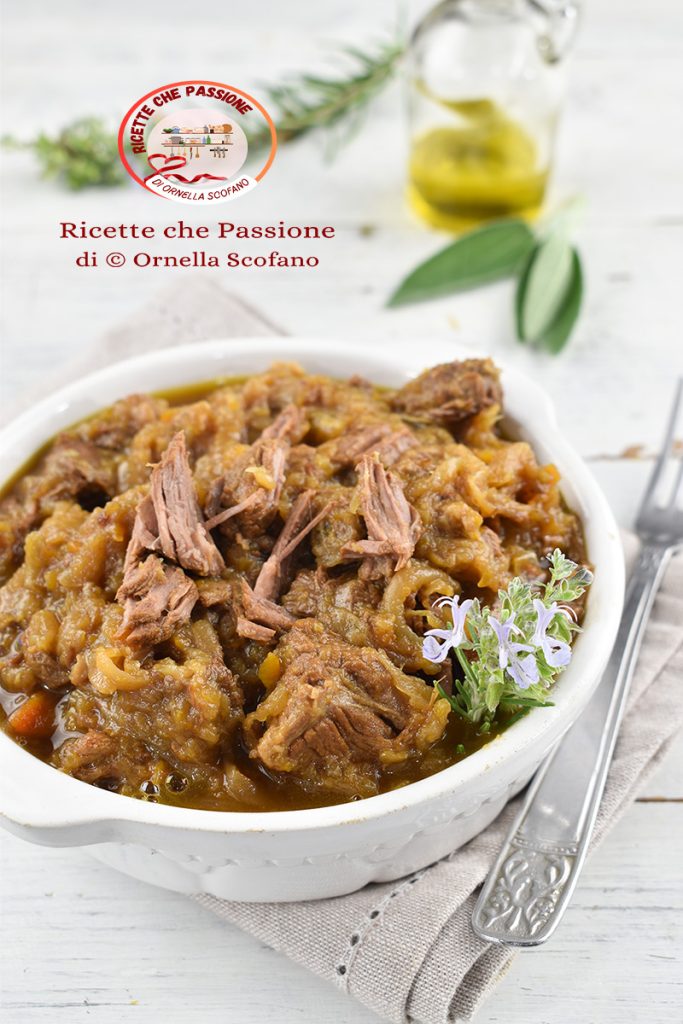
Cover and cook, adding a little salt. Let the meat cook in the liquid released by the onions. The cooking time is about 5–7 hours. If halfway through the cooking there is too little liquid, add a little white wine and continue cooking until the meat is extremely tender and falls apart and the onions have turned into a creamy jam. At the end, the wine must be completely evaporated, so finish the last part of the cooking over higher heat without a lid. Adjust salt and pepper at the end.
This sauce is excellent for dressing pasta, but it’s also a delight on a slice of rustic bread.
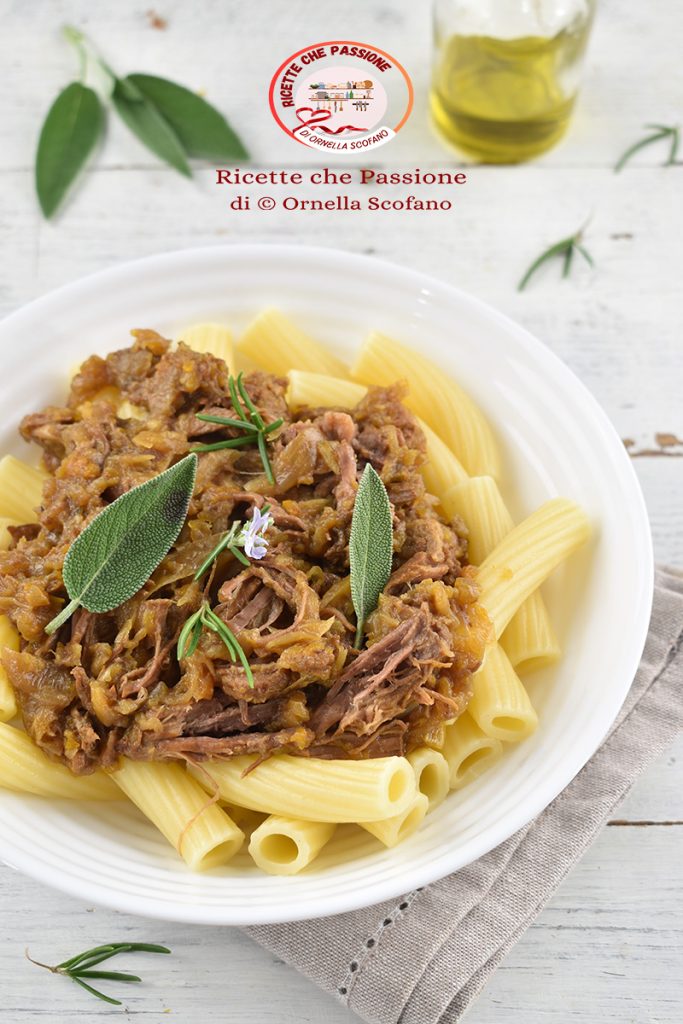
If desired, you can add herbs such as parsley and bay leaf, or a little rosemary or sage if you prefer. A sprinkle of Parmesan on the pasta will complete the dish.
