
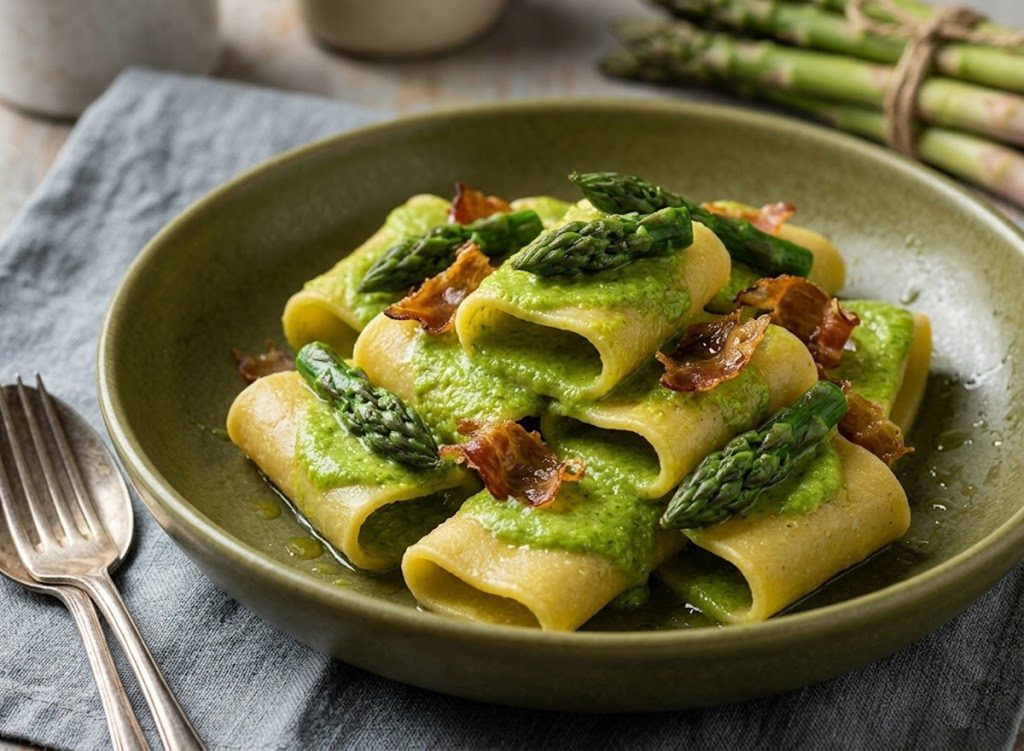
Pasta with asparagus cream and pancetta: an easy, quick spring recipe
There is something irresistible in the meeting between the delicate sweetness of asparagus and the savory push that only pancetta can give. Yet the risk is always around the corner: how many times have we ended up with a pasta that is “loose” or, worse, with those fibrous, woody stem pieces that ruin the pleasure of the bite?
The main problem for those who cook asparagus is often the fear of ruining its bright color or not knowing how to handle the toughest part of the stem. I confess that before I learned how to create a truly velvety base, I used to be satisfied with quickly tossing them in a pan, but the result never managed to “embrace” the paccheri as I dreamed.
To solve this annoyance and bring to the table a first course that really impresses, the secret is to play with textures. In this recipe I’ll show you how to transform the stems into a silky, lively cream, leaving the tips and the pancetta to give you that crunch that makes every bite unforgettable.
We will use the starch in the cooking water as a natural binder, obtaining incredible creaminess without adding a drop of cream or unnecessary fats. Get ready to discover how well-roasted pancetta and tender-but-firm tips transform simple paccheri into a restaurant-worthy dish, made with all the love of home.
It’s spring on the plate, and it’s better than ever!
Paccheri with asparagus cream: how to get a silky sauce without cream
- Creamy asparagus risotto: the perfect and easy recipe
- Pasta Primavera with asparagus, snow peas and peas: the perfect green mix
- Puff pastry baskets with asparagus and bacon: the trick for a crisp base that doesn't go soggy
- Asparagus with speck in a pan: the secret to keeping them crisp and not limp
- Tall and fluffy asparagus frittata: grandma's recipe
- Difficulty: Very easy
- Cost: Budget-friendly
- Preparation time: 20 Minutes
- Cooking time: 25 Minutes
- Portions: 4
- Cooking methods: Stovetop
- Cuisine: Italian
Ingredients for Pasta with asparagus cream and pancetta
- 12 oz paccheri (or other short pasta)
- 1 bunch asparagus
- 3 oz pancetta (streaky) (sliced thinly)
- 1/2 cup Parmigiano Reggiano, grated
- 1 clove garlic
- as needed extra virgin olive oil
- 1 pinch black pepper (freshly ground)
- to taste fine salt
Tools
- Kitchen scale
- Frying pan
- Immersion blender
- Saucepan
Paccheri with asparagus cream: how to get a silky sauce without cream
Start by cleaning the asparagus: remove the woody ends and slice the stems into even rounds. Keep the tips whole (about 1 5/8–2 in): they’ll be the visual jewel of the dish. In a pan, heat the oil with the crushed garlic. When it’s golden, add the sliced stems and the tips. Season with salt and pepper and deglaze with a splash of hot water. Cover and let simmer for about 8–10 minutes: they should become tender but retain a vibrant green.
Once ready, separate the tips and set them aside. Transfer the sliced stems to a blender along with the Parmigiano Reggiano and a ladle of the pasta cooking water (which you will have started). Blend at high speed until you obtain a velvety, thick purée. Grandma’s trick: If the cream seems too fibrous, pass it through a fine-mesh sieve. The result should be a green silk.
While the pasta cooks, heat a nonstick pan without adding any extra fat. Lay in the pancetta slices and let them sizzle until the fat turns translucent and the meat is browned and crispy. Drain them on paper towels and, only once cold, roughly chop them with a knife to preserve their crispness.
Drain the paccheri very al dente, reserving some cooking water. Transfer the pasta to the pan with the asparagus cream. Toss over medium heat, adding the cooking water little by little: the starch will bind with the cream creating an enveloping emulsion that will coat the paccheri both inside and out.
Turn off the heat. Add the asparagus tips you kept aside and a shower of crispy pancetta. Finish with a generous grind of fresh black pepper and a final drizzle of extra virgin olive oil at the end.
Notes on ingredients and substitutions
The Paccheri: Their wide shape is perfect for holding the cream inside, creating a “surprise effect” in every bite.
The Pancetta: Choose streaky pancetta for a more pronounced crispness; if you prefer a smokier note, you can use speck cut into matchsticks.
Asparagus: Make sure the tips are tightly closed and the stems slightly springy—signs of peak freshness.
Tips
Pancetta temperature: Do not chop it while hot, or it will lose part of its crunch and become chewy. Wait until it has “shrunk” and become rigid as it cools.
Bright green: For magazine-worthy color, you can blanch the asparagus for 2 minutes and plunge them into ice water before finishing them in the pan. This thermal shock fixes the chlorophyll.
Finishing off the heat: Add the Parmesan or a drizzle of extra virgin oil only at the end, away from the heat, to keep the cream glossy and not “stringy”.
Storage
I recommend consuming the paccheri immediately: the contrast between the silky cream and the crispy pancetta is the soul of the dish. If there are leftovers, store them in the fridge for 1 day, but when reheating add a splash of water to revive the emulsion.
FAQ (Questions and Answers)
Can I use guanciale instead of pancetta?
Certainly, you’ll get a fattier, more savory flavor, similar to an “asparagus carbonara.” Remember to drain excess fat well.
The cream is too runny, how to fix it?
Continue tossing the pasta in the pan over high heat: the starch from the paccheri will quickly thicken the sauce. If necessary, add another tablespoon of Parmesan.
Can I prepare the cream in advance?
Yes, you can prepare it the day before and keep it in the fridge. At use, heat it directly with the pasta cooking water.
