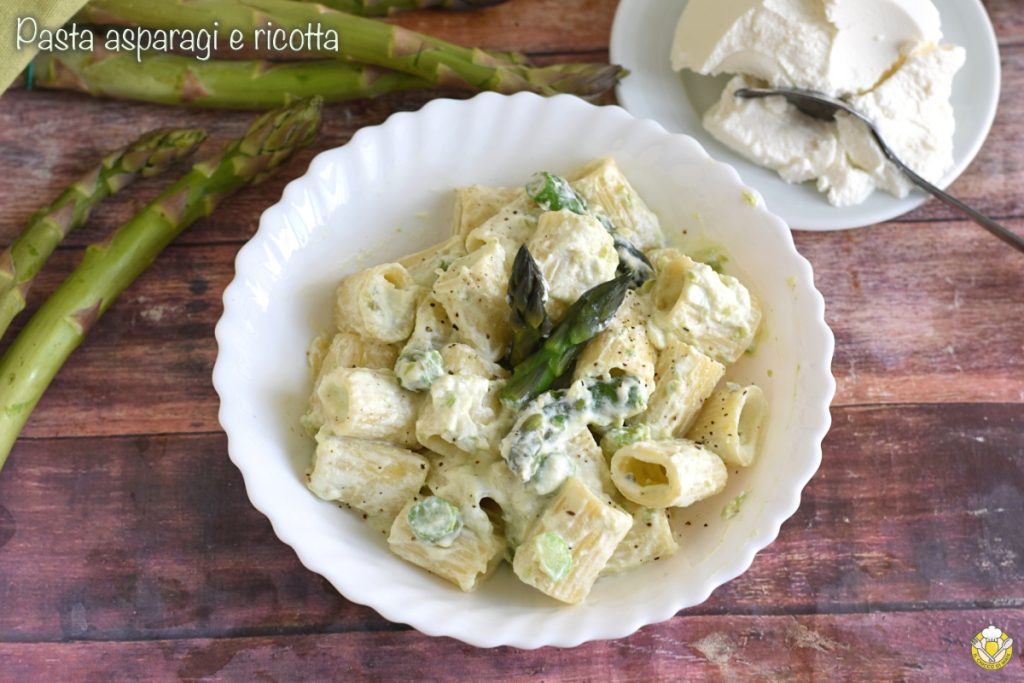
Creamy, light and delicate, asparagus and ricotta pasta is a perfect spring first course, ideal for bringing a simple yet flavourful recipe to the table. Ready in a few steps, this quick spring pasta highlights seasonal asparagus: the stems are partly blended to obtain a smooth asparagus and ricotta cream, and partly, together with the tips, added at the finishing stage, giving body and a more intense taste to the dish. The result is a creamy asparagus pasta, balanced and comforting.
To add a bit more character, I added some grated Parmigiano and Pecorino, but you can adjust the proportions or use just one, according to your taste. Among the many asparagus recipes you can prepare in spring – like asparagus and speck lasagna, gnocchi with asparagus cream and gorgonzola or asparagus risotto – asparagus and ricotta pasta is certainly one of the easiest and quickest, perfect for a light, vegetarian, seasonal lunch.
You might also be interested in:
- Difficulty: Very easy
- Cost: Inexpensive
- Preparation time: 10 Minutes
- Cooking time: 10 Minutes
- Portions: 4 Servings
- Cooking methods: Stovetop
- Cuisine: Italian
- Seasonality: Spring
- Energy 318.50 (Kcal)
- Carbohydrates 33.06 (g) of which sugars 4.20 (g)
- Proteins 14.63 (g)
- Fat 14.70 (g) of which saturated 6.92 (g)of which unsaturated 3.10 (g)
- Fibers 3.36 (g)
- Sodium 521.10 (mg)
Indicative values for a portion of 300 g processed in an automated way starting from the nutritional information available on the CREA* and FoodData Central** databases. It is not food and / or nutritional advice.
* CREATES Food and Nutrition Research Center: https://www.crea.gov.it/alimenti-e-nutrizione https://www.alimentinutrizione.it ** U.S. Department of Agriculture, Agricultural Research Service. FoodData Central, 2019. https://fdc.nal.usda.gov
Ingredients for asparagus and ricotta pasta
- 13 oz pasta (for me, gluten-free)
- 14 oz asparagus
- 1 cup cow's milk ricotta
- 3 tbsp Parmigiano Reggiano PDO (grated)
- 1 tbsp Pecorino Romano (grated)
- 2 tbsp extra virgin olive oil
- to taste coarse salt
- to taste pepper
Tools
- 1 Cutting board
- 1 Knife
- 1 Pot
- 1 Slotted ladle slotted
- 1 Chopper
How to prepare asparagus and ricotta pasta
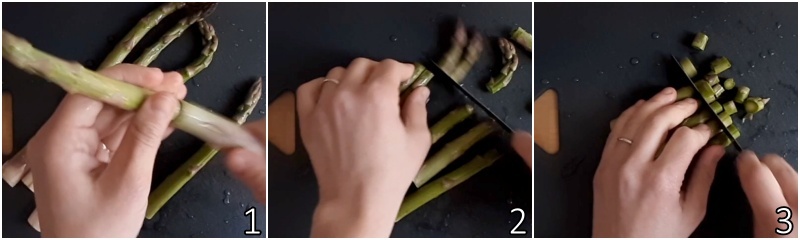
To prepare asparagus and ricotta pasta, start by cleaning the asparagus. Remove the tough, fibrous end of the stem at the point where it breaks (1). Rinse them well under running water, then cut off the tips (2) and set them aside. Cut the stems into pieces (3).
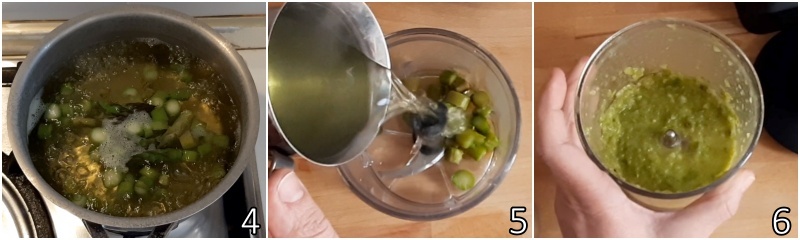
Place a large pot on the stove – the same one you’ll use to cook the pasta – filled with lightly salted water. When it boils, add the asparagus stems and cook them for 8 minutes. In the last 3 minutes of cooking, also add the tips (4). Drain the asparagus when they are tender but not falling apart, using a slotted ladle so you keep the cooking water. Put half of the stems in a chopper with 2 tablespoons of oil and a little of their cooking water (5). Blend until you get a fairly smooth cream (6).
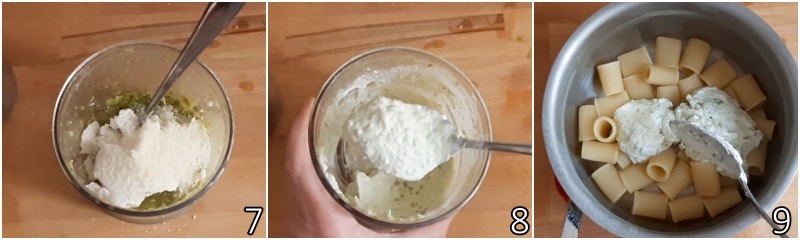
Then add the ricotta – you can use cow’s milk ricotta for a milder, lighter dish, or sheep’s or buffalo ricotta for a stronger flavor but higher fat content – the Parmigiano and the Pecorino (7). Stir with a spoon, adding a little of the asparagus water if the cream is too thick (8). Cook the pasta in the same water you boiled the asparagus in, drain it al dente keeping a little of the cooking water, and transfer it to a bowl with the asparagus and ricotta cream (9).
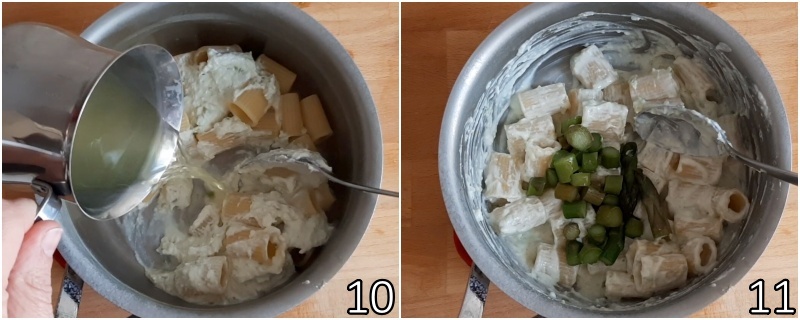
Briefly toss it off the heat, adding a little pasta cooking water if the sauce is too thick (10). Then add the asparagus tips and the reserved stems (11) and mix again.
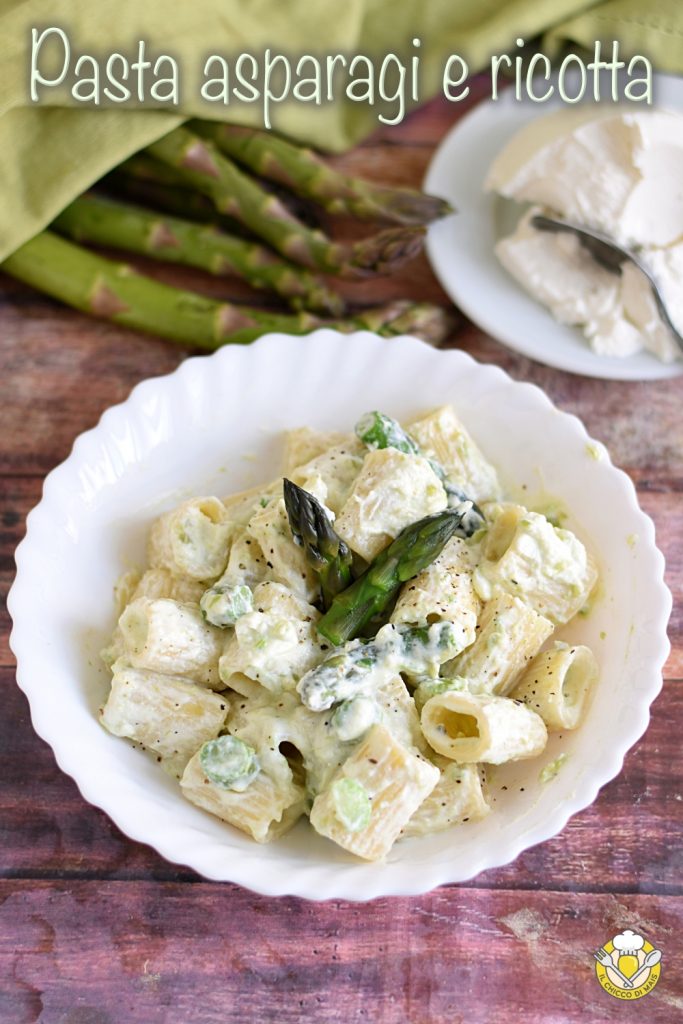
Serve the asparagus and ricotta pasta immediately, garnished with a grind of pepper and, if you like, a little grated Parmigiano or Pecorino.
Storage
The asparagus and ricotta cream can be stored easily in the refrigerator in an airtight container for 2 days. Before using, stir it and add a tablespoon of hot water or milk to make it creamy again.
Tips for perfect asparagus and ricotta pasta
To get a really creamy and tasty asparagus and ricotta pasta, here are some useful tips:
• Don’t discard the cooking water: it’s essential to adjust the sauce consistency and to finish the pasta
• Cook the asparagus to the right point: they should be tender but still green and bright, for better taste and color
• Finish off the pasta off the heat: this prevents the ricotta from separating and keeps a creamy texture
Variations
Asparagus and ricotta pasta is a versatile recipe you can personalize in many ways while keeping it a simple and tasty spring first course:
• With pancetta or speck: for a tastier, less vegetarian version
• With lemon: add grated zest for a fresh, fragrant touch
• With nuts: chopped walnuts or almonds add crunch and contrast
• With other pasta shapes: works very well with short pasta such as mezze maniche, penne, fusilli or farfalle, and also with tagliatelle or trofie
Mistakes to avoid with asparagus and ricotta pasta
To achieve a creamy, well-balanced asparagus and ricotta pasta, it’s important to avoid some common mistakes that can compromise the final result:
Not blending the stems enough
If the asparagus cream is grainy, the pasta will lose its velvety texture. Blend the stems well with oil and a little cooking water until smooth.
Adding too much water at once
Cooking water is essential for emulsifying, but add it little by little: too much will make the asparagus and ricotta sauce too runny.
Using too watery ricotta
A ricotta that hasn’t been drained can compromise creaminess. If necessary, let it drain before using to get the right creamy consistency.
Overcooking the asparagus
Overcooked asparagus become limp and lose flavor and color. They should be tender but still firm, especially the tips.
Skipping the correct finishing
Finishing the pasta on high heat can separate the ricotta. Better to do it off the heat, adding a little cooking water to combine everything.
Not salting properly
The asparagus and ricotta cream is delicate: if the pasta water is under-salted, the dish will taste flat even with the cheeses.
FAQ (Questions & Answers)
How do I prevent the asparagus and ricotta cream from being too runny?
Drain the ricotta well and add the cooking water little by little: that’s the trick to get perfectly creamy asparagus pasta.
Can I prepare the asparagus sauce in advance?
Yes, the asparagus and ricotta cream can be prepared in advance and stored in the refrigerator: it’s ideal to speed up making this asparagus first course.
Which ricotta should I use for asparagus and ricotta pasta?
I used cow’s milk ricotta which is milder and lighter, while sheep or buffalo ricotta have a stronger flavor and are more caloric.
Which pasta shape should I choose?
For this recipe, short shapes like mezze maniche, penne, fusilli or farfalle are ideal because they hold the asparagus cream well.
Can it be made without a blender?
Yes, but the texture will be less creamy: for truly creamy asparagus pasta, blending the stems is recommended.