
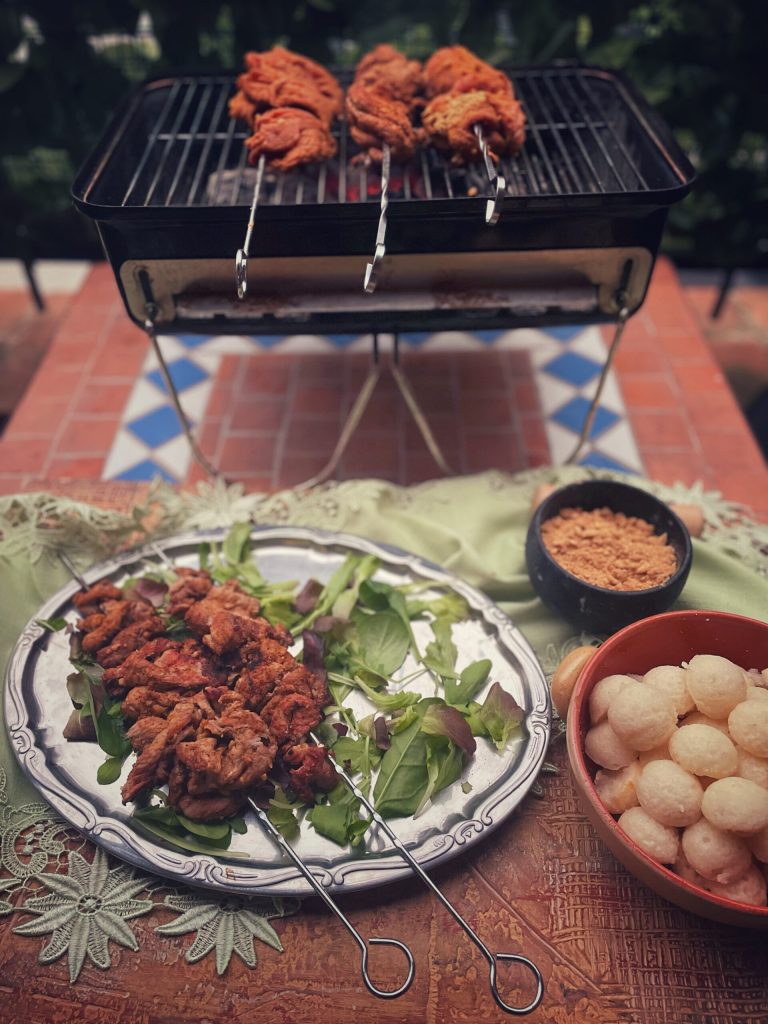
Suya is not simply a meat skewer; it is a cultural institution.
Originating with the Hausa people in northern Nigeria, this dish has conquered all of West Africa and become an emblem of late-night street food.
Its particularity lies in the perfect balance between the
Traditionally prepared by the Mallams (expert butchers and grillers), Suya is cooked on large outdoor grills.
The meat, cut into very thin slices (3/4 mm), is marinated in Yaji — a spice mix — and then grilled over an open flame. Rump or sirloin is usually used.
In Nigeria, Suya is typically served wrapped in foil or newspaper, accompanied by slices of raw red onion and tomatoes, which add a needed freshness to balance the intensity of the chili.
The ingredient that sets Suya apart from any other spiced skewer is Kuli-Kuli.
Traditionally, peanuts are roasted, ground into a dense paste and then literally ‘squeezed’ to extract their oil. What remains is a solid, dry, flavor-rich mass that is then pulverized.
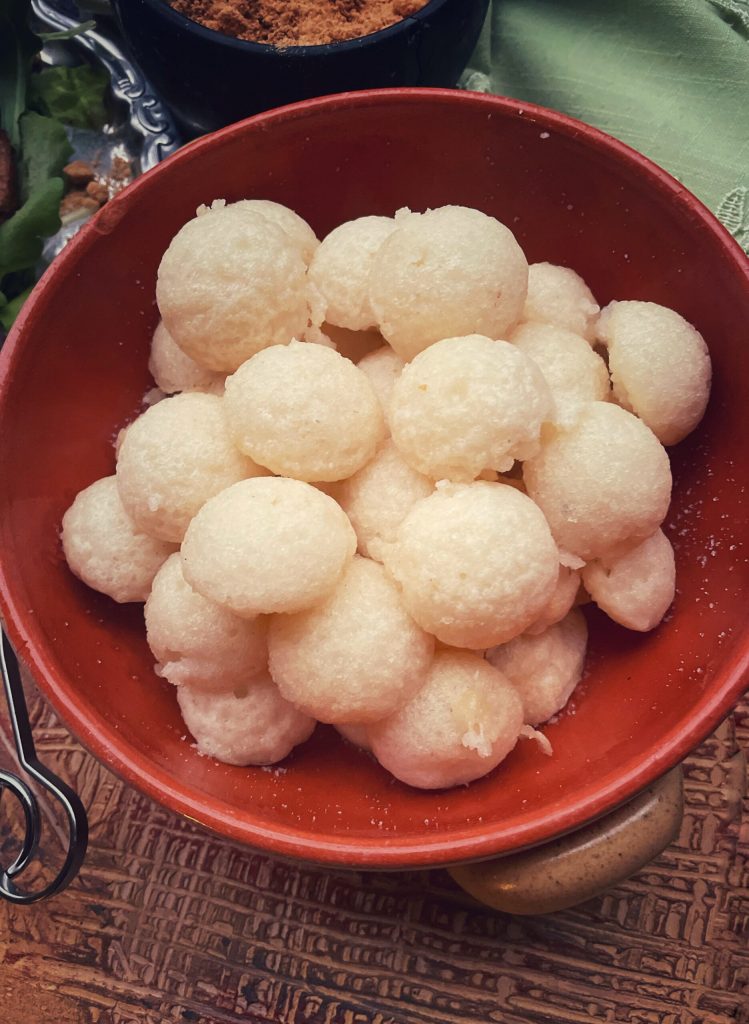
And for a complete experience, Suya should be accompanied by Masa (or Waina), delightful fermented rice flatbreads. Their delicate sweetness and spongy texture are the ideal complement to the savory spice of the meat, making the meal balanced and nuanced.
- Difficulty: Easy
- Cost: Medium
- Preparation time: 10 Minutes
- Cooking time: 8 Minutes
- Portions: 6 Pieces
- Cooking methods: Grill
- Cuisine: African
- Seasonality: All seasons
Ingredients
- 1 cup Kuli-Kuli (or 150 g roasted unsalted peanuts (~5.3 oz))
- 3 tbsp ginger
- 2 tbsp cayenne pepper
- 1.5 tbsp sweet paprika
- 2 tsp garlic powder
- 2 tsp onion powder
- 2 tsp Selim pepper
- 1.8 lb beef, very thinly sliced (rump or sirloin)
- as needed peanut oil
Tools
For Suya prepared with steel skewers (called Tsirai in the Hausa tradition), the recommended length is 12 in. This size allows you to thread several strips of meat.
- Skewers steel
Steps
Kuli-Kuli: if you don’t have access to the original Nigerian product, here’s how to make it:
Roasting and Grinding: Take 1 cup (150 g / ~5.3 oz) of roasted unsalted peanuts. Blend until you get an almost buttery paste.
Degreasing (The key step): Wrap the paste in a sturdy, clean cotton cloth and squeeze extremely hard to extract as much oil as possible. Alternatively, spread the paste between several layers of paper towels and press it with a weight for an hour.
Drying: Once the paste becomes drier and more crumbly, place it in the oven at 212°F for about 15–20 minutes. It should dry without burning.
Grinding: Once cooled, briefly blend again or crumble with a mortar and pestle. You’ll obtain a coarse, dry peanut flour: the perfect base for your Yaji.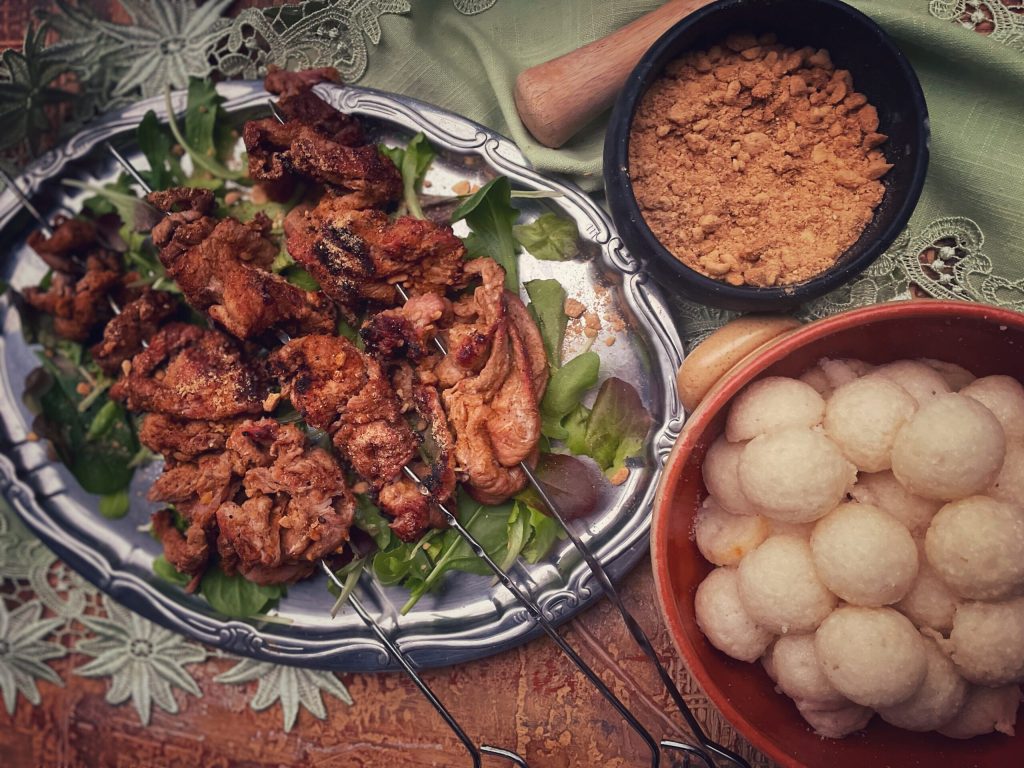
Preparing the skewers: If you use wooden skewers, soak them in water for 1 hour.
Dry marinade: Mix all the Yaji powders well.
Brush each slice of meat with peanut oil.
Coating: Dredge the meat in the spice mix, pressing firmly with your hands so the powder penetrates the fibers.
Skewering: Thread the meat onto the skewers compactly (accordion-style). Let rest 20–30 minutes at room temperature so the mix adheres.
Once threaded accordion-style, press the meat firmly with your hands if using steel skewers so the Yaji forms a compact crust that won’t fall off during cooking.
Grilling: Cook over hot coals (or a very hot griddle) for 3–4 minutes per side. Do not overcook: the meat should remain juicy inside and crisp outside.
Finishing touch: Right off the heat, dust with more fresh Yaji.
Serve with plenty of raw red onion sliced thickly and fresh tomatoes and/or masa.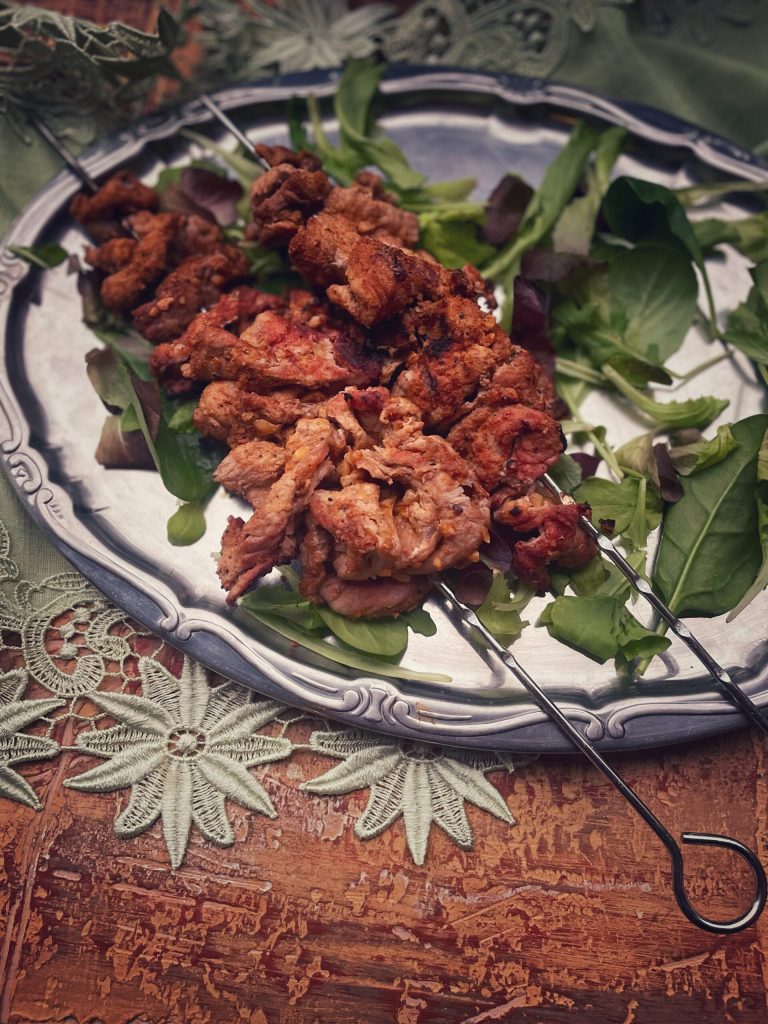
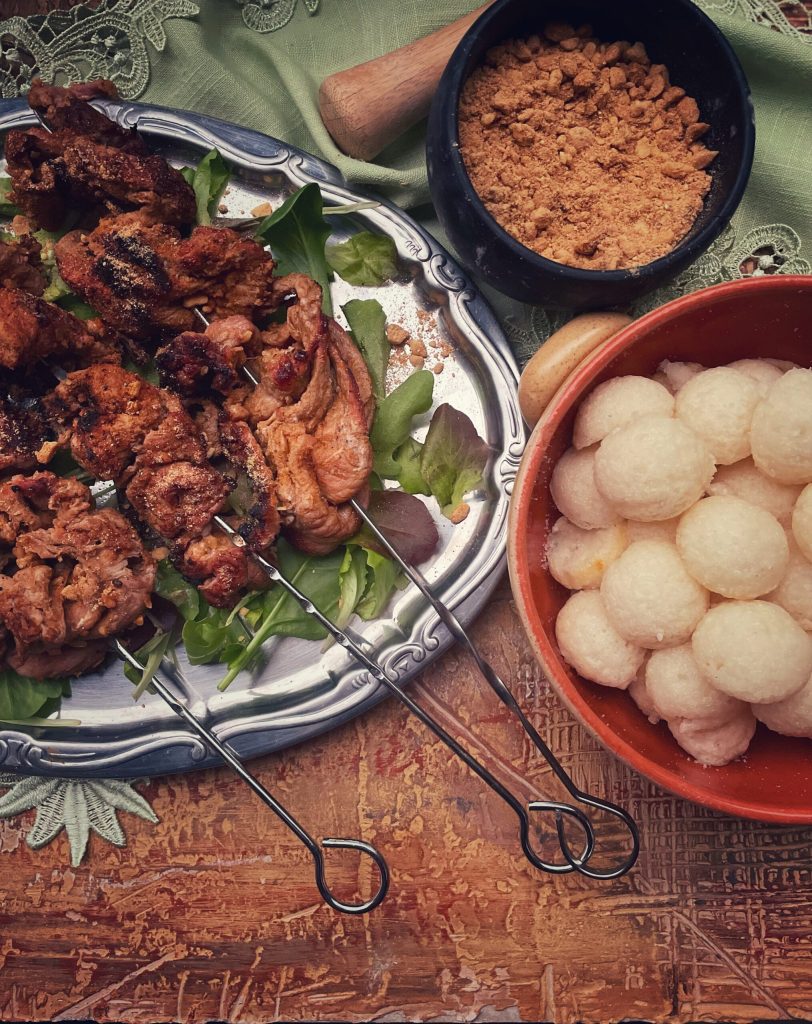
Besides classic beef, there are versions with offal (like liver or kidney) or chicken.
In Ghana, a very similar variant is known as Kyinkyinga.
There are modern versions that use Suya rub to season Portobello mushrooms or other vegetarian alternatives.
Masa recipe:
The traditional flatbread that accompanies Suya is called Masa (or Waina) and is gluten-free.
It is typical of Northern Nigeria (Hausa tradition) and is made from fermented rice. It has a crisp exterior and a soft, almost spongy interior.
Here is the correct recipe for about 15–20 pancakes:
Ingredients
Raw short-grain rice (e.g., Arborio): 2 cups (400 g — do not use parboiled rice)
Cooked rice: 2/3 cup (about 100 g)
Active dry yeast: 1 packet (7 g / 2 1/4 tsp)
Sugar: 2 tablespoons
Warm water: about 1 to 1 1/4 cups (250–300 ml)
Small onion: 1/2 (finely chopped)
Salt: 1/2 teaspoon
Baking soda: 1/2 teaspoon
Peanut oil
Preparation
Soaking: Wash the raw rice and soak it in water for at least 8 hours (or overnight). Drain well.
Blending: In a blender, combine the soaked rice, the cooked rice, the sugar, the yeast and half of the water. Blend until you get a smooth, thick batter. If it is too thick, add the remaining water.
Fermentation: Pour the mixture into a large bowl, cover with a cloth, and let it rise in a warm place for 2–4 hours. It should double and show many bubbles on the surface.
Seasoning: Add salt, the finely chopped onion and the baking soda to the risen batter. Mix gently.
Cooking: Traditionally a pan with semi-spherical cavities is used (similar to a takoyaki pan or those for ebleskiver), but you can use a regular nonstick skillet: heat a little oil.
Pour small ladles of batter to form thick discs.
Cook over medium heat until the edges are golden and bubbles appear in the center.
Flip and cook the other side until well browned.
Masa is served hot, sprinkled with a bit of leftover Yaji and eaten together with Suya skewers, alternating a bite of meat, a bit of raw onion and a piece of masa.
FAQ (Questions and Answers)
Masa resembles the Indian Idli or Appam made with fermented rice—why is that?
Masa is the signature dish of the Hausa people, who live in northern Nigeria.
This region was for millennia at the heart of the trans-Saharan trade routes.
Muslim merchants traveling between the Middle East, India and West Africa brought ingredients and cooking techniques with them.
Fermenting cereals (millet, sorghum or rice) was the oldest and safest method to preserve and make grains more digestible in hot climates.
In many parts of East Africa, there are Vitumbua (popular rice-and-coconut-milk pancakes typical of Swahili cuisine in Tanzania and Kenya), whose origin is directly traceable to contacts with Indian traders. In the case of Nigeria (West Africa), the link is less direct geographically, but it reflects a shared culinary matrix among peoples who traded with the Arab and Indian worlds.
