
Ptitim is often confused with couscous or presented abroad as “Israeli couscous”; in reality it is a form of toasted durum wheat pasta, whose origin is rooted in the economic and social history of the State of Israel.
Ptitim was created in the 1950s at the specific request of David Ben-Gurion, Israel’s first Prime Minister.
During that period, known as Tzena (austerity), rice — a staple for many immigrants from Arab countries — was scarce.
Ben-Gurion asked the food company Osem to develop a locally produced wheat-based substitute.
The result was an extruded pasta shaped like a grain of rice that was later oven-toasted; for this reason ptitim was initially nicknamed “Ben-Gurion’s Rice”.
Unlike traditional couscous, which is hand-worked semolina, ptitim is true pasta that retains a firm, “al dente” texture thanks to the industrial toasting process.
Over the decades the range expanded to include pearl shapes (the most common today), rings and little stars, lending itself to countless interpretations: from cold Mediterranean salads to one-pot dishes with legumes and spiced meats.
But the cooking technique for ptitim differs from conventional pasta. The preferred method is pilaf: the grains are briefly toasted in fat (oil or butter) with aromatics, then cooked in a measured amount of boiling water or broth until fully absorbed.
This ensures the grains remain well-separated and full of flavor.
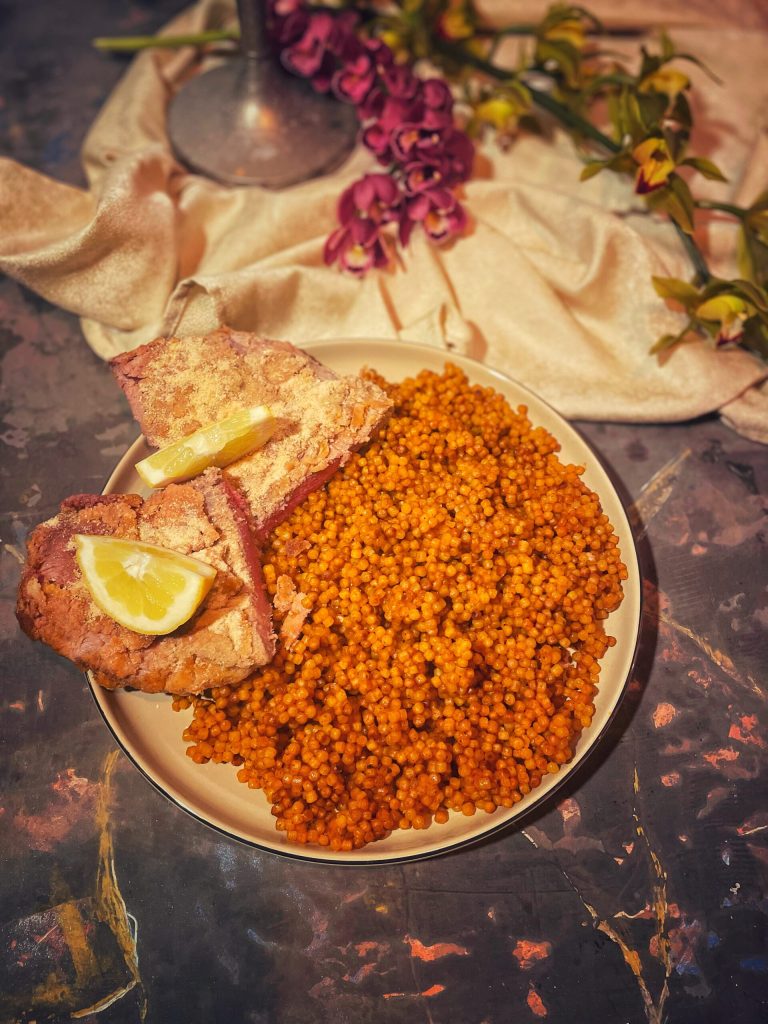
While contemporary culinary trends explore gourmet variants with fresh herbs and seasonal vegetables, here I propose the most authentic, home-style version: ptitim seasoned with tomato paste.
In Hebrew it is called Ptitim be-rotev agvaniyot (פתיתים ברוטב עגבניות), literally “Ptitim in tomato sauce”.
Using tomato passata or fresh tomatoes would add too much water, risking overcooking the pasta or turning it into a “glue.” Tomato paste provides an intense red color and concentrated flavor without altering the critical pasta-to-water ratio.
This version is a pillar of Israeli home cooking; it is often served with schnitzel – in Hebrew שניצל, pronounced shnitzel – (the breaded chicken cutlet), the iconic pairing at family lunches.
- Difficulty: Easy
- Cost: Very economical
- Rest time: 5 Minutes
- Preparation time: 5 Minutes
- Cooking time: 10 Minutes
- Portions: 4 Servings
- Cooking methods: Other
- Cuisine: Jewish
- Seasonality: All seasons
Ingredients
- 3 cups ptitim (Israeli pearl couscous)
- 1 onion (chopped)
- 3 1/3 cups hot water (boiling)
- 3 tbsp tomato paste
- 1 tbsp sweet paprika
- 1/2 tsp sugar
- 1 tbsp turmeric
- 1 tsp cumin (or Baharat)
- to taste salt and pepper
- to taste vegetable oil
Steps
Sauté: Heat the oil in a pot and sauté the onion until well golden.
Toasting & Spices: Add the raw ptitim and toast them for 2 minutes, stirring often. Halfway through toasting, add the paprika, turmeric, cumin or Baharat, salt, pepper and sugar. Briefly toasting the paprika in the oil enhances its color and aroma.
The Tomato: Add the tomato paste directly to the toasted grains and stir for one minute. This step slightly “fries” the tomato, removing the raw taste and making it sweeter.
Cooking: Pour in the boiling water. Stir well to dissolve the paste, cover with a lid and reduce the heat to the minimum.
Timing Trick: Cook for 8 minutes, then turn off the heat and — crucially — let rest without opening for another 5-10 minutes.The recipe is intrinsically Parve (neutral), which makes it perfect to serve with either meat or dairy, in keeping with Jewish dietary laws (Kosher).
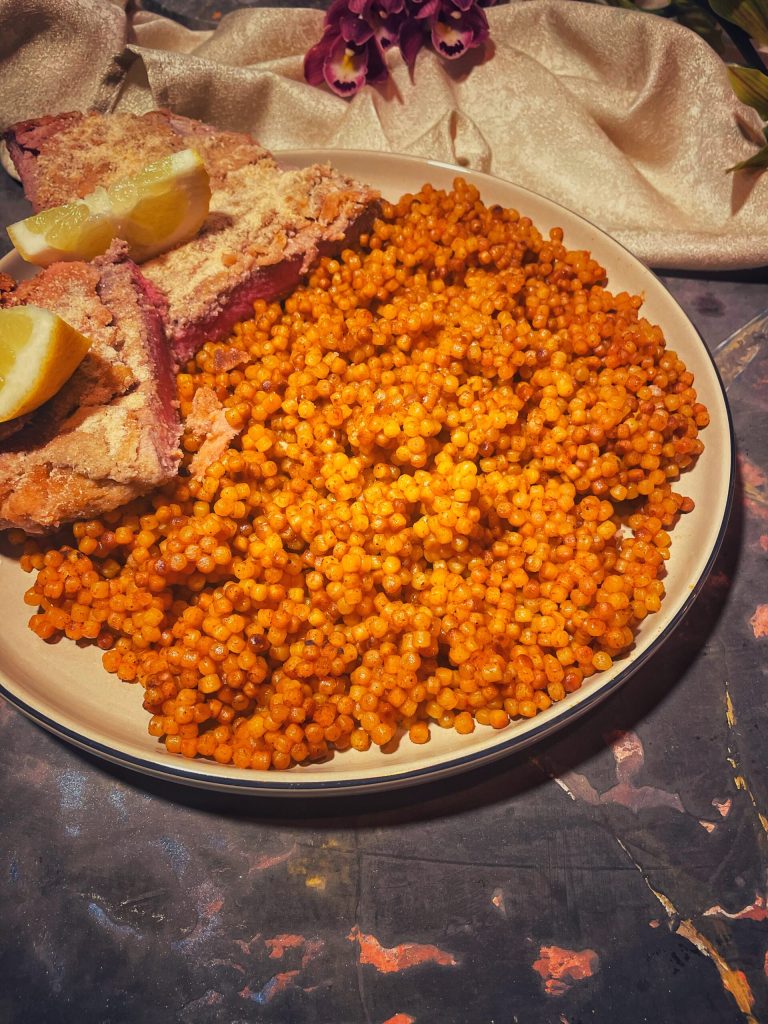
Other classic pairings with Ptitim:
Meatballs (Ktziot): Cooked in a thick tomato sauce that also seasons the ptitim.
Pan-fried chicken: Pieces of chicken cooked together with the ptitim in a single pot (one-pot meal).
Ptitim “Mujadara”: Inspired by the classic Middle Eastern rice-and-lentils dish, this version mixes ptitim with black or green lentils and a generous topping of crispy fried onions.
With caramelized onions: similar to the flavor of Kugel of Jerusalem, where many thinly sliced onions are slowly caramelized with a touch of honey or sugar before toasting the pasta.
