
The Saikoro Steak (literally “dice steak”) represents one of the most fascinating chapters of Wafu (Japanese-style) cuisine. Born from the meeting between Western steak culture and the practicality of the Japanese table, this dish has become an izakaya and teppanyaki icon across Japan.
The origins of Saikoro Steak date back to the postwar period and were conceived to respond to two needs: speed of consumption and use of chopsticks.
Cutting the meat into regular cubes (bite-size) allowed premium cuts to be served without knife and fork, making the dish perfect for the fast pace of cities like Tokyo.
While it was initially a way to enhance scraps of meat, today it is a specialty that celebrates the quality of the raw ingredient, from domestic beef to the prized Wagyu.
For a professional result, choosing the right cut of meat is the starting point. Although the tenderloin and sirloin are the noblest options, the Reale (or Chuck Roll) is preferred by connoisseurs for its balance of flavor intensity and marbling.
Intramuscular fat is fundamental to ensure the meat remains juicy during high-temperature cooking.
Unlike Western preparations, Saikoro Steak does not involve long cooking times or separate cooked sauces.
The Wafu Saikoro Steak (from Wafu, “Japanese style”) to be authentic should be served in a balanced set with grated Daikon (to cut the fat), crispy garlic chips, steamed white rice, finely sliced cabbage and a bowl of miso soup.
The wafu version is more “traditional” and refined. It is often found in restaurants that focus on digestibility and balance of flavors.
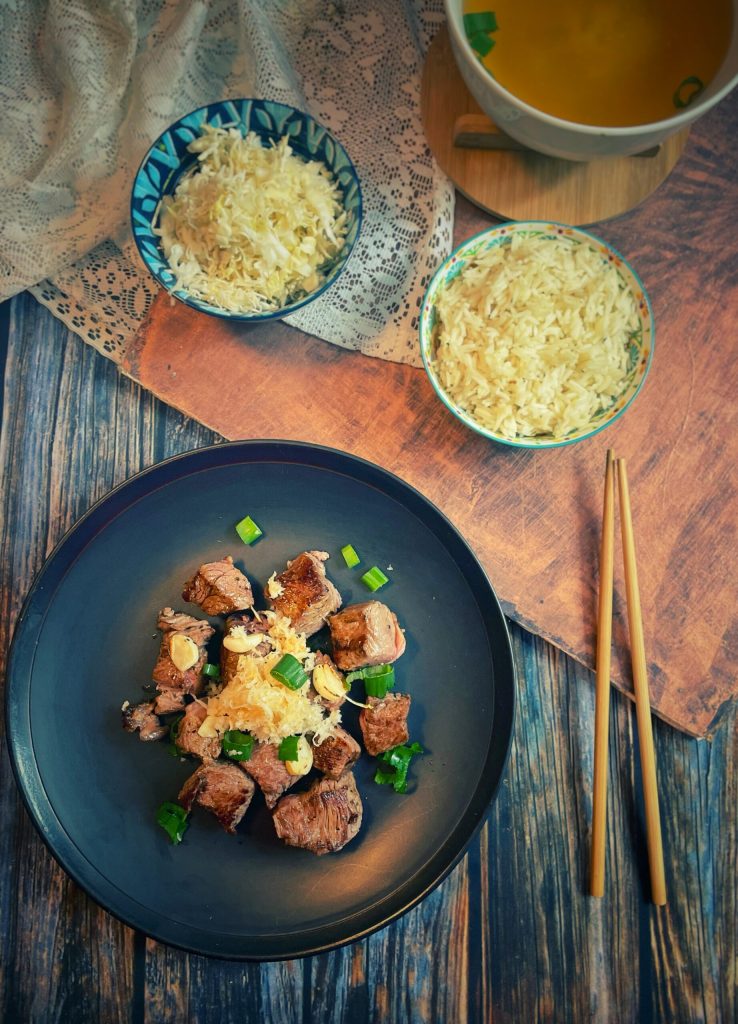
- Difficulty: Medium
- Cost: Moderate
- Preparation time: 5 Minutes
- Cooking time: 6 Minutes
- Portions: 2 People
- Cooking methods: Stovetop, Grill
- Cuisine: Japanese
- Seasonality: All seasons
Ingredients
- 14 oz beef (I used Reale (Chuck Roll))
- 2 tbsp soy sauce
- 2 cloves garlic
- 2 in daikon
- to taste salt and pepper
- to taste vegetable oil
Steps
Clean the meat of any sinew and cut it into small cubes.
Oil aromatization: In a large pan, warm the oil with the garlic slices over medium heat. When the garlic is golden and crispy, remove it and set it aside (you’ll use it at the end). The oil will now be fragrant.
Cooking the meat: Increase the heat to high. Salt and pepper the cubes and add them to the same pan. Do not turn them immediately: they need to form a dark, flavorful crust.
Deglazing with soy: When the meat is seared on all sides, pour the soy sauce directly onto the cubes while the pan is still very hot.
Reduction: Move the pan quickly so each cube is enveloped by the soy, which will reduce and become thick and almost black, clinging to the meat.
Finishing: Turn off the heat as soon as the soy has almost entirely evaporated. The meat should shine.Daikon: Grate about 4 inches of Daikon root using a fine-holed grater.
Squeeze: Press the pulp between your hands to remove excess water (which is bitter), leaving a soft “ball” of pulp.
Service: Place a mound of this grated Daikon on top of the meat cubes just removed from the pan or to the side.
Sauce: Pour a little extra soy sauce (or ponzu) over the grated Daikon.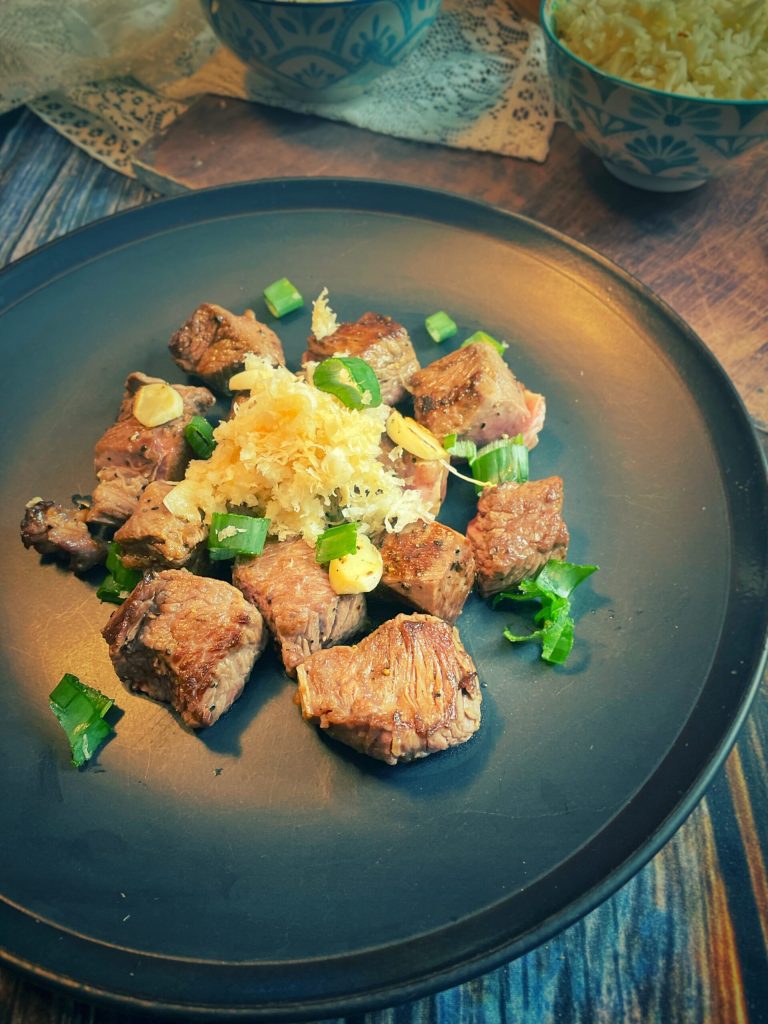
Miso Soup
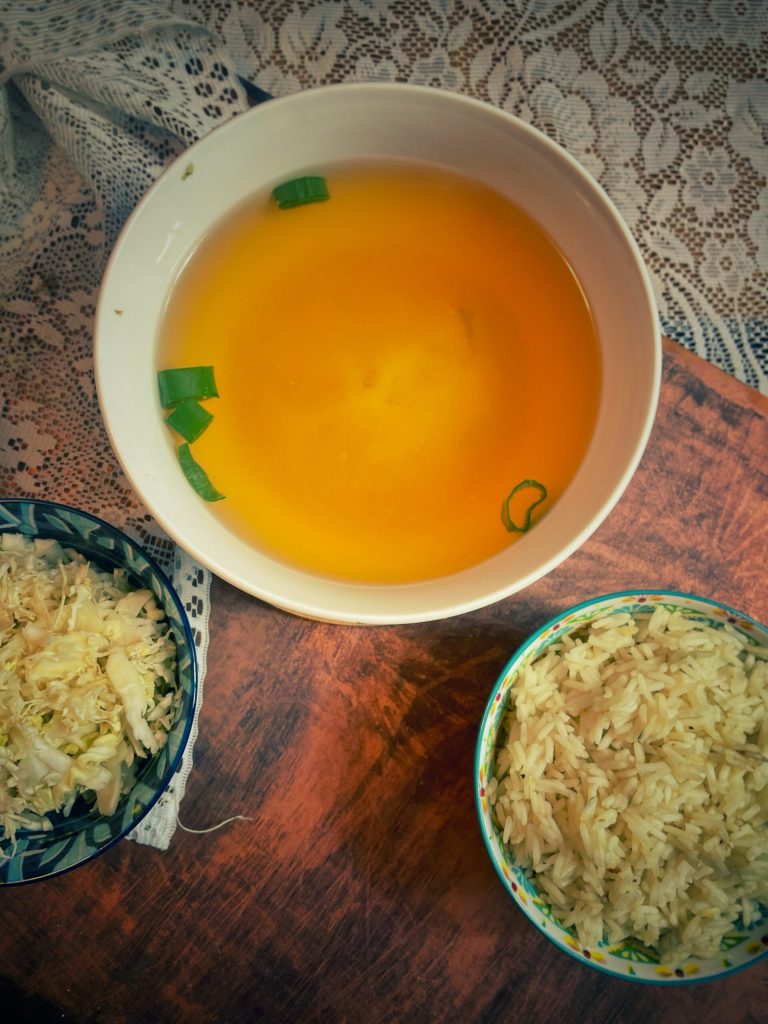
Here is an authentic, balanced Miso Soup (Misoshiru) recipe for 2 people, perfect to serve alongside your Saikoro Steak.
Ingredients for 2 people
Water: 1 3/4 – 2 cups (approx. 400–500 ml).
Dashi (base broth): 1 tsp granulated dashi or about 2 cups of homemade dashi (made with kombu and katsuobushi).
Miso paste: 1 1/2 – 2 level tbsp. You can use White Miso (milder) or Red Miso (stronger).
Wakame seaweed: 1 tsp dried wakame (it rehydrates quickly).
Scallion: The green part, sliced into thin rounds for garnish.
Procedure
Prepare the broth: Bring the water to a simmer in a small pot and dissolve the granulated dashi (or heat your homemade dashi).
Add the ingredients: Add the dried wakame. Let simmer gently over low heat for about 2-3 minutes.
The crucial step (Never boil the miso): Turn off the heat or reduce it to the lowest setting. Take a little hot broth in a ladle, add the miso paste and mix in the ladle until it has fully dissolved with no lumps.
Combine: Pour the dissolved miso back into the pot. Stir gently.
Important: Do not boil the soup after adding the miso, otherwise it will lose its probiotic properties and delicate aroma.
To serve: Pour into bowls and garnish with fresh scallion.
FAQ (Questions and Answers)
Which cuts are most used in Japan for Saikoro Steak?
In Japan, two very different categories of meat are used for Saikoro Steak, depending on the context (luxury restaurant or home/quick consumption):
1. “Natural” meat (whole premium cuts)
In high-end restaurants or in kaiseki, whole cuts of Wagyu (Japanese beef) or high-quality domestic beef are used. The most common cuts are:
Tenderloin: The most tender, with very little connective tissue.
Sirloin: Appreciated for its perfect balance between tender meat and flavorful fat.
Ribeye: Chosen for its excellent marbling that makes the cubes juicy.
2. “Formed” meat (Processed Meat)
This is the most widespread version in supermarkets and budget chains.
What it is: It consists of trimmed pieces of meat (often Wagyu or Angus) that are assembled, pressed and held together with natural binders (such as egg or soy proteins) to form geometrically perfect cubes.
Advantage: It is extremely economical and always very tender to the bite because the fibers are already broken down.
Warning: Unlike natural meat, formed meat must be cooked through and cannot be eaten rare for food safety reasons.What are the versions of Saikoro Steak?
The versions of Saikoro Steak are mainly distinguished by seasoning and method of serving.
Wafu (Japanese Style): This is the most balanced version. The meat is accompanied by grated Daikon (Daikon Oroshi) and often finished with Ponzu sauce. It helps cut the fat, making the dish fresh and light.
NB. The term Wafu (和風) in Japanese literally means “in Japanese style”. It is not only a cooking technique but an approach that seeks harmony between the richness of the meat and the freshness of the vegetable elements.
Shoyu-Butter (Soy and Butter): This is the richest and most popular version in izakaya. The cubes are sautéed with butter and soy sauce, creating a dense, rich, and very flavorful glaze.
Garlic Steak: A “strong” version focused on intensity. It uses an abundant amount of garlic, both chopped in the cooking and as crispy garlic chips for garnish, without adding refreshing elements.
Teppanyaki: Cooked on the griddle with bean sprouts (the most technical).
