
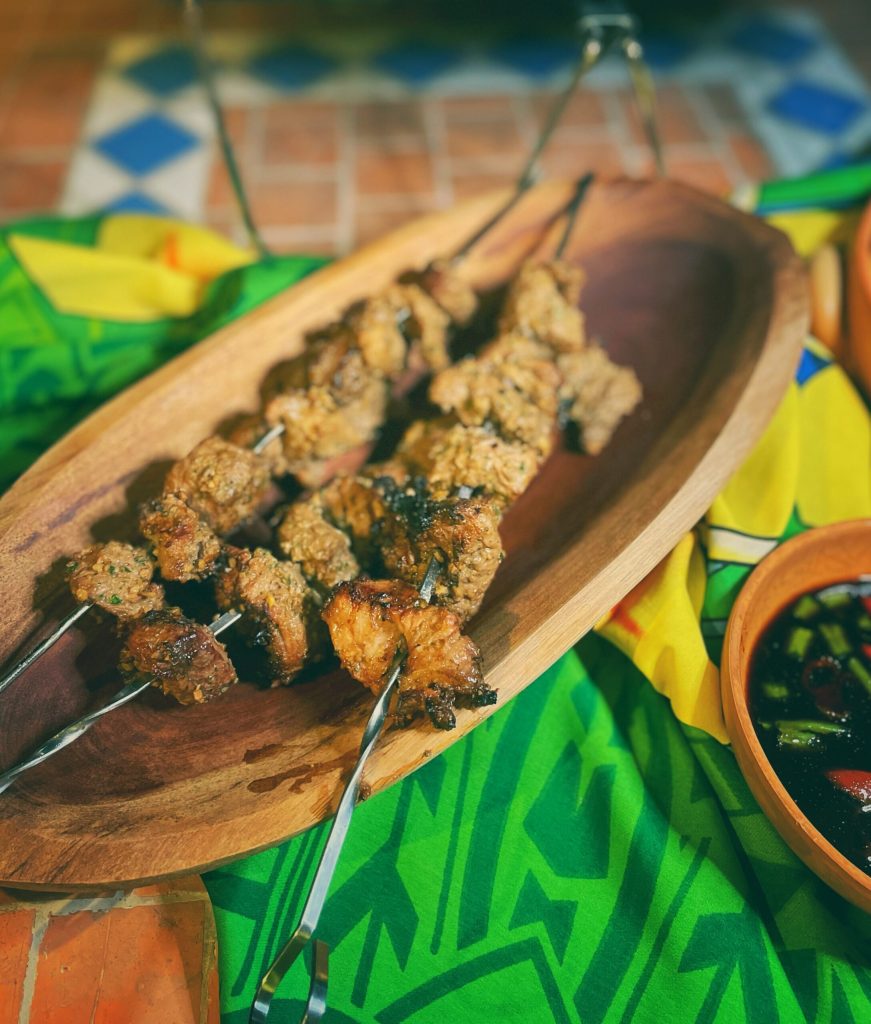
Sate Babi, that is the pork satay, represents one of the most refined and specific expressions of Indonesian culinary tradition.
In Indonesia, the term Sate refers specifically to the technique of skewering meat and grilling it.
Although globally the Saté Ayam (chicken satay) served with peanut sauce is the most famous reference, pork satay holds a niche of excellence.
The choice of Kapsim (capocollo) is not accidental, but responds to precise thermal dynamics during cooking.
Unlike belly, which has often excessive separated fat layers for a small skewer cut, Kapsim offers an intrinsic marbling.
This intramuscular fat protects the protein fibers during exposure to the radiant heat of the embers, ensuring a uniform Maillard reaction and a final texture that combines juiciness with bite resistance.
But Kapsim is not the only variant of Sate Babi found across the archipelago.
The most popular version is undoubtedly the Sate Babi Samcan (pork belly), loved for its opulence: here the layered fat turns into a glassy, crunchy crust, offering a more robust and rustic experience compared to the finesse of capocollo.
Besides these whole-piece versions, Balinese tradition stands out for Sate Lilit, where the meat is minced and spiced, or for the use of offal (Sate Jeroan), typical of local markets where nothing is wasted.
However, for those seeking the perfect combination of Maillard reaction and tenderness of the fiber, Kapsim remains the unsurpassed quality standard.
Its preparation involves a more complex bumbu (spice paste) featuring galangal and kemiri nuts.
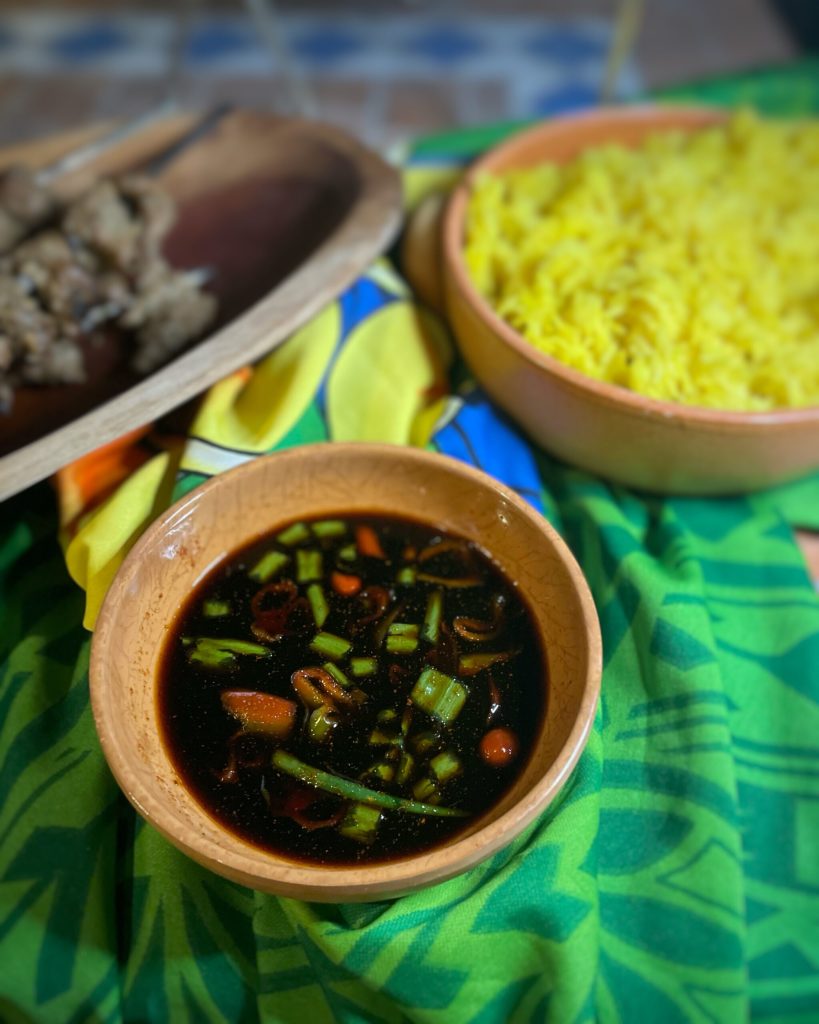
The final touch is the Sambal Kecap, a raw sauce where the acidity of lime and the heat of chili cleanse the palate from the pork fat.
If the meal is eaten at lunch or dinner in a small restaurant (Warung), the skewers are served with steamed white rice (Nasi Putih) or, on special occasions, with turmeric yellow rice (Nasi Kuning).
- Difficulty: Easy
- Cost: Inexpensive
- Rest time: 2 Hours
- Preparation time: 10 Minutes
- Cooking time: 8 Minutes
- Portions: 6 Pieces
- Cooking methods: Grill
- Cuisine: Indonesian
- Seasonality: All seasons
Ingredients
- 3.5 oz shallots
- 4 cloves garlic
- 1.8 oz Indonesian kemiri nuts (candlenuts) (or macadamia nuts)
- to taste galangal
- 5 tablespoons kecap manis (sweet Indonesian soy sauce)
- 3 tablespoons kecap asin (salty Indonesian soy sauce)
- 1.8 oz palm sugar (grated)
- 1 tablespoon ground coriander
- 1/2 teaspoon ground cumin
- 1/2 teaspoon ground turmeric
- 2 limes
- 1.1 lb capocollo (pork neck)
Tools
- 6 Metal skewers
Steps
Prepare the spice paste: blend or pound all the ingredients.
Marinade: Combine the cubed meat with the spice paste and all liquid and dry seasonings. Mix well and refrigerate for at least 2 hours, ideally overnight, to allow the capsom fibers to relax and absorb the flavors.
Skewering: Thread 4–5 pieces of meat onto each skewer (if using bamboo skewers, soak them in water beforehand to prevent burning).
Cooking: Grill over medium-high heat for about 3–4 minutes per side. Brush with the remaining marinade or a mix of kecap manis and oil during cooking to obtain a glossy, caramelized glaze.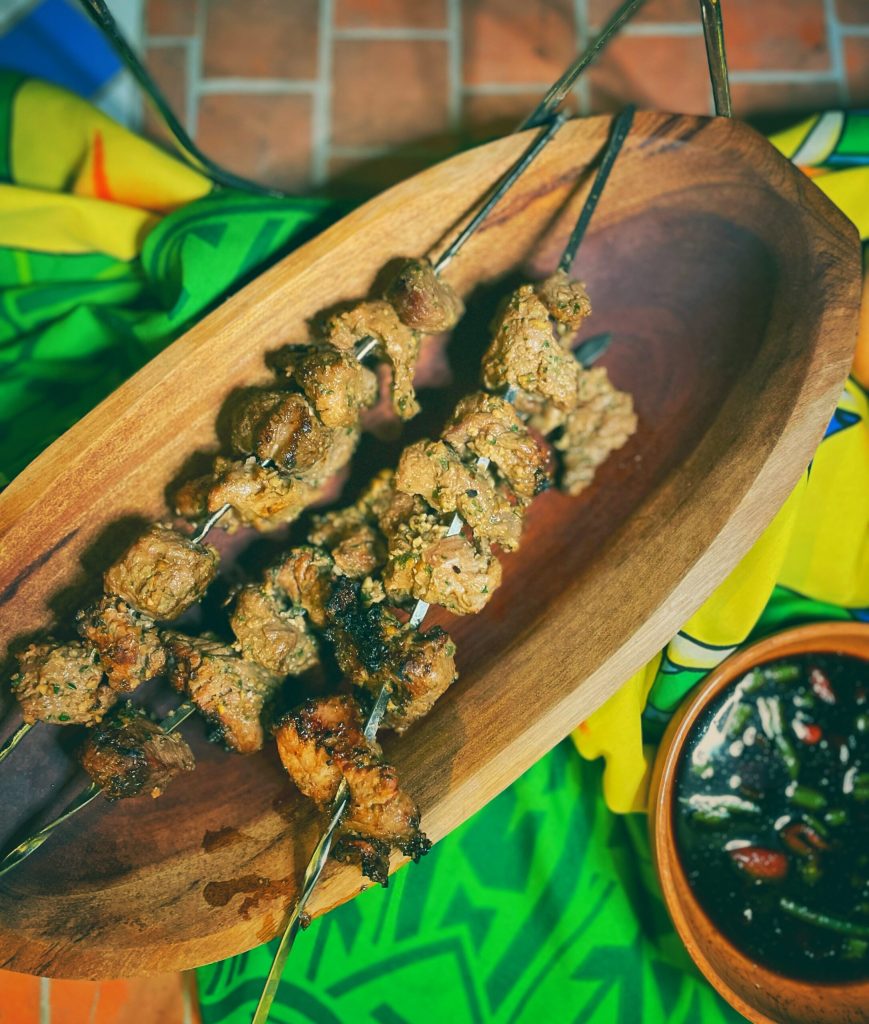
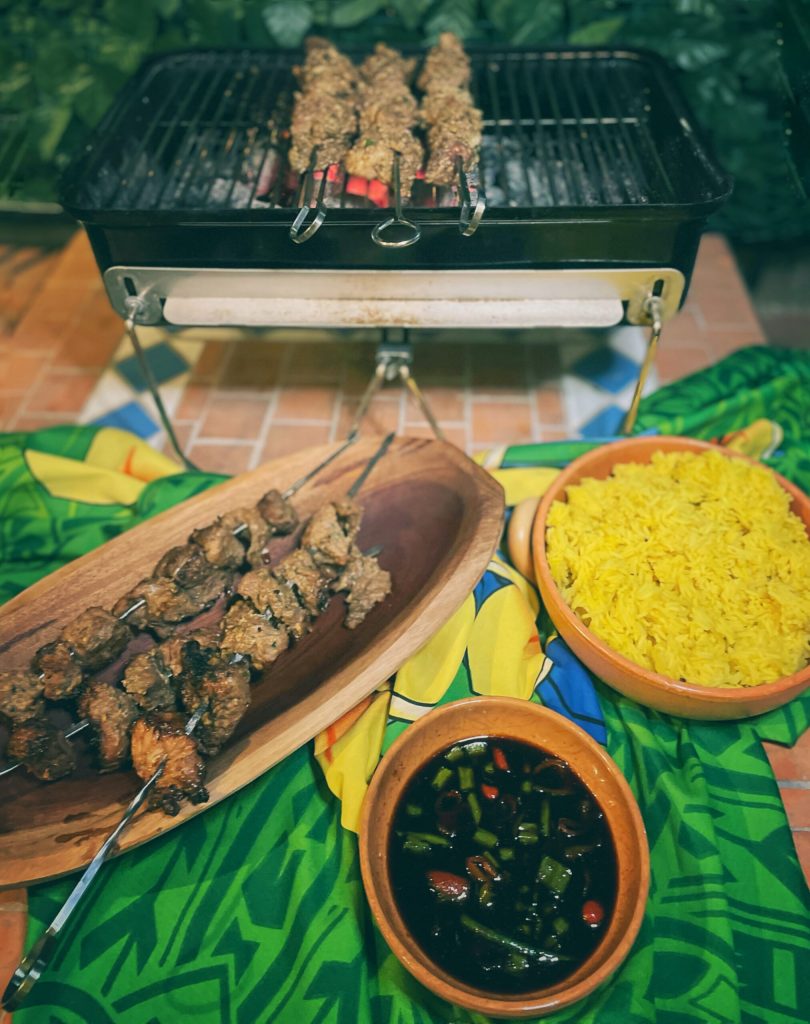
Sambal Kecap Recipe (Amounts for 500 g / 1.1 lb of meat)
Ingredients:
About 1/3–1/2 cup (100–120 ml) of Kecap Manis (fermented sweet Indonesian soy sauce)
4–5 small shallots, thinly sliced raw
5 bird’s eye chilies (cabe rawit), sliced into rounds (adjust to taste)
1 medium tomato, seeds removed and finely diced
Juice of 2 limes (preferably limau or calamansi for a more intense citrus aroma)
A pinch of salt
Preparation:
In a small bowl, combine the sliced shallot, the chili and the diced tomato.
Pour the Kecap Manis over to completely cover the ingredients.
Add the lime juice and the salt.
Mix well and let rest for 10–15 minutes before serving so the shallot and chili flavors infuse the sauce.
FAQ (Questions & Answers)
Which pork cuts are most used for Sate Babi?
The most common pork cuts are:
Capocollo and Shoulder (Kapsim): Considered by many the best cuts. They have an ideal balance between lean meat and streaks of fat, which allows the skewers to remain tender during quick cooking over coals.
Tenderloin and Loin: Used for a leaner, more refined version. Since these parts tend to dry out quickly, they are often marinated longer or alternated on the skewer with small pieces of pure fat to keep them moist.
Pork Belly: Remains the queen for lovers of richer, “fattier” street food, as the fat melts creating a caramelized crust with the sweet soy sauce (kecap manis).
Sate Lilit (Bali): This version does not use whole pieces of meat but minced pork mixed with grated coconut, coconut milk and a spice paste (basa gede). The meat is then wrapped around wide bamboo skewers or lemongrass stalks.
Sate Plecing: Typical of Bali and Lombok, it focuses less on the cut and more on the spicy sauce made with chili, garlic and shrimp paste that accompanies it.
Offal: It is not uncommon to find skewers made with liver, intestine or rind, especially in local markets where every part of the animal is used.
