Rice can be included in the diet of a person with hyperglycemia, prediabetes and diabetes in the portions and frequency indicated in the dietary plan by the professional who follows them.
Today we prepare a saffron risotto with deamidated brown rice recommended for people with hyperglycemia.
Rice | glycemic index
– brown rice GI 50.
For those following a low glycemic index diet and for people with diabetes, it is useful to deamidate the rice.
The deamidation technique reduces the glycemic impact of rice, shortens cooking time and improves texture.
You might be interested in:
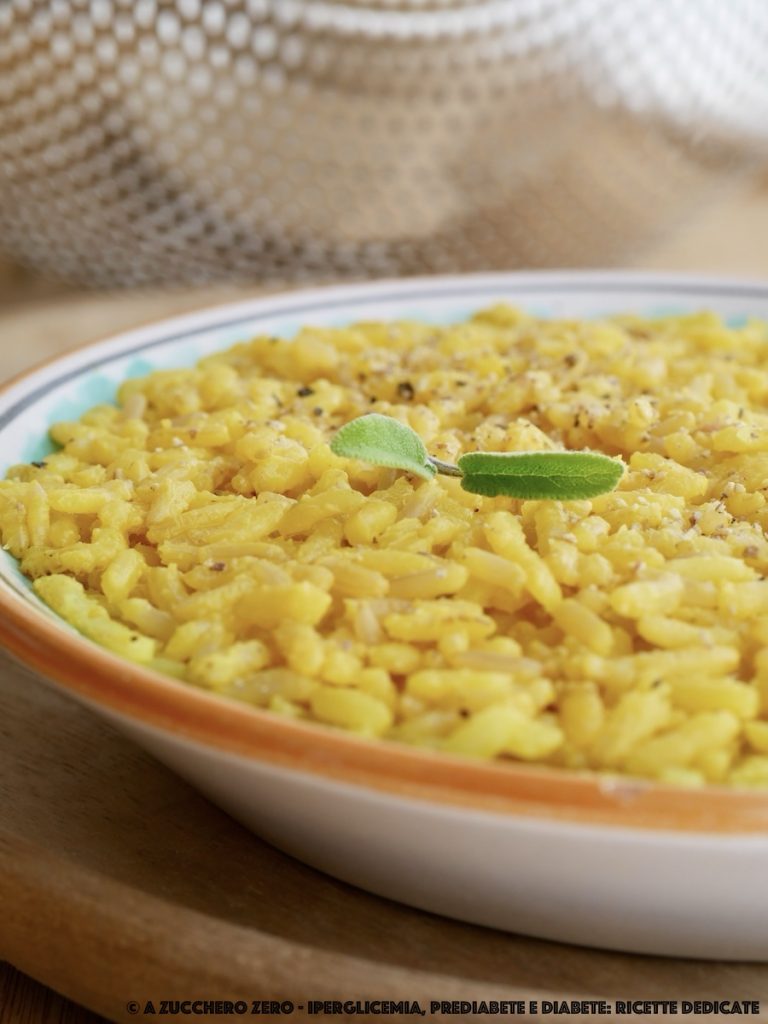
- Difficulty: Easy
- Cost: Budget-friendly
- Rest time: 2 Hours
- Preparation time: 10 Minutes
- Cooking time: 10 Minutes
- Portions: 2People
- Cooking methods: Stovetop
- Cuisine: Italian
Ingredients
- 7/8 cup brown rice (parboiled, cooking time 10 min)
- 1 2/3 cup water
- 1 pinch salt
- 1 bouillon cube (vegetable, homemade or vegetable pieces)
- 1 packet saffron
- 1/4 cup white wine
- 1 pinch mixed whole pepper (with grinder)
- 1 drizzle extra virgin olive oil (for drizzling)
- to taste cheese (grated: Grana or Parmesan)
Suggested Tools
- Bowl
- Strainer
- 1 Pan with lid preferably glass
Preparation
Precautions for hyperglycemia | prediabetes and diabetes
– use brown rice;
– deamidate the rice;
– add healthy fats.
As always, individual tolerance varies and should be evaluated with your healthcare professional.
Using a fine-mesh strainer:
1. rinse the rice under running water, rubbing the grains between your hands until the water runs clear and transparent;
2. soak it in cold water for about 2 hours – for basmati rice 30 minutes are enough – stirring occasionally and changing the water at least a couple of times;
3. finally, rinse again and drain thoroughly before cooking.
If you taste a grain, you will get the sensation of eating par-cooked rice.
Prepare a quick, light vegetable broth.
Choose one of the two options:Vegetable broth with bouillon cube
In a saucepan, pour 400 ml of water and a pinch of salt.
Bring to a boil.
Dissolve a vegetable bouillon cube.Vegetable broth with vegetables
In a saucepan, pour 400 ml of water and a pinch of salt.
Add half an onion, parsley stems and/or celery stalks.
Bring to a boil and simmer for 10 minutes.Dissolve a sachet of saffron in the vegetable broth.
Heat a pan, add the deamidated rice and toast it or, more correctly, warm it: it is already hydrated, so it will not heat like raw rice – this is normal.
Deglaze with white wine and let it evaporate.
Add the saffron-colored vegetable broth little by little, stirring until absorbed as you would with a traditional risotto (the rice is already hydrated and will not absorb a lot).
If the broth is insufficient, add hot water.
Remember that deamidation shortens cooking time; taste the rice a few minutes before the time indicated on the package.
If necessary, adjust salt.
Grind the pepper.Add one cold ingredient of your choice among:
– a drizzle of extra virgin olive oil;
– 1–2 tablespoons of grated cheese;
and mix vigorously off the heat.
After finishing, let the risotto rest covered for 2–3 minutes.Plate.
Grind a little more pepper.Your saffron risotto with deamidated brown rice is ready.
Enjoy your meal!
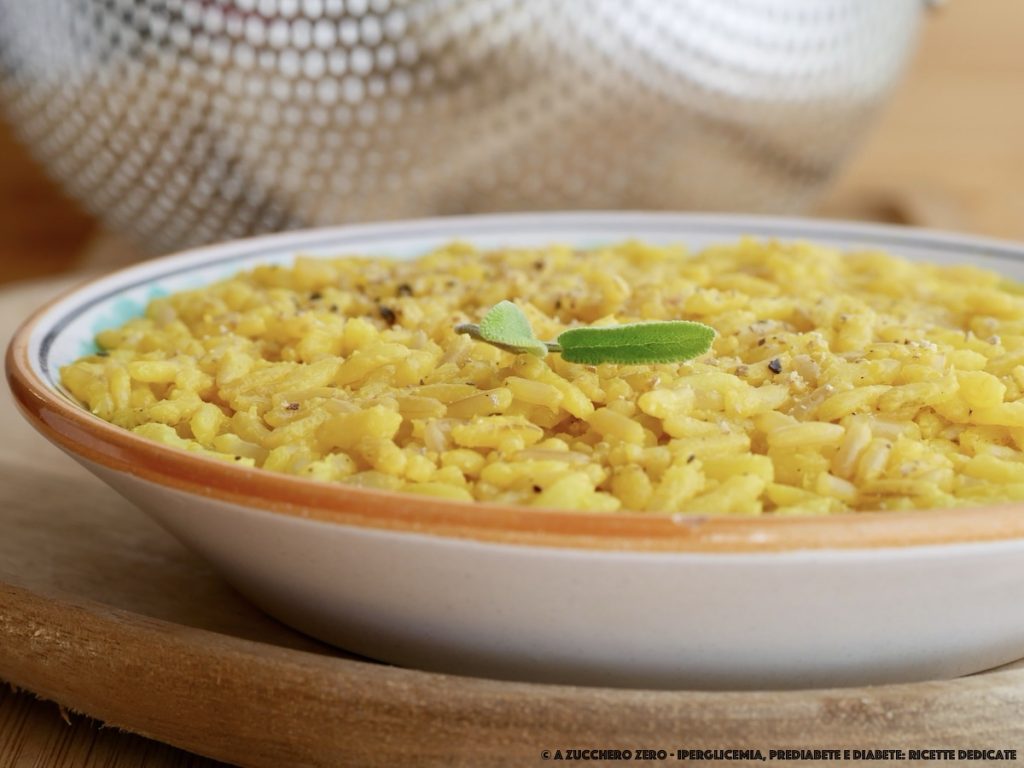
Start the meal with a generous portion of raw or cooked vegetables and pair the rice with fiber, lean proteins and healthy fats to slow carbohydrate absorption.
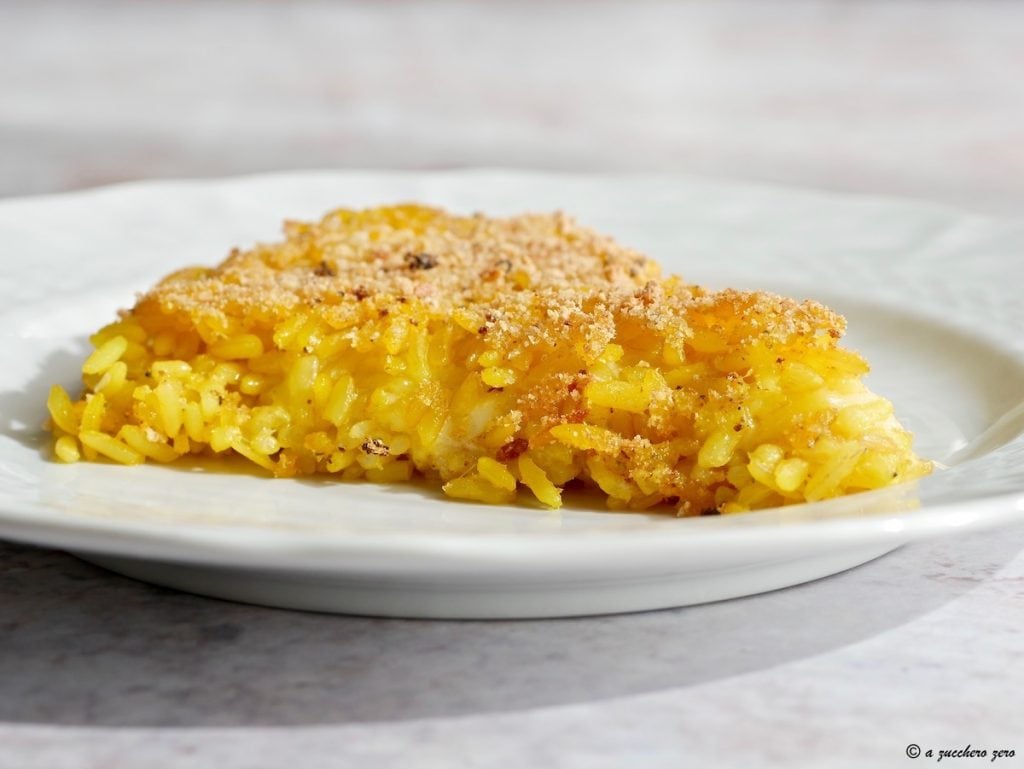
“Riso al salto” (pan-fried leftover rice) is a recycling recipe prepared with saffron risotto leftover from the previous day.
Risotto made with deamidated brown rice and without butter is not exactly ideal for “riso al salto” because it doesn’t remain compact.
However, you can refresh leftover brown saffron risotto in a pan.
Use a good-quality nonstick pan.
You can oil its surface with a paper towel.
Preheat the pan.
Pour in the leftover saffron risotto and stir repeatedly until the grains are golden and crispy.
Or reheat it in the oven.
It’s delicious!
Storage, tips and variations
Storage
You can store cooked rice in the refrigerator in a closed container for 1–2 days.
Reheat in a pan adding a little broth or a drizzle of oil.
Tips and variations
You can complete the risotto with your preferred amount of grated cheese or flakes.
FAQ – Questions and Answers
Difference between risotto alla Milanese and saffron risotto
Risotto alla Milanese and saffron risotto both use saffron, but in risotto alla Milanese wine is not used, bone marrow is added and it is served with ossobuco prepared separately.