
Grandma’s Custard Cream: A Journey into Taste and Tradition. Custard cream is one of the pillars of Italian pastry, a true culinary treasure that accompanies cakes, pies, and desserts since ancient times like the classic Custard Cream and Strawberry Tart
Its history is intertwined with the gastronomic traditions of our country, but what makes this cream so special and beloved? Let’s discover together its world, preparation, and its countless variations (Pistachio Custard, Orange Custard, Coffee Custard, Chocolate Custard )
It is a preparation based on egg yolks, sugar, milk, and flour used in many pastry products. Instead of flour, other thickeners such as cornstarch or rice starch can be used, a part of the milk can be replaced with cream. It can be served as a simple spoon dessert, as it is very good even just eaten cold, or used as a filling for cakes, to fill cannoli or cream puffs, and various other pastry products.
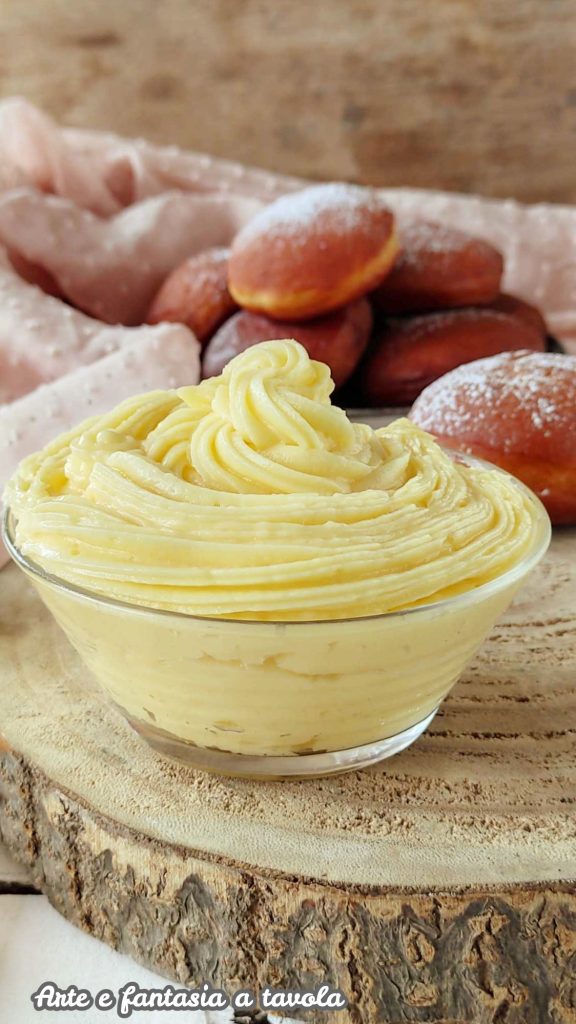
- Difficulty: Very Easy
- Cost: Very Cheap
- Preparation time: 15 Minutes
- Portions: 14 oz
- Cooking methods: Boiling
- Cuisine: Italian
- Seasonality: All Seasons
Ingredients for Custard Cream: A Journey into Taste and Tradition
- 2 1/2 cups milk
- 1/2 cup egg yolks
- 1/2 cup cornstarch
- 1 packet vanillin
- 1/2 cup granulated sugar
Tools
- Pot
- Hand Whisk
Steps for Grandma’s Custard Cream: A Journey into Taste and Tradition
Grandma’s Custard Cream: A Journey into Taste and Tradition
In a saucepan, mix the egg yolks with the sugar, add the starch gradually, without stopping stirring until the mixture is well blended. Set aside.
Heat the milk, adding the vanillin. As soon as it reaches a simmer, slowly add the egg mixture and continue stirring for 5 minutes, or until you get a creamy consistency.
Pour the cream into a bowl and let it cool covered with plastic wrap to prevent a skin from forming on the surface.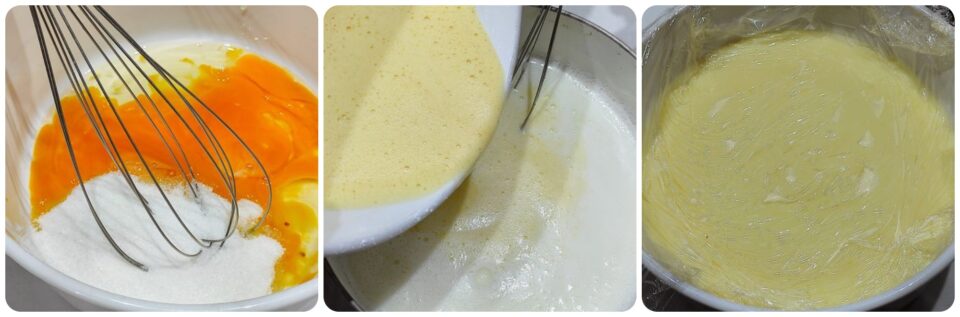
Once cold, store in the fridge until use.
If not used immediately, keep it in the fridge for no more than 2 days.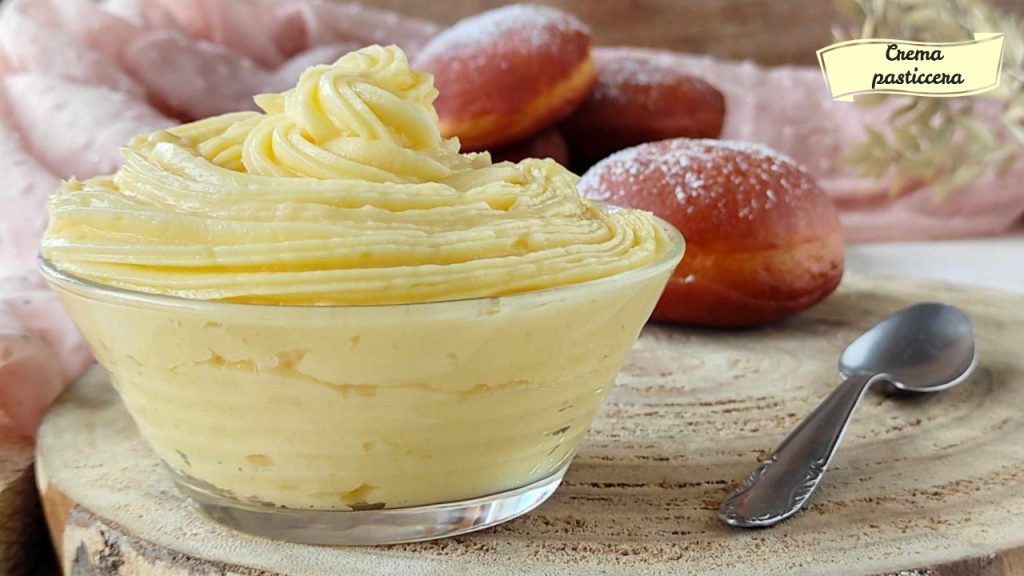
If you want to share your kitchen specialties, you can join the group Arte e fantasia a tavola
Arte e fantasia a tavola awaits you for more new and interesting but above all simple recipes to make in a short time, find us in home at the site Arte e fantasia a tavola
If you like our recipes and want to stay updated, you can follow us by leaving a like on the Facebook page by clicking Arte e fantasia a tavola
You can also follow me on Pinterest by clicking HERE
We are also on the new YouTube channel by clicking HERE
I would like to take this opportunity to thank everyone who has visited and will visit this site for the visits, comments, and more.
There are many variations of creams, such as chantilly cream obtained by mixing whipped cream with the custard, lemon cream simply scented with citrus peel, vanilla cream flavored with vanillin, and many more…
The origins of the cream date back to the Middle Ages, when cooks began to experiment with eggs and milk to create new textures and flavors. Initially used as a base for various pastry preparations, custard cream spread throughout Europe, becoming a fundamental ingredient in pastry. In Italy, each region has reinterpreted this recipe, enriching it with unique flavors such as lemon, vanilla, or rum.
The possibilities for using custard cream are endless. It can be used as a filling for cream puffs, pies, or cakes, or as a base for spoon desserts. Imagine a delicious diplomatic cake, made of layers of puff pastry, custard cream, and whipped cream, or a classic tiramisu where the cream is a key element of the recipe.
FAQ
Is it possible to substitute cornstarch with all-purpose flour?
About 2 tablespoons of flour are equivalent to 1 tablespoon of cornstarch
