
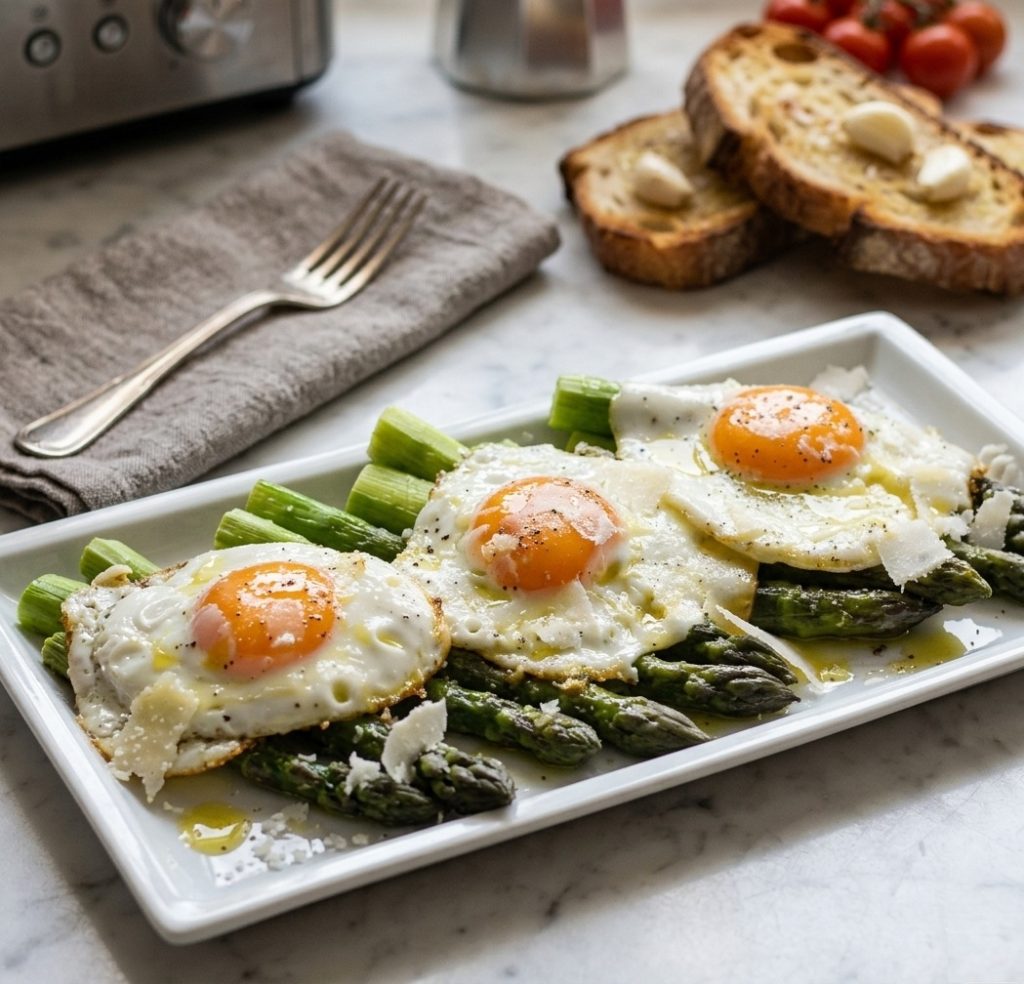
Asparagus and fried eggs: the classic recipe for a regal main course
The main issue when preparing asparagus alla Bismarck is handling the different textures: often you end up with limp asparagus tips and stems that are still tough, or with an egg that is too cooked and loses its magical “scarpetta” (the act of mopping up the yolk with bread).
Preparing such a simple dish actually requires a small strategy to avoid the white staying slimy or the yolk drying out too much.
To solve this nuisance, we’ll use the “standing” cooking technique for the asparagus, protecting the tips from excessive water heat, and a gentle pan cooking for the eggs. The result?
A wonderful contrast between the saltiness of Pecorino Romano and the sweetness of the runny yolk, which embraces the asparagus making them almost creamy.
It’s the perfect dish for those looking for a quick yet comforting meal, able to transform a few humble ingredients into a gourmet experience to be enjoyed strictly with a slice of toasted bread.
- Difficulty: Easy
- Cost: Economical
- Preparation time: 10 Minutes
- Cooking time: 25 Minutes
- Portions: 4
- Cooking methods: Stovetop
- Cuisine: Italian
Ingredients Asparagus and fried eggs
- 1.1 lb asparagus (fresh)
- 4 eggs (large)
- 1/2 cup Pecorino Romano (grated or shaved (about 2 oz))
- to taste extra virgin olive oil
- 1 pinch black pepper
- to taste fine salt
Tools
- Pentola
- Padella
How to cook asparagus alla Bismarck: the trick to not break the yolk
NOTE: A key aspect for the success of this dish is managing the cooking time of the asparagus, which inevitably depends on their thickness. If you have wild or very thin asparagus, just 3–4 minutes of boiling is enough to make them tender but still slightly firm; for medium-sized stalks the time rises to about 5–7 minutes, while for thicker, meatier stems it may take up to 8–10 minutes. The secret is to plunge them into boiling salted water and drain them while they are still turgid and bright: remember they will continue to cook a little from residual heat once removed and the final pass with the hot egg will complete their texture.
Thoroughly wash the asparagus under running water. With a knife, trim about 0.4 in (1 cm) from the base of the stem to remove the woodier attachment. If the asparagus are very thick, you can lightly peel the lower part of the stem with a vegetable peeler.
Bring a tall pot of salted water to a boil. Tie the asparagus into a bundle with kitchen twine (or a rubber band) and stand them upright in the pot, leaving the tips out of the water: this way they will cook only by steam. Cook like this for 5 minutes, then untie the bunch and continue cooking for a total of about 10 more minutes (see NOTE at the start of the recipe). Drain them gently and arrange them fanned out on a serving plate or in a baking dish.
In a large skillet, heat a drizzle of extra virgin olive oil. Lay the asparagus in the pan (or do this directly on the platter if you prefer to cook only the eggs separately) and crack the four eggs over them, being very careful not to break the yolk. Cover with a lid to speed up the cooking of the whites.
Cook over medium-high heat for about 5–7 minutes: the white should be set and opaque, while the yolk should remain soft and glossy. Place the eggs on top of the asparagus bed (if you didn’t cook them directly in the pan), season with a drizzle of raw olive oil, a pinch of salt and plenty of black pepper. Finish with a generous grating of Pecorino Romano.
Ingredient notes and substitutions
The Cheese: Pecorino Romano gives a strong salty note, but if you prefer a milder taste you can replace it with Grana Padano or Parmigiano Reggiano.
The Eggs: Make sure they are very fresh and at room temperature; this will help the white set better without overcooking the yolk.
Variation: If you want a richer touch, you can add a knob of butter to the pan together with the oil for a more fragrant browning.
Storage
Asparagus alla Bismarck should be eaten hot and immediately. The nature of the runny egg does not allow refrigeration nor reheating later, which would make the yolk rubbery.
Recipe variations
Gourmet: Add a few drops of truffle oil at the end for an irresistible aroma.
Crispy: Serve the dish with crusty bread crostini rubbed with garlic.
Tea’s Tips
For a picture-perfect result, crack each egg first into a small bowl and then gently slide it into the pan: this will allow you to check there are no shell fragments and to position it perfectly over the asparagus.
FAQ (Questions and Answers)
Can I steam the asparagus instead of boiling them?
Certainly! Steaming preserves nutrients and the bright color even better. Allow about 15–20 minutes depending on thickness.
Why should the tips be left out of the water?
The tips are the most tender and prized part; boiling them for the entire time would make them soft and they would fall apart. Steam is enough to make them tender but still crisp.
Can I use butter instead of oil?
Yes, the traditional “alla Bismarck” recipe often uses butter, which pairs divinely with the flavor of asparagus. Use a knob to cook the eggs.
