
How to make Crème Brûlée at home: tips for a silky custard and a perfect bain-marie
Crème Brûlée: the original French recipe with a perfect caramelized crust
The secret to a silky Crème Brûlée without surface bubbles
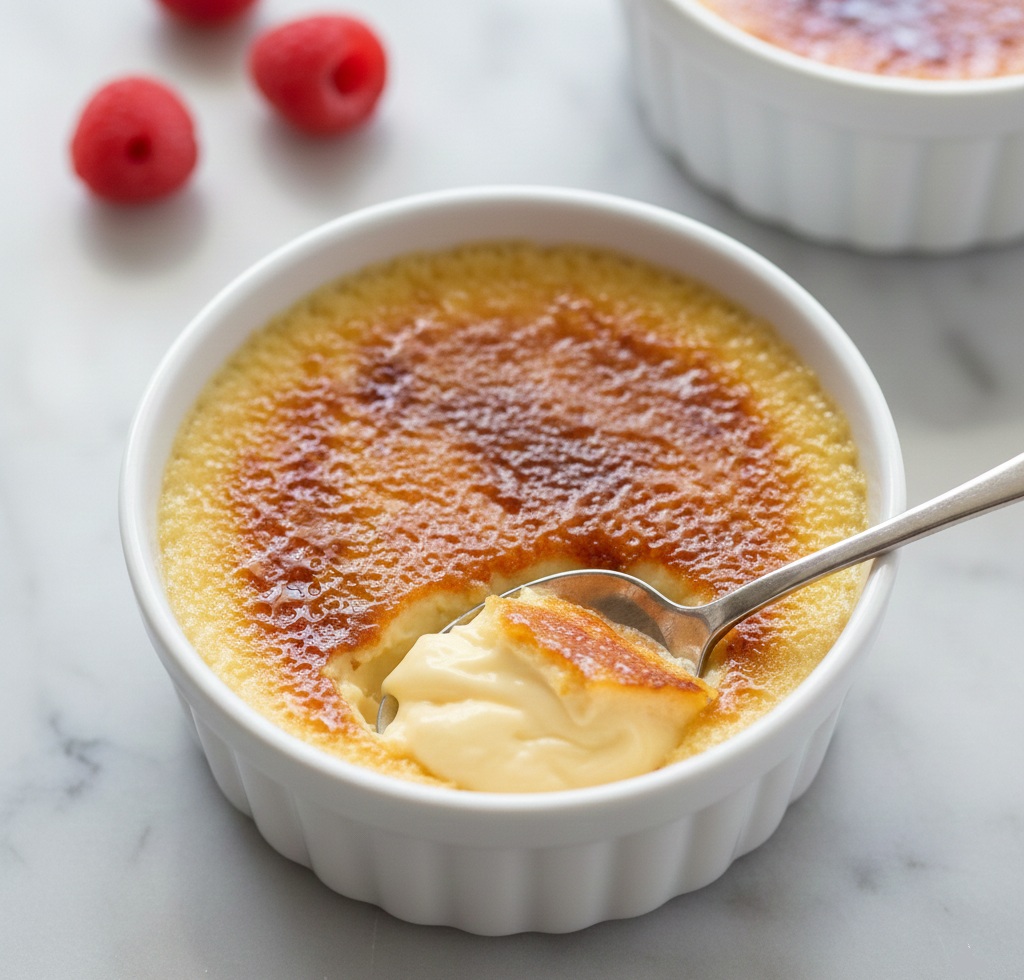
Crème Brûlée is the final test for every lover of spoon desserts, but it hides pitfalls that can ruin the result: the most common problem is ending up with a custard that tastes too eggy or that shows annoying air bubbles on the surface, making it grainy instead of velvety.
Often this happens because the yolks are overbeaten or because the oven temperature is too high, turning the dessert into a sort of sweet omelet.
To solve these problems and achieve a perfect result, the secret lies in gentle handling and precise bain-marie technique.
Mixing without incorporating air is fundamental, as is straining the mixture before baking, which guarantees the removal of any yolk clumps or vanilla residues.
Today I’ll explain how to manage the heat to obtain that ivory-colored, incredibly melt-in-the-mouth center that contrasts with the crunch of burnt sugar.
Get ready to discover that you don’t need a pastry diploma to serve a dessert that leaves everyone speechless: just a few quality ingredients and the right resting times!
- Difficulty: Medium
- Cost: Medium
- Preparation time: 20 Minutes
- Cooking time: 1 Hour 20 Minutes
- Portions: 6 servings, ramekins of 5 fl oz (150 ml)
- Cooking methods: Oven
- Cuisine: Italian
Tools
- Kitchen scale
- Saucepan
- Bowl
- Whisk
- Fine-mesh sieve
- Baking pan
- 6 Ramekins
How to make Crème Brûlée at home
First, pour the milk and cream into a saucepan. Split the vanilla pod, scrape out the seeds with the tip of a knife and add both the seeds and the pod to the liquid. Gently bring to a simmer over low heat.
While the cream heats, put the egg yolks in a bowl with the sugar. Gently stir with a whisk or a wooden spoon, taking care not to beat them: they should not become frothy or incorporate air, but only combine.
When the milk and cream mixture reaches a simmer, remove the vanilla pod and pour the hot liquid in a thin stream into the bowl with the yolks, stirring continuously. You will obtain a very liquid and homogeneous mixture. Key step: strain everything through a fine-mesh sieve to remove any impurities.
Place the 6 ramekins in a high-edged baking pan and fill them with the strained liquid. Carefully pour boiling water into the pan until it reaches one-third of the height of the ramekins. Bake in a static (conventional) oven preheated to 284°F for about 70 minutes. The surface should be set but the center still slightly “jiggly.”
Once ready, remove the ramekins from the oven and let them cool to room temperature, then refrigerate for at least 4 hours. Only when serving, sprinkle the surface with a thin layer of sugar and use a kitchen torch to create the amber crust.
Notes on ingredients and substitutions
Vanilla: If you don’t have a pod, you can use pure vanilla extract (avoid synthetic vanillin).
Sugar: Granulated sugar creates a more even crust, while brown sugar gives a more caramelized, rustic flavor.
Storage
Crème Brûlée can be stored in the refrigerator for a maximum of 24 hours. Remember to caramelize the sugar only just before serving, otherwise the moisture in the custard will dissolve the caramel and it will lose its characteristic crunch.
Tips
If you don’t have a torch, you can place the well-chilled ramekins under the oven grill at maximum power for 2-3 minutes, watching them constantly to prevent the sugar from burning too much.
FAQ (Questions & Answers)
Why did my Crème Brûlée remain liquid after baking?
Probably the water in the bain-marie cooled down too much or the oven wasn’t well calibrated. Make sure the water you add to the pan is already boiling and do not open the oven during the first 50 minutes of baking.
Can I use only milk to make it lighter?
No, in that case you would obtain a pudding or a custard. The richness and structure of Crème Brûlée comes from the high fat content of the cream, which ensures the typical melt-in-the-mouth texture.
What can I do with leftover egg whites?
Don’t waste them! You can use them to make meringues, an angel food cake, or cat’s tongue cookies to serve alongside the custard.
