
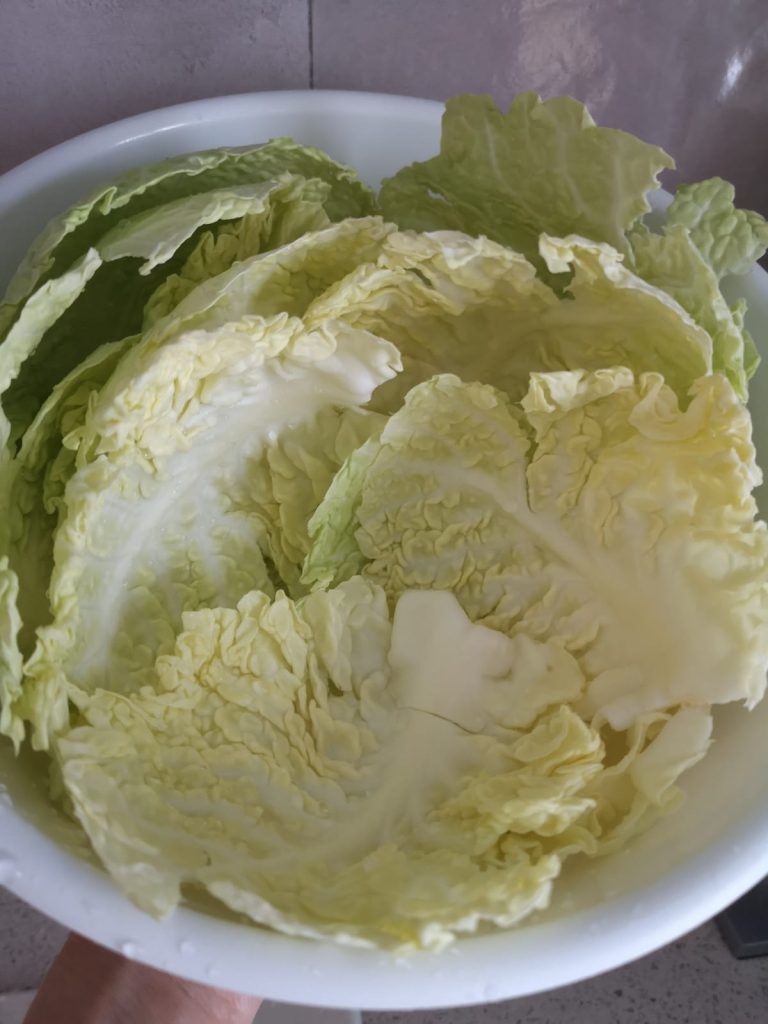
There are dishes that are not just recipes but true family memories. Braised savoy cabbage in a skillet is one of those simple sides that smell of home, the kind that instantly brings me back to my grandmother’s kitchen.
Made with a few ingredients and cooked slowly until tender and flavorful, this recipe is perfect for anyone looking for a light yet tasty idea. The secret?
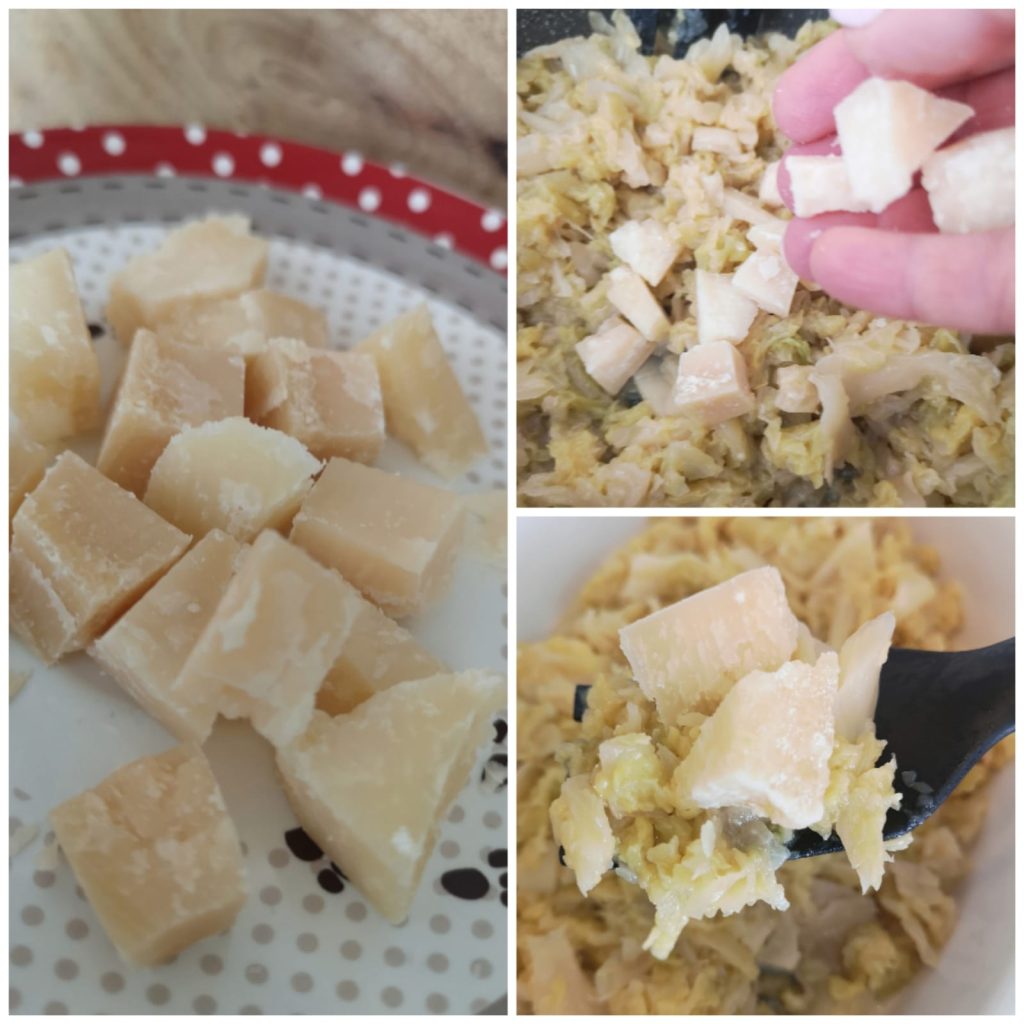
A final touch of Parmigiano Reggiano that melts slightly and gives the dish character.
If you love simple, honest preparations and want to serve a satisfying, easy side dish, this braised savoy cabbage will become one of your favorites.
This recipe is naturally gluten-free and perfect for those following a vegetarian diet.
If you like savoy cabbage, try these tasty variations as well: savoy cabbage salad fresh and crunchy, the flavorful turkey with savoy cabbage and mushrooms, the tasty risotto-cabbage frittata, or the richer version with savoy cabbage with dried fruit, walnuts, pine nuts and raisins.
- Difficulty: Very easy
- Cost: Very inexpensive
- Preparation time: 20 Minutes
- Cooking time: 40 Minutes
- Portions: 4 Servings
- Cooking methods: Stovetop
- Cuisine: Italian
- Seasonality: Autumn, Winter
Ingredients
- 1.75 lb savoy cabbage
- 2 cloves garlic
- 3 tbsp extra virgin olive oil
- to taste fine salt
- 1.4 oz Parmigiano Reggiano PDO (cubed, preferably cut from the rind side where it remains firmer)
Tools
To prepare the savoy cabbage you can use some useful kitchen tools.
Below you’ll find the ones I regularly use, with a direct link to purchase them online.
- 1 Saucepan
- 1 Knife
- 1 Cutting board
- 1 Bowl
Steps
First, take the savoy cabbage, remove the tougher outer leaves and separate the leaves gently.
Wash each leaf well under running water and cut it into coarse strips.
Transfer the cabbage directly into the saucepan and add the garlic: you can use it chopped, as in this recipe, or leave it whole if you prefer to remove it at the end of cooking.
Then add water, the extra virgin olive oil and a little salt.
There is no need for a sauté: this preparation is intentionally light.
Cook over medium heat, stirring occasionally until the cabbage becomes tender.
Watch during cooking so it doesn’t dry out too much: if needed, add a little more water until fully cooked.
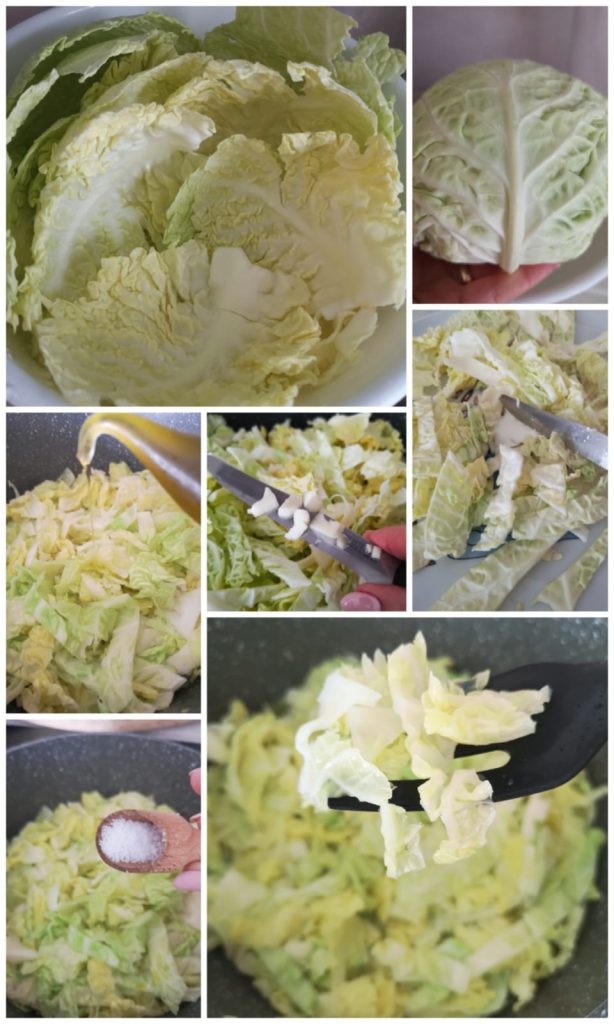
When the cabbage is well cooked and tender, raise the heat slightly and let any excess water evaporate.
At this point turn off the heat and add the cubes of Parmigiano Reggiano.
Stir gently: the heat of the cabbage will soften them slightly, making the dish even more tasty and irresistible.
The braised cabbage is ready to be served, simple but with a finishing touch that really makes the difference.
How to store braised savoy cabbage
The braised savoy cabbage keeps easily in the refrigerator for 2-3 days in an airtight container.
When serving, you can reheat it in a skillet with a drizzle of oil or in the microwave.
If you want to prepare it in advance, you can also avoid adding the Parmigiano Reggiano immediately and add it only at serving time, so it keeps its texture better.
Freezing is not recommended, because cabbage tends to lose texture after thawing.
Tips for perfect braised savoy cabbage
Cut the cabbage into pieces not too small to keep it tender but with some body
Don’t overdo the water: it should braise, not boil
At the end of cooking let it dry well for a more intense flavor
🔁 Tasty variations
Add a pinch of pepper or chili for a bolder taste
Replace Parmesan with pecorino for a saltier note
Add pancetta or speck for a richer version
FAQ (Questions & Answers)
How can I prevent braised cabbage from becoming bitter?
To avoid a bitter taste, cook the cabbage uncovered for part of the time and don’t overcook it.
Is braised savoy cabbage light?
Yes, it’s a light and digestible side dish, especially because it doesn’t require sautéing.
Can I make braised cabbage without garlic?
Yes, you can omit it or leave it whole and remove it at the end of cooking for a milder flavor.
How long should cabbage cook in a skillet?
On average 20–30 minutes are enough, but it depends on the size of the pieces and the amount of water used.
Can I use green cabbage instead of savoy cabbage?
Yes, but the result will be slightly different: green cabbage is crunchier and less delicate.
