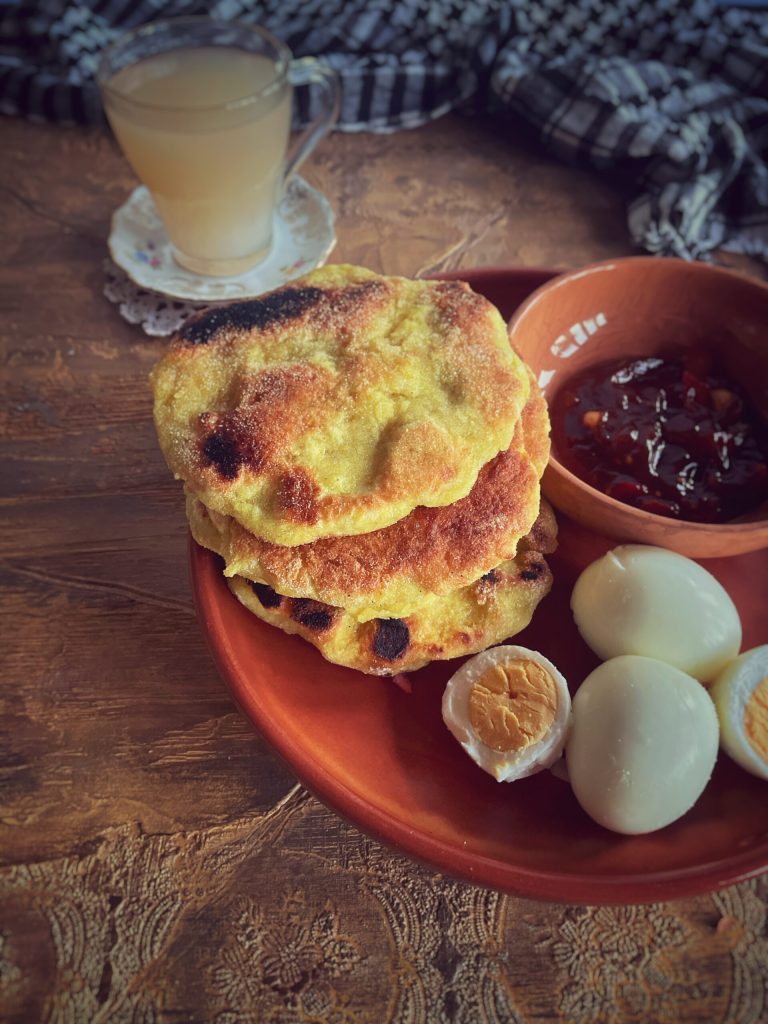
The Malawah (also known as Malawach or خبز الملوح Khubz al-Malawah) is one of the cornerstones of Yemeni culinary culture.
It is an unleavened flatbread characterized by very thin, crispy layers, making it visually and technically similar to the Indian paratha.
The history of Malawah is deeply linked to trade routes and cultural exchanges between the Arabian Peninsula and the Indian subcontinent.
Traditionally, this bread was prepared in Yemeni homes and baked in the tannur, the typical cylindrical clay oven.
Over time, the Yemeni diaspora brought this recipe across the Middle East, where it became a staple of breakfast and festive meals, appreciated for its versatility and rich flavor.
The secret of its texture lies in the technique: the dough is rolled out until almost transparent and then folded multiple times with added fat (usually smen or ghee).
This process creates layering that separates during pan or oven cooking, giving a pleasant contrast between a crunchy exterior and a soft interior.
The authentic recipe is made with a few essential elements:
Wheat flour: the structural base.
Water and salt: for elasticity and flavor.
Smen, salted fermented butter: essential to create the layers.
Nigella seeds (Habbat al-Barakah): used to garnish and add a pungent, aromatic note.
In Yemen the Malawah is often called Rashush (literally “sprinkled”), referring to the nigella seeds that are “sprinkled” on and inside the bread.
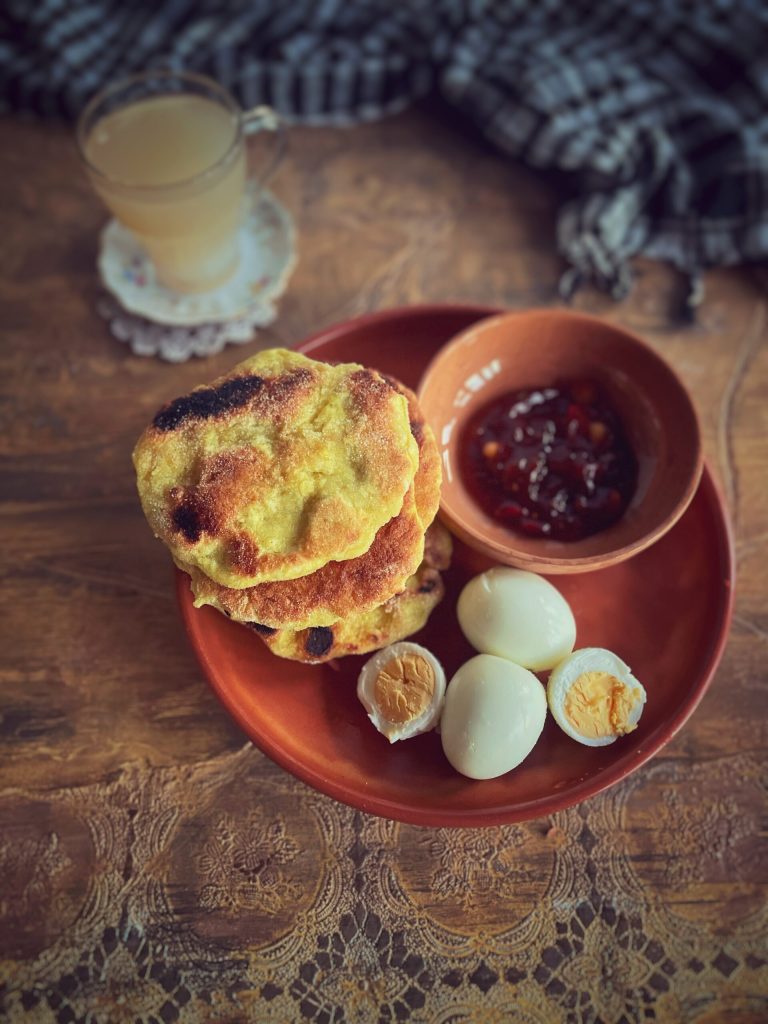
The Malawah is usually served in the center of the table to be shared, accompanied by freshly grated tomato with the spicy sahawiq sauce, hard-boiled or scrambled eggs with tomato (a Yemeni version of Shakshuka), and Yemeni tea (Shahi Haleeb) with milk.
If served at lunch or dinner, the Malawah acts as a “utensil” for hot stews served in a stone pot (Haradah):
- Difficulty: Medium
- Cost: Very inexpensive
- Rest time: 1 Hour 20 Minutes
- Preparation time: 10 Minutes
- Cooking time: 6 Minutes
- Portions: 6 pieces
- Cooking methods: Stovetop
- Cuisine: Middle Eastern
- Seasonality: All seasons
Ingredients
- 4 cups wheat flour
- 1 1/4 cups water (warm)
- 1 teaspoon sugar
- 7 tbsp smen (or ghee)
- to taste nigella seeds
- to taste salt
Tools
- 1 Skillet 11 in
Steps
The dough: In a bowl, combine flour, salt and sugar. Add the water gradually. Knead vigorously for 10-12 minutes. You should obtain a smooth and very elastic ball.
Resting: Divide the dough into 4-5 balls. Cover them and let them rest for at least 1 hour. This step is vital so you can roll the dough out without tearing.
The sheet and the nigella: Generously grease your work surface with smen.Take one ball and stretch it with your hands until it becomes very thin and almost transparent (like a veil).
Brush the entire surface with plenty of melted smen.
Generously sprinkle nigella seeds over the entire opened sheet.
Forming the “snail”: Roll the sheet onto itself to create a long cylinder (a “rope”).
Twist the cylinder into a spiral to form a snail shape.
Let the finished snails rest for another 20 minutes.
Cooking: Flatten each snail with a rolling pin or with your hands until you get a disc about 11 in or about 6–7 in for a “mini” version like mine.
Heat a cast-iron or heavy-bottomed skillet over medium heat.
Cook for about 2-3 minutes per side. When you see bubbles and golden spots, brush with a bit more ghee.
As soon as it comes off the heat, gently “tap” the edges of the bread with your hands to separate the inner layers and make it softer.