
Cajuína is a typical beverage from northeastern Brazil produced and consumed especially in the state of Piauí, where it is considered a cultural heritage of the state and a symbol of the culture of the city of Teresina.
Prepared with the juice of the caju, non-alcoholic, using clarified sterilized water, it has a color between yellow and amber, the result of the caramelization of the juice’s natural sugars.
It can be prepared both artisanally and industrially.
It was first mentioned around 1900 by the pharmacist Rodolfo Teófilo and was used to fight alcoholism as a benevolent substitute for cachaça.
Today cajuína is mainly produced to preserve the fruits harvested in abundance between June and September when they are ripe and fall from the trees and are therefore vulnerable to insects that easily damage them.
The cajù is the cashew apple; the seeds are removed from the shell and subjected to several washes. They are then pressed and the juice that comes out is clarified thanks to the addition of sap extracted from the caju tree itself. The extracted juice is filtered through a cloth and then sterilized in a bain-marie.
Its sweet but slightly acidic flavor makes it a perfect accompaniment to fish, seafood and meat dishes.
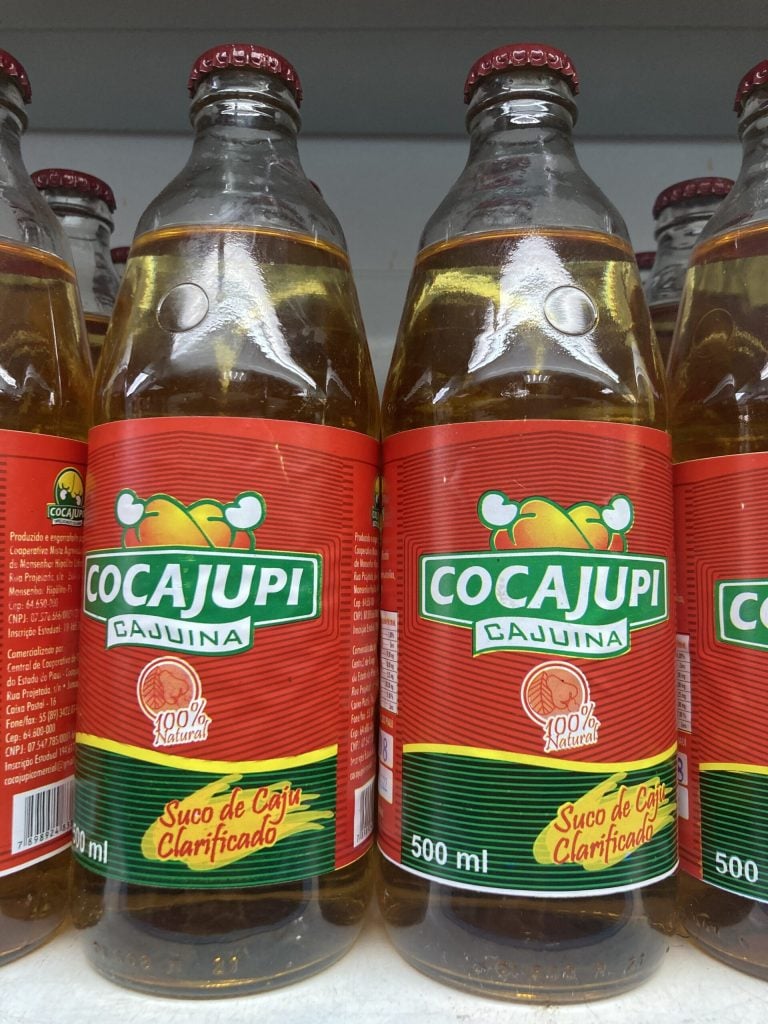
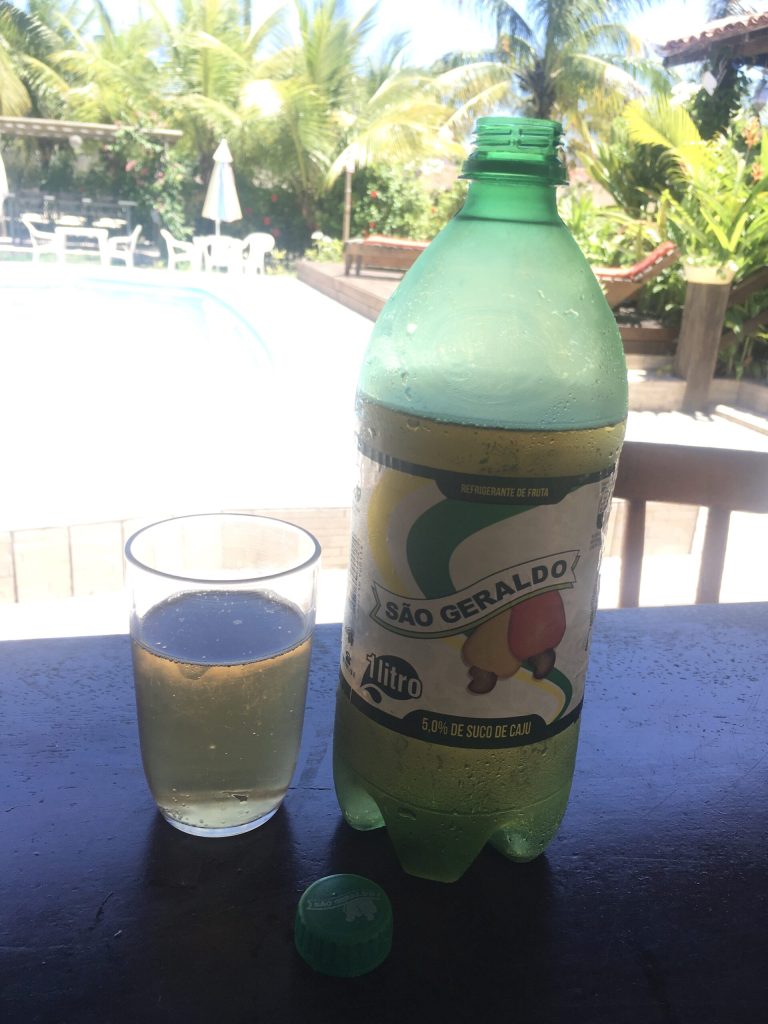
The one in the photo is one of the more famous but harder-to-find brands; the one below is a sort of imitation easily found in bars and supermarkets.
The recipe below is the homemade version.
- Difficulty: Medium
- Cost: Medium
- Preparation time: 30 Minutes
- Cooking time: 2 Hours
- Portions: 6
- Cuisine: Brazilian
Ingredients
- 17 cups Caju juice (cashew apple juice)
- 1 tsp gelatin
- as needed water
Steps
Mix the gelatin with the water and place over heat until it boils, then add and stir in the caju juice.
Filter the juice through a fine mesh and repeat the process until you obtain a clear liquid, then place it in a container and cook in a bain-marie for about two hours.
Allow to cool and then consume.
For a sweeter version you can add about 2 tsp of caramel for every liter (≈4.2 cups).
A fruit of Brazilian origin, the Caju (cashew apple) is widespread both in the Northeast of Brazil and internationally. It is exported worldwide and is a fruit that contains two parts.
As mentioned, the Caju is nothing other than the cashew apple. the cashew seed is extracted from the shell.
