
In Calabria, Easter wouldn’t be the same without the scent of cuzzupe.
These braided pastries, also known as sgute or cuddure, have for centuries marked the end of the Lenten fast and the joy of rebirth.
There are versions closer to a soft cookie (shortcrust-like) and leavened versions (more like a brioche), such as the recipe below.
Their most iconic feature is the hard-boiled egg embedded in the dough, an ancient symbol of life and fertility.
Tradition dictates that the eggs embedded in the dough should be an odd number. In the past, the number of eggs had a specific meaning: for example, a cuzzupa with seven eggs would be given by a mother-in-law to her son-in-law as a symbol of family bond.
The shapes of the cuzzupe also tell a story: braids, hearts, baskets, doves or rings. Each family keeps its own recipe, handed down through the aroma of anise seeds and the warmth of the wood-fired oven.
Before baking, the surface is brushed with egg yolk and milk and decorated with: colored sprinkles (traditional diavolini or sprinkles) or a sugar glaze (called annaspro), typical in some areas, applied after baking to make the pastry white and glossy.
In the recipe I propose today, I wanted to combine this cultural heritage with modern dietary needs.
These are the Calabrian cuzzupe in a gluten-free version, using sourdough starter to achieve better digestibility and the complex aromatic notes that only natural fermentation can give.
To finish, a tempting touch of chocolate sprinkles.
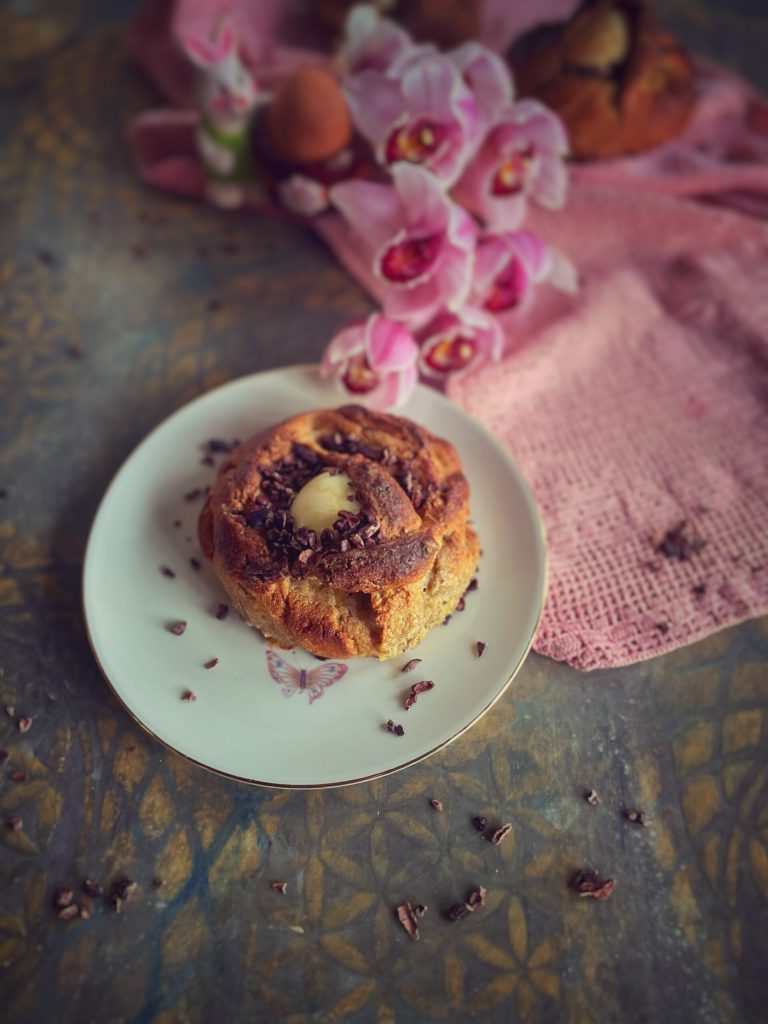
- Difficulty: Medium
- Cost: Economical
- Rest time: 8 Hours
- Preparation time: 15 Minutes
- Cooking time: 30 Minutes
- Portions: 4 pieces
- Cooking methods: Oven, Electric oven
- Cuisine: Italian
- Seasonality: Easter, Spring
Ingredients
- 2/3 cup fresh gluten-free sourdough starter (refreshed)
- 1/2 cup milk (+ for brushing)
- 3/4 cup granulated sugar
- 3 eggs (+ 1 yolk for brushing)
- 7 tbsp butter ((about 3.5 oz))
- 2 tsp anise seeds
- as needed lemon zest
- 6 hard-boiled eggs
- as needed chocolate sprinkles
Steps
Activation: In a large bowl, dissolve the gluten-free sourdough starter in the lukewarm milk.
Dough: Add the sugar and the eggs one at a time, mixing well. Then add the gluten-free flour mix, the lemon zest and the anise seeds.
Incorporating fats: Work the mixture and add the softened butter in pieces until fully absorbed. Gluten-free dough will be stickier than usual: help yourself with lightly oiled hands or dusted with rice flour.
First Rise: Cover with plastic wrap and let rise in a warm place for 4 to 6 hours.
Shaping: Divide the dough and shape into the classic forms (braids or rolls). Embed the hard-boiled egg (with shell) in the center, securing it with two crossed strips of dough.Note: Before embedding the hard-boiled egg, lightly brush the shell with a thin layer of oil. This creates a non-stick barrier between the shell and the dough, preventing the dough from “sticking” during the rise and baking.
Second Rise: Place the cuzzupe on a baking sheet lined with parchment paper and let rest for another 2 hours.
Baking: Brush with egg yolk and milk, decorate with chocolate sprinkles (traditionally colored sprinkles) and bake at 356°F (static) for about 25-30 minutes, until nicely golden.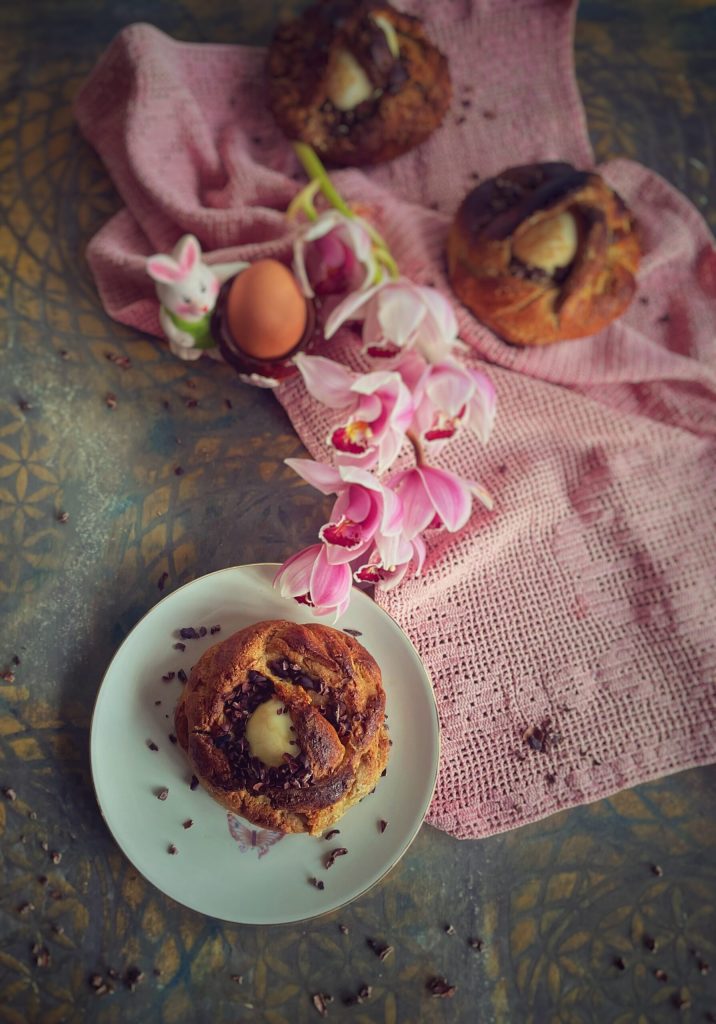
The use of anise in the tradition of Calabrian Cuzzupe:
Wild variety: In Calabria, wild black anise seeds (locally known as aranzo or ananzu) are often used, and they have a more intense aroma than the common anise seeds found commercially.
Besides the seeds, it is very common to add a small glass of anise liqueur (or anisette) in the dough to enhance its fragrance.
FAQ (Questions and Answers)
It’s fascinating to note how the Mediterranean basin shares almost identical traditions born from the symbolism of the egg as rebirth.
Here is a comparison of the most famous “cousins,” whose recipes you can find on the blog:
