
The Neapolitan pastiera is one of those desserts that does not really come from a single recipe, but from a story. It sits on Easter tables, of course, but even before that it lives in home kitchens, among discussions and little secrets.
As happens with many regional recipes, quantities vary, details change, sometimes even ingredients: every family has its own version, kept and defended over time.
In mine, you could write a whole treatise about the pastiera.
Grandma Gina’s was better, no, aunt Assunta’s was better. Or maybe the mother-in-law’s. And then: yes, but grandma Gina had aunt Assunta’s recipe… although, at some point, she had changed the quantities.
Real teams formed, small domestic competitions. I remember satisfied faces for a victory and sulky looks down to the feet for a defeat. And then there was always someone with a secret ingredient, the kind they wouldn’t reveal even under torture.
The one that came to me is the recipe my mother used to make: truly good. From whom she received it, however, I cannot say with certainty. Maybe from my grandmother, perhaps later with some adjustments. Who knows. For sure, it’s the one I feel is mine today.
Like her, I have taken to always making triple quantities: that way there is an extra pastiera ready to give to a friend.
And one thing I know for sure is that someone will say: “Ah, but mine is the original.”
And I, inevitably, answer: “The original is available at every street number in town.”
I don’t know if this is truly the original version of the Neapolitan pastiera. But I can guarantee the result. And that’s where we start: here is how to make Neapolitan pastiera at home.
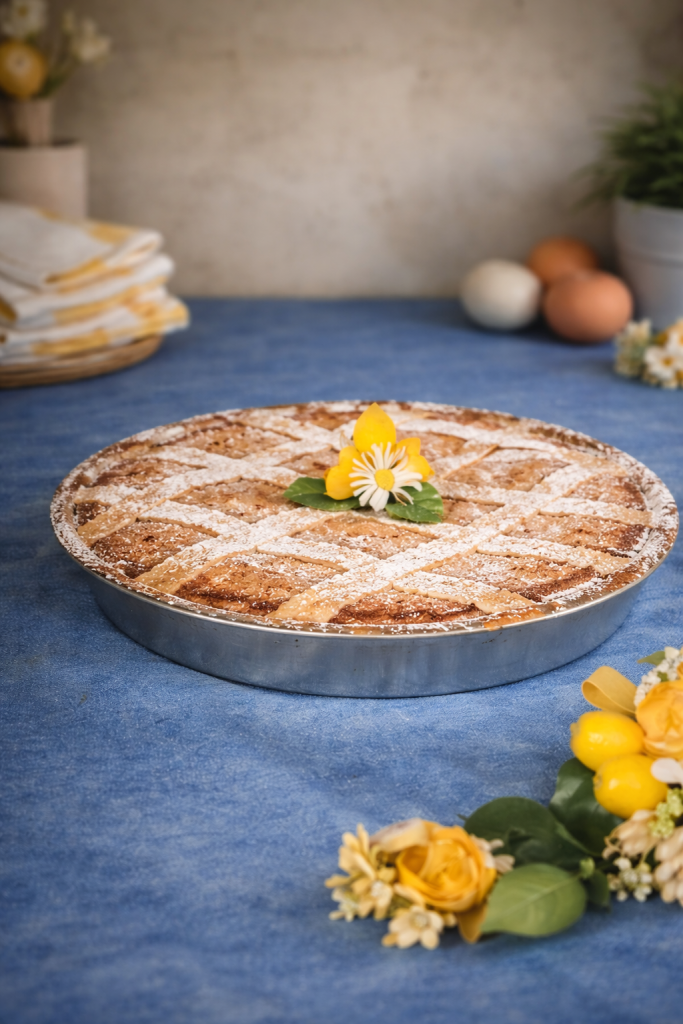
- Difficulty: Medium
- Cost: Medium
- Rest time: 3 Days
- Preparation time: 2 Hours 30 Minutes
- Cooking time: 45 Minutes
- Portions: 10Pieces
- Cooking methods: Oven
- Cuisine: Italian Regional
- Region: Campania
- Seasonality: Easter
Ingredients
- 3 eggs
- 2.92 cups all-purpose flour (00)
- 3/4 cup granulated sugar
- 10 1/2 tbsp butter (or lard)
- 1 tsp baking soda (or a pinch of baking powder)
- 1 grated lemon zest ((optional))
- 2.04 cups sheep ricotta
- 1.25 cups granulated sugar
- 3 egg yolks
- 2 egg whites
- 1.67 cups cooked wheat (grano cotto)
- 2 tbsp lard
- 1 pinch salt
- 1 glass milk
- 2 tbsp sugar
- 1 vial millefiori essence
- 1 pod vanilla
- 1 cinnamon stick
- 1.33 cups candied fruit (candied citron and orange)
Tools
- Whisk
- Rolling pin
- 1 Baking pan for pastiera
- 1 Saucepan
- 1 Fluted pastry wheel
Steps
How to make Neapolitan pastiera at home
The first thing to do is prepare the shortcrust pastry.
You can work it by hand on the work surface or, if you want to speed up, use the stand mixer.
Start by combining the flour and softened butter cut into pieces: work them with your fingertips (or with the paddle attachment if using a mixer) until you obtain a sandy mixture.At this point add the baking soda (or baking powder), the sugar and then the eggs, one at a time, waiting for the first to be well absorbed before adding the next. Also add the grated lemon zest.
Continue to work the dough until you obtain a smooth and homogeneous shortcrust. Compact it, wrap it in a tea towel or cling film and put it in the refrigerator to rest for at least 40 minutes. You can also make it a few days in advance and store it in the fridge.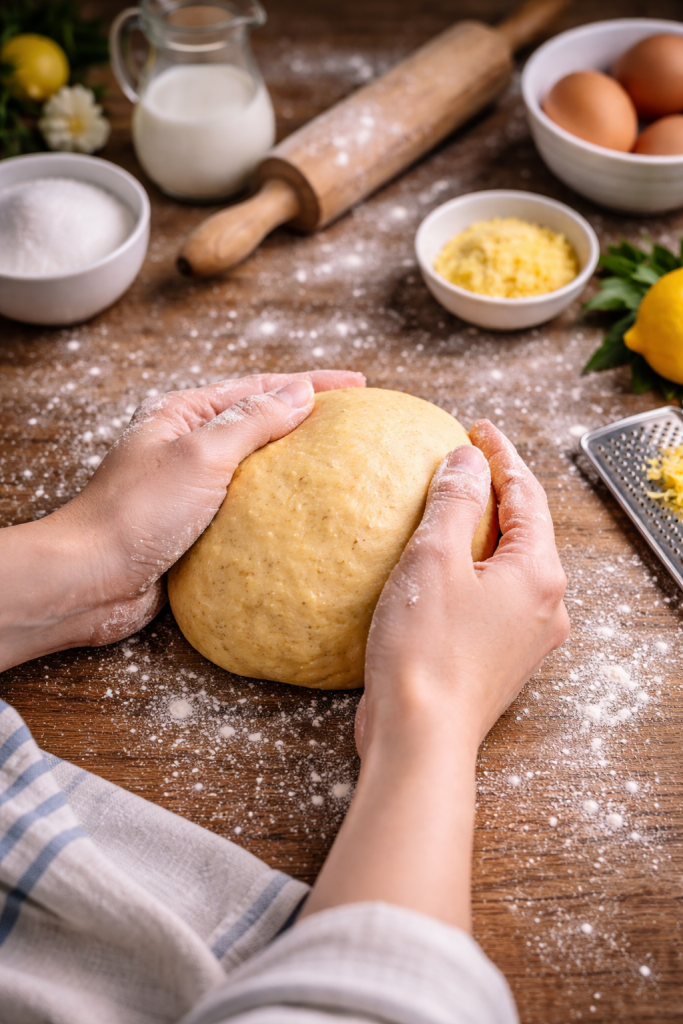
Take a large saucepan and pour in the cooked wheat, the milk, the lard, the 2 tablespoons of sugar and a pinch of salt. Bring to a boil, then turn off the heat.
Split the vanilla pod lengthwise with the tip of a knife, scrape the seeds and add them to the mixture together with the whole pod, which you will remove later.
Add the candied fruit, the vial of millefiori water and the cinnamon stick.To speed up, you can plunge the saucepan into a larger one filled with cold water (an ice bath). Alternatively, let it cool at room temperature: it will just take a little longer.
Separate the egg whites from the yolks and whip them separately.
Tip: to get well-whipped egg whites, put the container in the freezer for about 10 minutes. Then pour the egg whites and whip them with an electric whisk until very firm: when you turn the container upside down they should not move. Set them aside.
In another bowl work the yolks with half of the sugar, beating them until you get a pale and frothy mixture. Add them to the wheat mixture.
Separately, work the well-drained ricotta with the remaining sugar until creamy and lump-free, then add it to the mixture.
Only at the end gently fold in the whipped egg whites, mixing from the bottom up.
Combine everything well, then move on to rolling out the shortcrust pastry.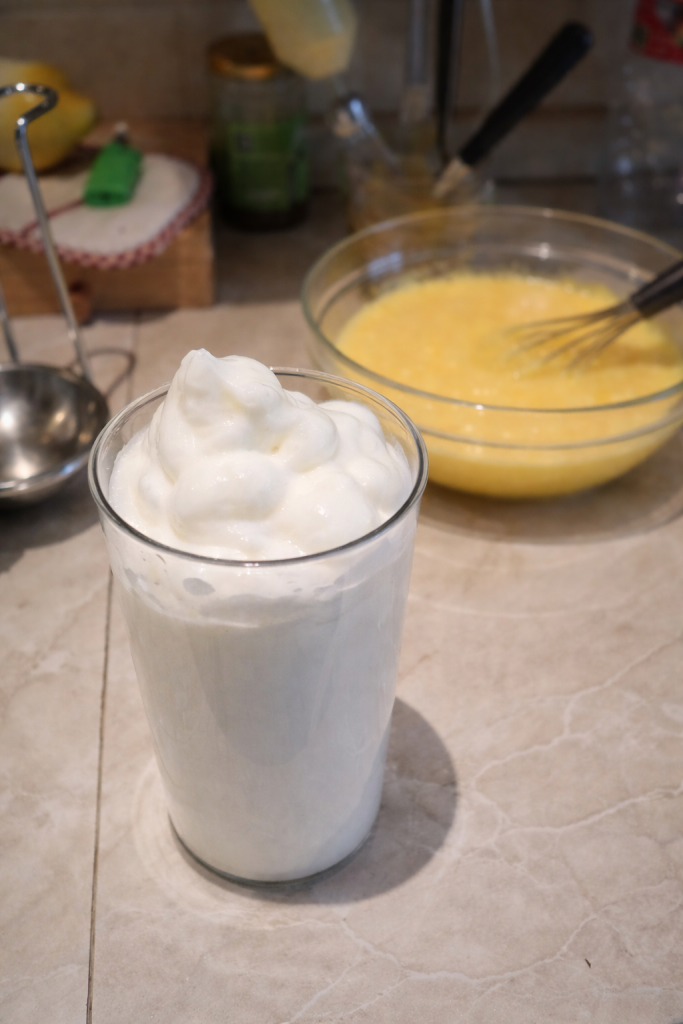
Roll out the shortcrust pastry as for a tart, keeping a thickness of about 0.2 inches (5 millimeters). Line it into the pan, trim the excess edges and pour inside the wheat and ricotta cream. Before using the filling, remove the vanilla pod and the cinnamon stick.
Roll out more shortcrust pastry and, with a fluted wheel, cut strips to place on top.
The characteristic of the pastiera is precisely the woven lattice strips, but this is not always an easy step: they risk breaking while you move them. To make it easier, you can cut the strips directly on the parchment paper, transfer them to a tray and let them rest in the freezer for about 10 minutes. This way they will firm up slightly and it will be easier to place them without breaking.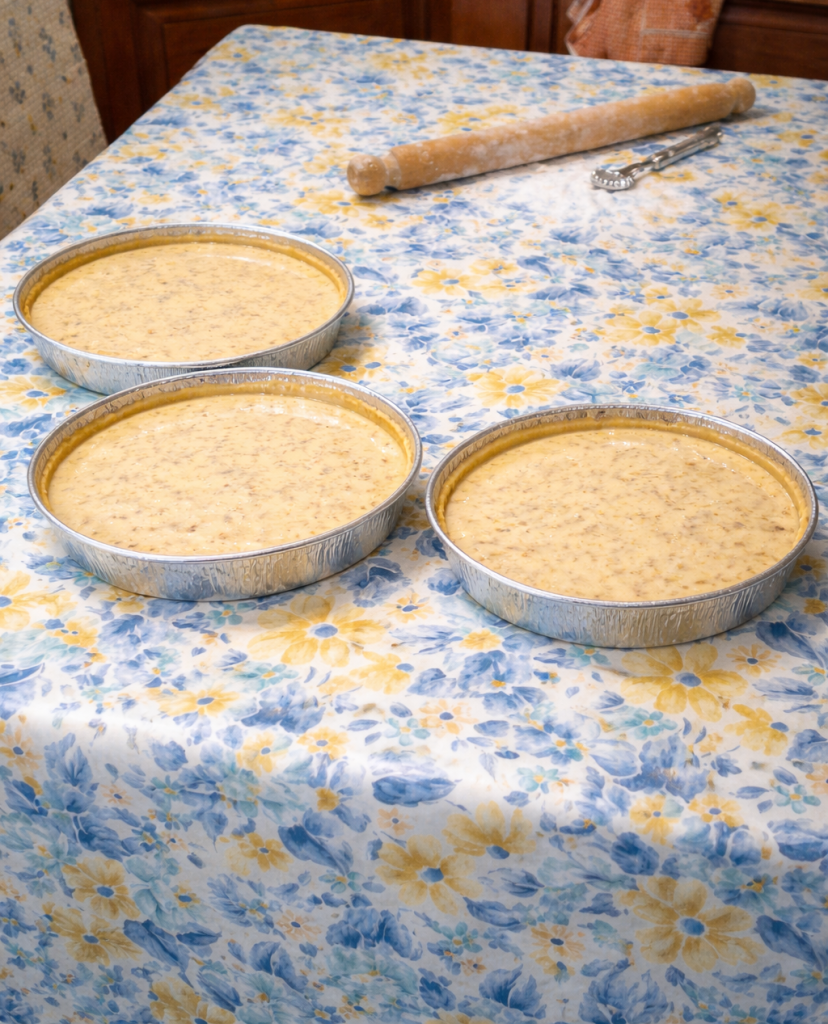
Preheat the oven in static mode to 356°F and bake for 40-45 minutes. Check the surface: it should be well golden. If necessary, extend baking by another 5-10 minutes, or until the pastiera is well colored even in the center.
Remove from the oven, then let it rest in a cool, dry place for at least 24 hours.
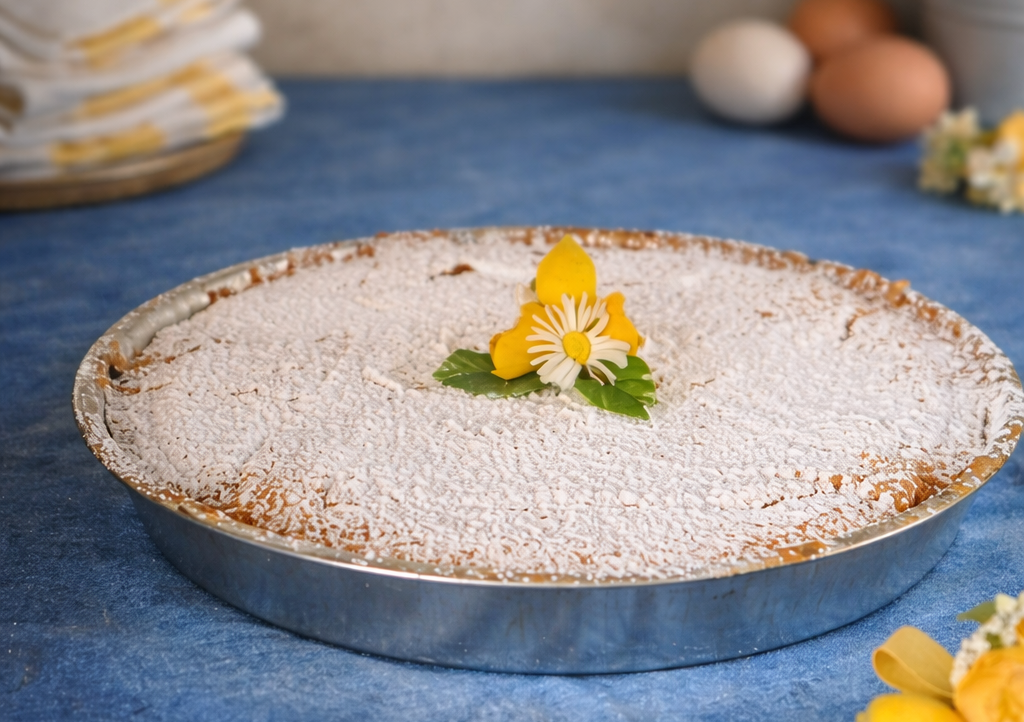
Before serving, dust with powdered sugar.
Preparing the pastiera is long, but it is really worth it.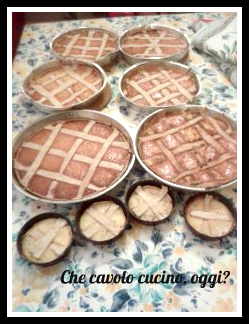
Easter is not only about sweets: here you can also find the Neapolitan tortano.
Storage, notes and tips
The Neapolitan pastiera keeps at room temperature, in a cool, dry place, for 4-5 days. Avoid the refrigerator, because it would tend to harden the shortcrust and alter the texture of the filling.
Resting is fundamental: just out of the oven the pastiera is still moist and not very compact. The next day it is already better, but the best result is obtained after 2-3 days, when the flavors have perfectly blended.
If you prefer a creamier consistency, you can blend part of the cooked wheat before adding it to the mixture. Conversely, leaving it whole will give you a more rustic texture, as tradition dictates.
Regarding aromas, you can adjust them to your taste: some prefer a more intense note of millefiori water and others use it more sparingly. The same goes for candied fruit, which you can reduce or increase.
FAQ (Questions & Answers)
Can pastiera be frozen?
Yes, you can freeze it once baked and completely cold. To eat it, let it thaw slowly at room temperature. I recommend portioning it before putting it in the freezer.
Can I omit the candied fruit?
Yes, you can omit them or reduce their quantity, but they are part of the traditional recipe and contribute to the characteristic flavor of the pastiera.
Can I replace lard with butter?
Yes, you can use butter both in the pastry and in the wheat. The result will be slightly different, but still very good.
Can I bake the pastiera in an air fryer?
No, it is not recommended. The pastiera needs a slow and even bake that allows the filling to cook well inside without drying out too much on the surface.
The air fryer tends to cook faster and more aggressively, risking over-browning the surface while leaving the inside still moist.
For this reason it is preferable to use a conventional oven in static mode, which guarantees a gentler and more uniform cooking.
Some images in the text were generated with AI for illustrative purposes
