
Pici all’aglione original Tuscan recipe, a typical dish prepared with homemade Tuscan pici, as tradition dictates. The main ingredient of this traditional recipe is the Aglione from Valdichiana, a typical Tuscan product with a unique flavor. After suggesting the pici with white ragù, today we’ll see together how to make pici all’aglione following the traditional Tuscan recipe.
The Aglione from Valdichiana is a typical Tuscan garlic characterized by very large cloves and a milder flavor compared to common garlic. Also known as the “garlic of the kiss”, it is easier to digest and less pungent, qualities that make it perfect for this traditional recipe.
If you’re wondering how to prepare the original pici all’aglione, it’s important to know that aglione is mainly found between the provinces of Arezzo and Siena, in the summer period from June to the end of August. It is not always easy to find, but you can substitute it with a good quality garlic to still obtain a nice sauce for homemade pici, although it will certainly differ from the original version.
If you pass through Tuscany, especially the Valdichiana, look for this unique ingredient and take the opportunity to prepare the real pici all’aglione, one of the most authentic dishes of the local tradition.
See you at the next recipe… and in the meantime set the table!
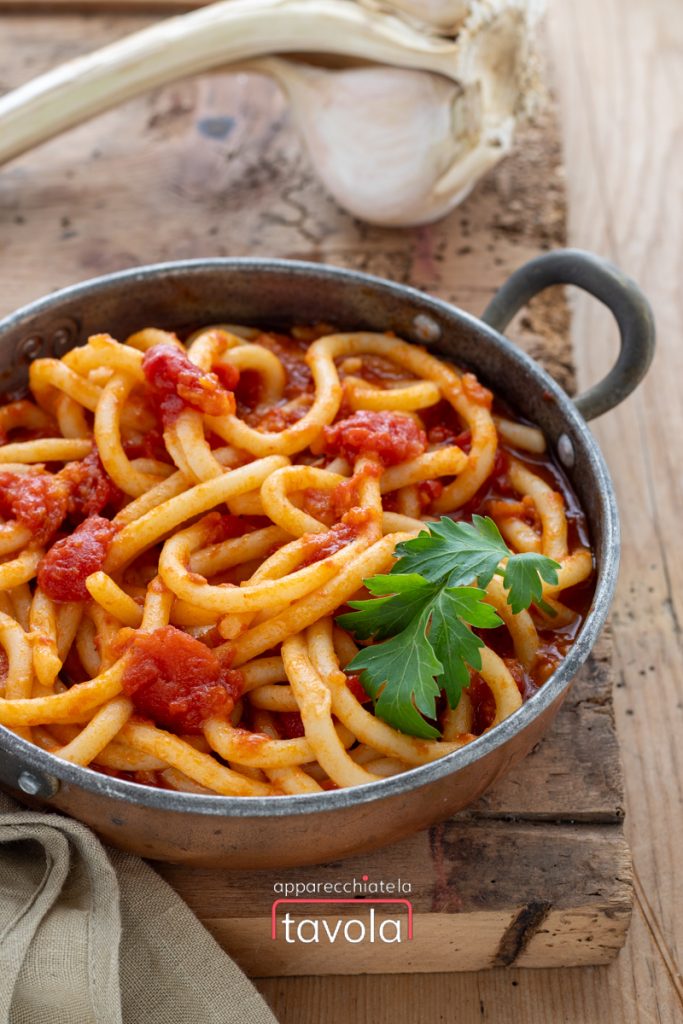
- Difficulty: Very easy
- Cost: Very inexpensive
- Preparation time: 10 Minutes
- Cooking time: 30 Minutes
- Portions: 4
- Cooking methods: Stovetop
- Cuisine: Italian
- Seasonality: All seasons, Summer
- Energy 304.53 (Kcal)
- Carbohydrates 38.57 (g) of which sugars 4.41 (g)
- Proteins 7.48 (g)
- Fat 14.44 (g) of which saturated 2.62 (g)of which unsaturated 3.18 (g)
- Fibers 4.70 (g)
- Sodium 1,168.47 (mg)
Indicative values for a portion of 250 g processed in an automated way starting from the nutritional information available on the CREA* and FoodData Central** databases. It is not food and / or nutritional advice.
* CREATES Food and Nutrition Research Center: https://www.crea.gov.it/alimenti-e-nutrizione https://www.alimentinutrizione.it ** U.S. Department of Agriculture, Agricultural Research Service. FoodData Central, 2019. https://fdc.nal.usda.gov
Ingredients
- 13 oz pici (hand-rolled Tuscan pasta)
- 3 cloves aglione (Valdichiana large garlic)
- 21 oz peeled tomatoes (canned)
- 5 tbsp extra virgin olive oil
- 1 chili pepper
- to taste salt
Recipe: Tuscan pici all’aglione
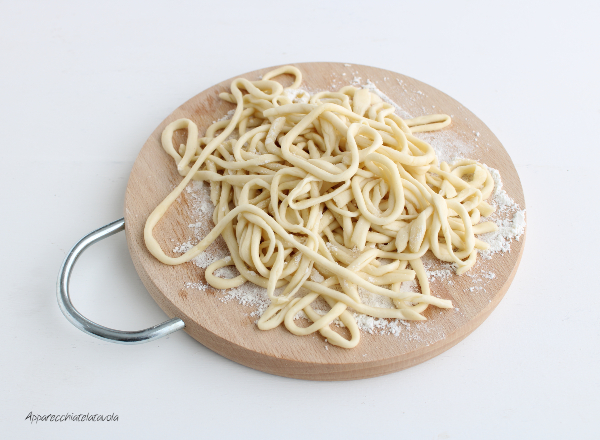
Buying ready-made pici at the supermarket or a specialty shop is definitely the quickest way to prepare this first course. Alternatively, if you love fresh pasta and want to try making homemade Tuscan pici, follow my recipe: the result will be even more authentic and close to the regional tradition.
Take the aglione and separate into 3 cloves. Peel them and reduce them to a cream, transferring them to a container and blending with an immersion blender together with 2 tablespoons of extra virgin olive oil.
Transfer the aglione cream to a large frying pan along with the remaining extra virgin olive oil. Turn the heat to low and let it gently sauté, stirring often to prevent sticking. When the soffritto is hot and fragrant, add the chopped chili pepper (adjust to your taste) and let it flavor for a few minutes, continuing to stir.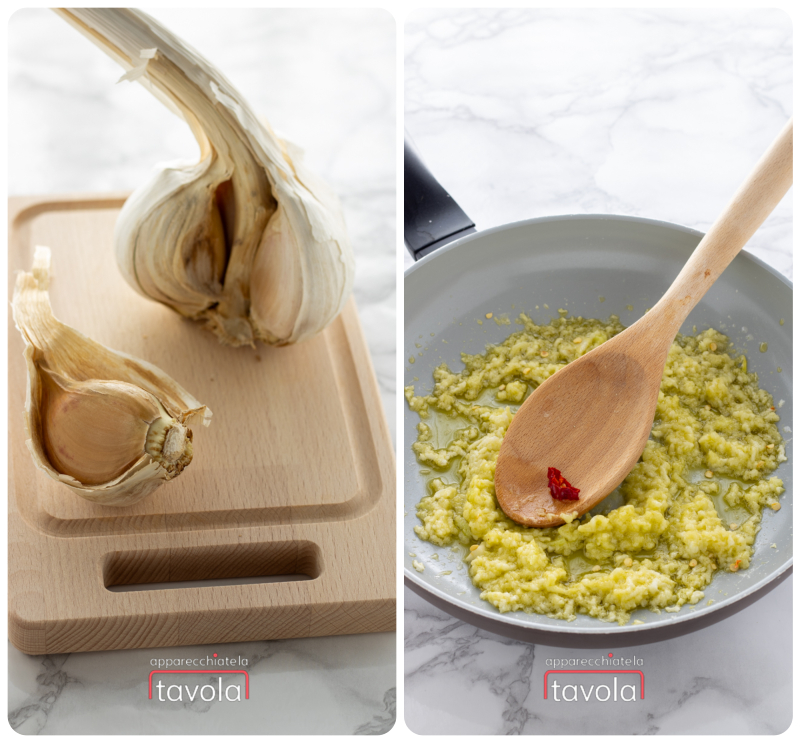
Add the peeled tomatoes (or fresh tomatoes if in season) to the pan with the aglione soffritto. Stir well with a wooden spoon to combine all the flavors.
Season with salt, cover with a lid and let cook over low heat for about 30 minutes. During cooking, stir occasionally to prevent the sauce from sticking and to obtain a uniform, well-reduced consistency.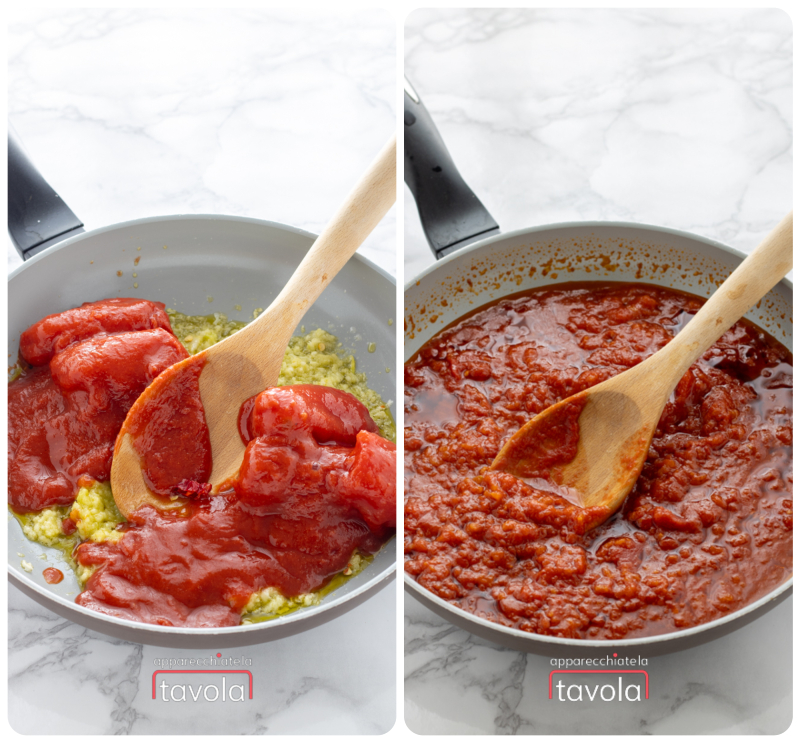
Meanwhile, bring a pot of salted water to a boil and cook the pici. If you use packaged pici, follow the times indicated on the package; if you made fresh homemade pici, they will be ready when they float to the surface.
Once cooked, drain them and transfer them immediately to the pan with the freshly prepared aglione sauce. Toss the pici gently to combine the sauce well and serve hot.
Do not serve with cheese to respect the original recipe.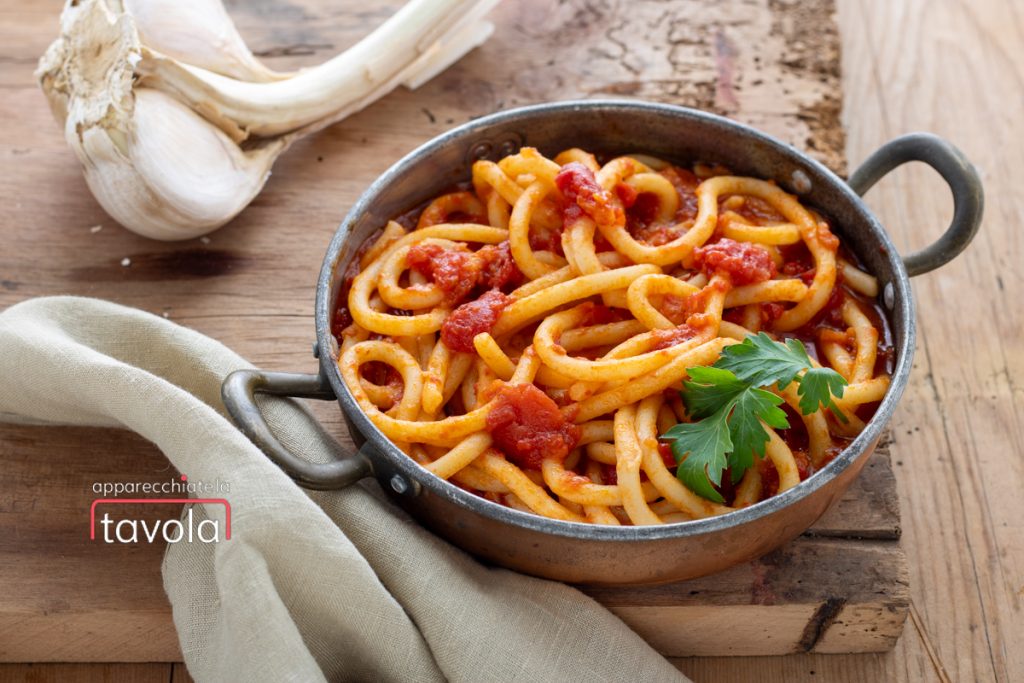
The first difference you notice between aglione and garlic is undoubtedly the size: the cloves of the Aglione from Valdichiana are much larger than those of common garlic (see photo). The bulbs are also considerably bigger, with fewer cloves compared to common garlic.
Besides appearance, there are important differences in taste and digestibility. The aglione has a milder and slightly sweet flavor, so much so that it is also known as the “garlic of the kiss”, because it is less pungent and easier to digest than traditional garlic. This makes it ideal for preparations like the aglione sauce for pici, where the flavor should be present but not too sharp.
Another difference concerns structure: aglione presents fewer but much larger cloves per bulb, while common garlic has smaller bulbs with numerous cloves.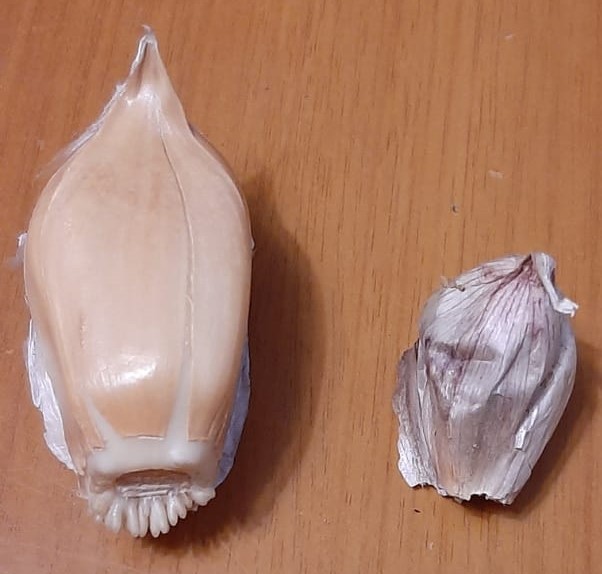
Storage and tips
Storage: pici all’aglione are best eaten just cooked. Alternatively, you can store them in the refrigerator and reheat them in a pan with a drizzle of extra virgin olive oil before serving.
Tips: if the sauce reduces too much, add a ladle of the pasta cooking water to keep it creamy.
FAQ
Can I replace aglione with regular garlic in Tuscan pici?
Yes, if you cannot find Aglione from Valdichiana, you can use common garlic, preferably fresh and with a mild flavor. The result will, however, be more intense and less sweet than the original recipe.
Can I use fresh tomatoes instead of peeled (canned) ones?
Yes, especially in summer. Fresh tomatoes make the sauce even lighter and more fragrant.
What is the difference between pici and spaghetti?
Pici are a hand-rolled Tuscan fresh pasta, thicker and more irregular than spaghetti, which are industrial and thinner.
