
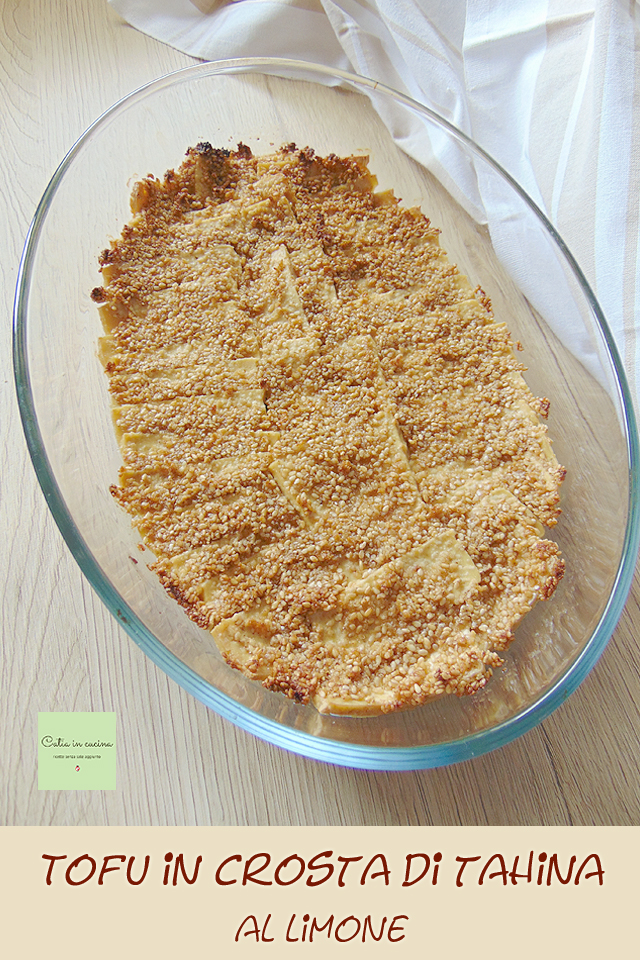
Tofu in a tahini lemon crust
This recipe needs no big explanations; the title says it all. 😀
Do you remember the vegetarian and vegan cooking course I took (many) years ago? Among the many recipes I learned thanks to that course – all included in this collection (which, besides the recipes, also contains links to the posts for each lesson) – the tofu in a tahini crust is one of the most successful recipes in my household, and I have made it many times.
If you like lemon flavor, if you like tahini, and if you… well I mean… if you appreciate tofu (or want to start appreciating it 😀) then this recipe is the right one! Pairing tofu with tahini and lemon is a great way to enjoy this unusual (for many it is unusual) food: not everyone loves it, but when cooked the right way it can be liked. It’s a great way to start, and I assure you you will like it more and more!
👉 For more tofu recipes, here are some ideas and also the complete collection:
- Difficulty: Very easy
- Cost: Budget-friendly
- Preparation time: 15 Minutes
- Cooking time: 15 Minutes
- Portions: 4
- Cooking methods: Oven
- Cuisine: Italian
- Seasonality: All seasons
Ingredients
- 11 oz Tofu (2 blocks, package weights are not standard)
- 6 tablespoons Tahini (homemade)
- 5 tablespoons Lemon juice
- 1 teaspoon Extra virgin olive oil
Tools
- Baking tray
Preparation
First, prepare the tahini:
I have made this tahini-crusted tofu several times, creating a different tahini each time. Therefore I give you three variants, all excellent and suitable for this recipe, and all convertible into lemon tahini simply by adding (it’s obvious but that’s how it is) the lemon juice to the sauce you just prepared.
1) Tahini made with untoasted sesame seeds that have been soaked, a recipe I learned in the cooking course;
2) Tahini made the more commonly known way, i.e. with toasted sesame seeds;
3) Tahini made with sunflower seeds (or a mix of the two seeds, half sesame and half sunflower), which can be made either toasted or directly from raw seeds without soaking, and which is prepared very quickly by blending the seeds straight from the bag.
Decide which of the three you want to try, keeping in mind that:
– For tahini number 1 (with untoasted sesame) you can consult the full recipe here.
– If you want to try tahini number 2 I don’t have a published recipe but it’s very simple: you just toast the sesame seeds before blending (or grinding in a mortar) together with the oil. Toast the seeds in a pan for a few minutes and consider, as for no. 1, a proportion of 150 g of toasted seeds and 50 g of oil (150 g ≈ 5.3 oz of seeds and 50 g ≈ 1.8 oz of oil). For some extra info I refer you to the recipe for sesame and breadcrumbs carrots where I explained how to toast sesame.
– For tahini number 3 there are no special explanations: the seeds (sunflower or mixed) are treated like sesame seeds, either toasted or blended raw with the oil. The result will be a delicate and creamy sauce, thanks to sunflower seeds that are more… pasty. (For more details see the recipe: sunflower seed tahini).
Once the sauce is ready, squeeze the lemon (or lemons) and add the juice, stirring with a spoon.
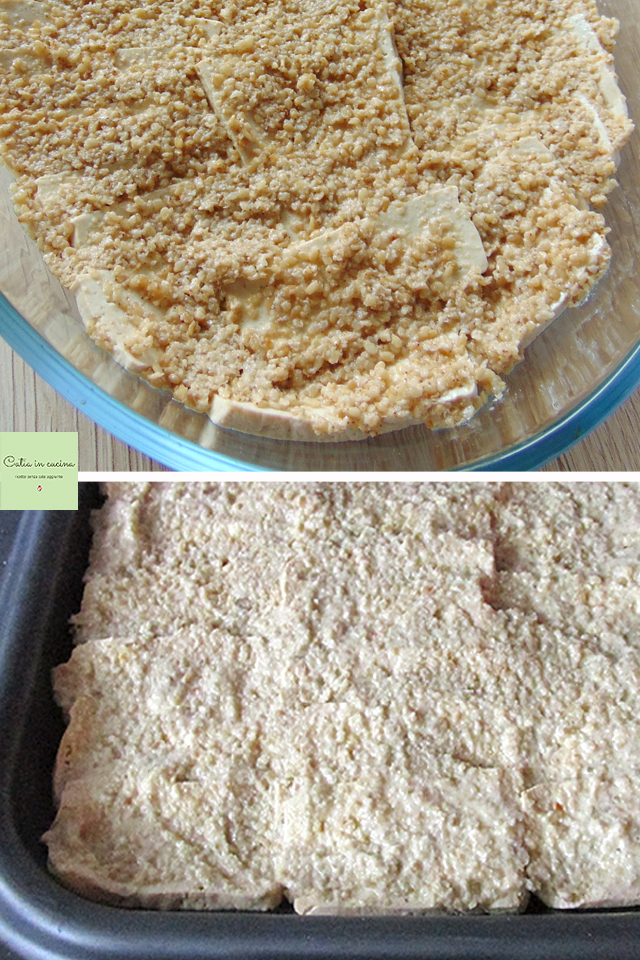
In all three versions the sauce can be more or less grainy depending on how much it is blended, without the texture affecting the final taste.
I show here photos I took on two different occasions, where you can clearly see the greater graininess (with the sesame seeds clearly visible, i.e. less blended) of the first, and the greater creaminess of the second (half sesame and half sunflower). The different color is due to the different seeds used and to toasting in the first case (and untoasted seeds in the second photo).
With the tahini ready, prepare the tofu:
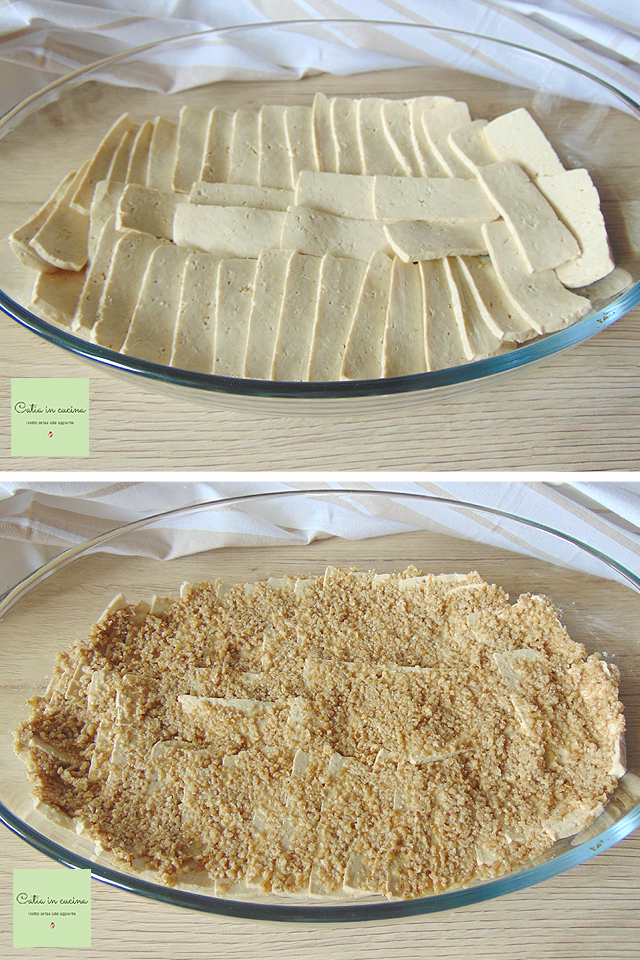
Rinse the tofu to remove any packing liquid residue and pat it dry.
Slice it thinly. A tofu block is usually a flat rectangle not too tall. For this recipe you can slice it either along the short side or the long side if you want larger slices.
Place the slices on a baking tray brushed with a little oil. The slices can be arranged side by side so the tahini can cover each slice completely, or they can be slightly overlapped as I did. For the final taste the difference is negligible, while aesthetically you may prefer not to overlap them if you want each slice to be totally covered in tahini and therefore fully gratinated.
Cover the tofu with the lemon tahini.
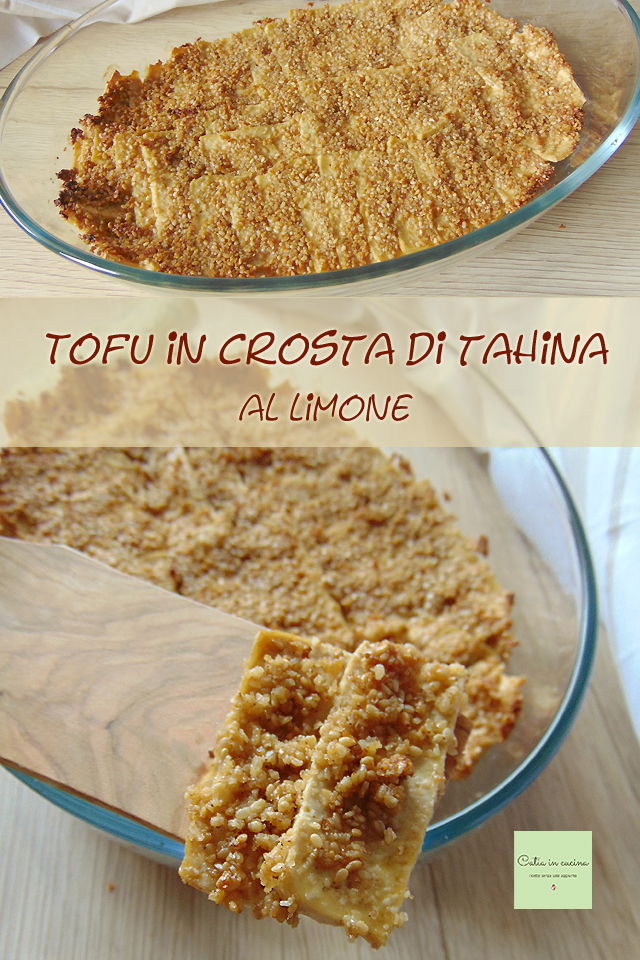
Bake at 356°F for about 15 minutes, until the tahini is golden.
And here is my tahini-crusted tofu just out of the oven:
One extra tip:
One of the things taught in the cooking course was that tofu should be boiled for a few minutes in water before using. The purpose of this treatment would be to make the tofu softer – and indeed we were advised to do this when preparing sauces and spreads – but it would also, and above all, aim to remove the bitter aftertaste that tofu sometimes has. To be honest, I have only tried boiling it once, then I stopped because I like tofu as it is and I did not feel the need to lengthen prep time by boiling it.
However, I’m sharing this information because I find it useful, especially as an additional idea for those who don’t like tofu: if a few minutes of boiling can make it to your taste, why not try? 🙂
Salt-free Tips
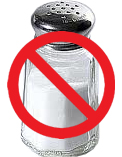 Tahini is flavorful and extraordinarily good even without added salt.
Regarding tofu, I recommend checking the ingredients and nutritional values on the package, because I have found that the sodium level indicated can vary. Checking the label is always the best thing to do to choose the product that fits your needs.
I invite you to cook without added salt (or at least to reduce it!). Put into practice my usual tips listed below:
If you are interested in reducing or eliminating salt, always remember to:
▫ Reduce salt gradually, the palate needs to adjust slowly and should not notice the progressive reduction.
▫ Use spices. Chili, pepper, curry, nutmeg, cinnamon, cloves, cumin…
▫ Use aromatic herbs. Basil, parsley, oregano, thyme, sage, marjoram, rosemary, mint…
▫ Use seeds. Sesame, pine nuts, almonds, walnuts…
▫ Use pungent vegetables or fruit. Garlic, onion, lemon, orange…
▫ Use my salt-free vegetable granulate and gomasio.
▫ Prefer fresh foods.
▫ Avoid cooking methods that lose flavor in water; prefer methods that retain flavors (griddle, foil, steam, microwave).
▫ Avoid putting a salt shaker on the table!
▫ Allow yourself an occasional treat. It’s good for morale and helps you persevere.
If you don’t want or can’t give up salt:
▫ You can still try my recipes seasoning them according to your habits.
Follow me!
On the WhatsApp channel and on Instagram, on the Facebook page and Pinterest boards, in my two groups: Il gruppo di Catia, in cucina e oltre and Proprio quello che stavo cercando! and if you like… subscribe to my Newsletter
