
Today I’d like to tell you about the latest creation from my kitchen: pizza made with yellow cornmeal for polenta. It’s a dough that contains a percentage of polenta flour, which gives a very tasty, rustic flavor, dedicated to lovers of this ingredient and more. In fact, the balanced taste of this pizza, with that extra note given precisely by this flour, will please everyone. This is not a novelty; in peasant tradition polenta flour was used to supplement white flour when making bread or focaccia, as my grandmother used to tell us. I wanted to try and this “experiment” worked perfectly. I obtained a soft, well-aerated, very flavorful pizza. Pizza made with yellow cornmeal for polenta can be enjoyed plain or topped with a simple tomato, garlic and oregano sauce, with tomato and mozzarella, gorgonzola and sausages, or with vegetables and cured meats.
- Difficulty: Very easy
- Cost: Inexpensive
- Rest time: 20 Hours
- Preparation time: 15 Minutes
- Cooking time: 12 Minutes
- Portions: 8 slices
- Cooking methods: Oven
- Cuisine: Italian
- Seasonality: All seasons
Ingredients
- 2 oz Sourdough starter (about 60 g)
- 2 cups All-purpose flour (about 250 g)
- 1/2 cup Coarse yellow cornmeal (polenta) (about 75 g)
- 1 1/4 tsp Fine salt (about 7 g)
- 2/3 cup Room-temperature water (about 165 ml / 5.6 fl oz)
Tools
- 1 Baking pan 12-inch diameter
Preparation
I used very little sourdough starter to make this soft and flavorful pizza. After refreshing the starter (you can do this according to your usual routine), I took 60 grams (about 2 oz) and used it directly without waiting for it to rise. If you’re not sure of the strength of your starter, you can use up to 120 grams.
I chose to include 30% polenta flour in the total white flour because this percentage gave me results that were more than excellent both in terms of softness and flavor.
Transfer the freshly refreshed starter into a large bowl. Add the all-purpose flour and the polenta flour.
Add about 90 ml of water (about 3/8 cup / 3 fl oz), mix the ingredients very coarsely, cover well with food-grade plastic wrap and let the dough rest for about 30-40 minutes (photo 1). In this phase, called autolysis, the flours begin to hydrate and will absorb the water better; the structure and aroma of the leavened dough will be improved, plus the working time of the dough will be reduced (in plain terms) and we will have an even softer and more digestible final product.
After the resting time, slowly add the rest of the water, the fine salt and proceed to knead the ingredients directly in the bowl (to avoid adding more flour, since at the beginning the dough is very soft and sticky) for about 6-7 minutes, until you obtain a smooth dough ball.
Seal with plastic wrap and wait one hour. After an hour, take the dough, transfer it to a work surface dusted with semolina or all-purpose flour (but not polenta flour) and work it a bit more with your hands, gently.
Roll it up on itself a couple of times, each time forming a kind of cylinder. Shape the dough into a ball, lightly oil a large bowl and place the dough inside. Seal again and put it in the middle of the refrigerator for 18 hours. I put it in the fridge at 2:00 PM and took it out at 8:00 AM the next morning.
After 18 hours take the dough out and leave it at room temperature for one hour.
Oil a pan, gently tip the dough into it, cover and let rest another 15 minutes. Then stretch it well without pressing the dough, covering the entire surface of the pan; cover and let rise for the final time, about 3-4 hours depending on the temperature at home.
Bake the pizza made with yellow cornmeal (polenta) on the middle rack of a preheated oven at 482°F for about 10-12 minutes if your oven heats from both top and bottom; if, like mine, it’s a gas or electric oven that cooks only from the bottom, cook for about 12-15 minutes. Always check your baking since ovens do not all bake the same way.
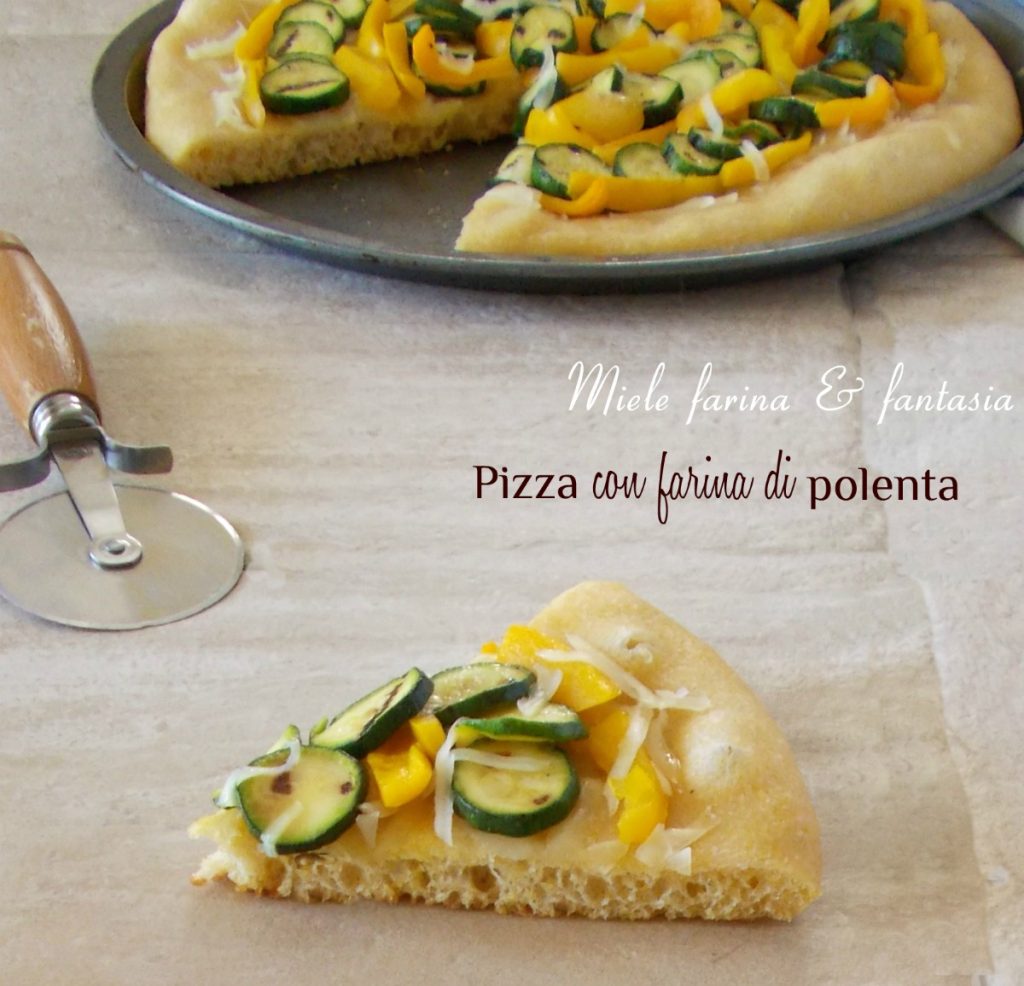
You can choose to top the pizza before baking or after (remember cheeses are usually added near the end of cooking), as I did with my vegetarian pizza, which I topped with slices of zucchini (about 3/16 inch / 5 mm thick) lightly grilled and strips of bell pepper (blanched in already-salted water for exactly two minutes, then immediately drained and left to cool).
Shortly before taking the pizza out of the oven I combined the vegetables in a bowl, dressed them with extra virgin olive oil and fine salt. I took the pizza out, filled it with the vegetables and finished with a coarse grating of aged provola (non-smoked), with a delicate flavor.
I put the pizza back in the oven (turning it off immediately) and left it for another 5 minutes before removing it.
The result is what you see in the photo: inviting softness and open crumb.
Enjoy your meal
