Today I want to show you a basic recipe for making a light pizza sauce, not because it’s complicated, but mainly to give you a few tips on how to get a more flavorful pizza compared to using canned whole tomatoes or passata straight from the can.
The problem, in my opinion, is that cans of tomatoes are full of water and so the pizza may not cook well on the surface despite pre-baking: the base still gets too wet and the surface becomes a bit “mushy.” Also, since I try to make a lighter pizza with less fat, this sauce is a good trick to make the pizza very flavorful even with very little oil.
So for a long time now I’ve gotten into the habit of preparing this sauce, a reduced tomato sauce flavored with spices and aromatics. Great for pizza but also for mini pizzas. Let’s look at the recipe…
Other recipes you might be interested in:
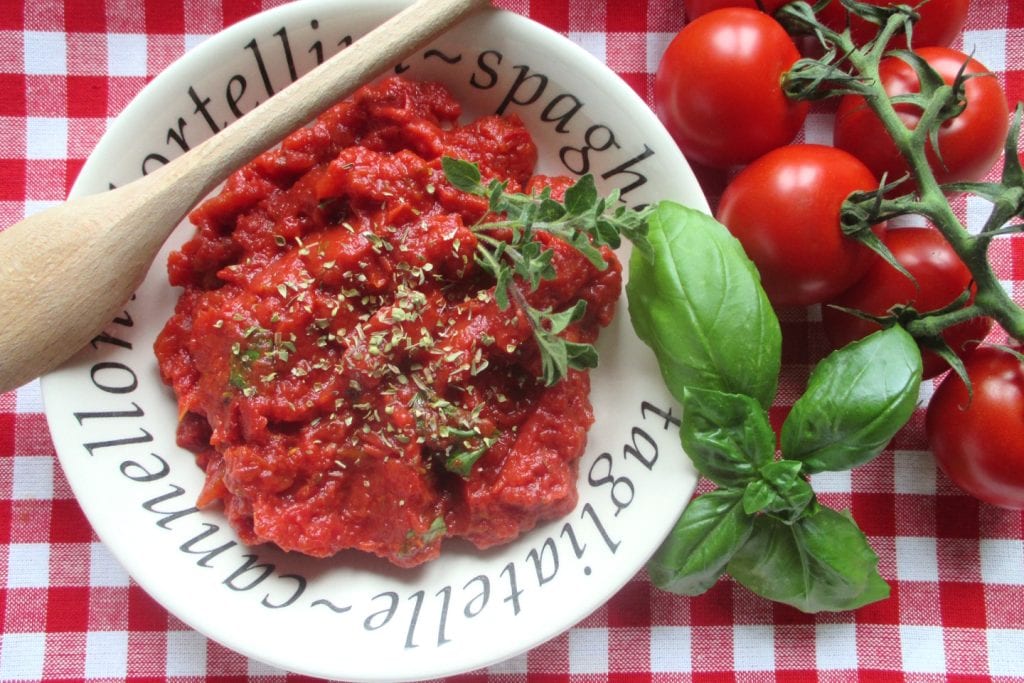
- Preparation time: 5 Minutes
- Cooking time: 20 Minutes
- Portions: 3, for 1 large baking sheet
- Cooking methods: Stovetop
- Cuisine: Healthy
- Seasonality: All seasons
Ingredients
- 10.6 oz (about 1 1/4 cups) tomatoes (peeled (canned) or chunked)
- 1 tsp extra virgin olive oil
- 1 clove garlic
- 1 tbsp dried oregano
- to taste basil (fresh)
- to taste salt
- Total points = 1 WW point
- Points per serving = 0 WW points
Tools
- Frying pan
- Knife
- Wooden spoon
- Splatter screen
- Potato masher
Steps
In a frying pan pour the teaspoon of oil and add the garlic cut into pieces or leave it whole if you plan to remove it later. As soon as the garlic starts to sizzle, add the tomatoes and season with salt and oregano. I use a little extra salt and don’t add more when topping the pizza.
Stir and cover with a splatter screen so air can still circulate in the pan and the tomato water can evaporate quickly without splashing all over the kitchen. Alternatively, you can use a lid left slightly ajar.
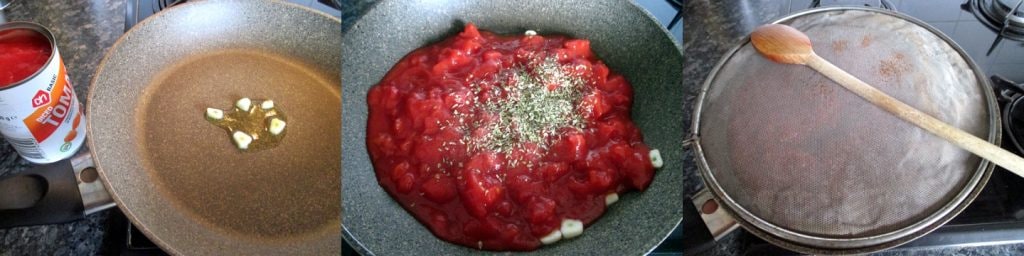
Cook over medium heat; the pizza sauce should simmer gently, and stir occasionally to check the cooking: it will take about 20 minutes for the sauce to reduce — it really needs to dry out a lot.
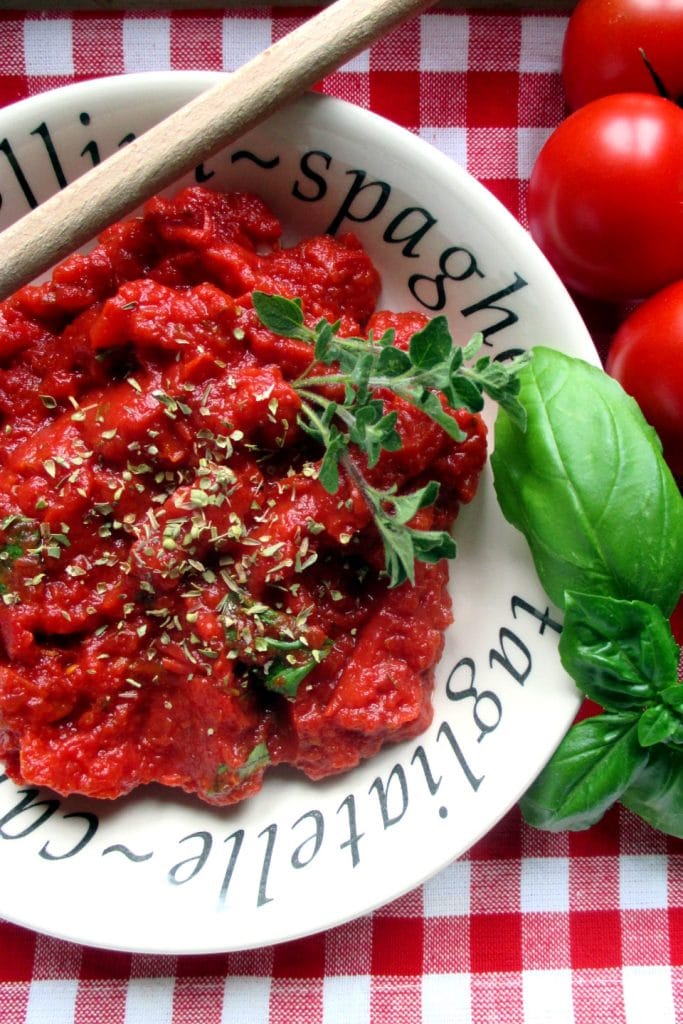
Turn off the heat, remove the garlic if you want, and roughly mash the tomatoes with a potato masher as in the photo or simply with the tines of a fork, so the sauce is not completely smooth but similar to the rustic passata you find commercially.
Cooking times depend a lot on the quality of the tomatoes used: the less watery they are, the faster the cooking will be.
At the end add plenty of fresh torn basil and adjust the salt.
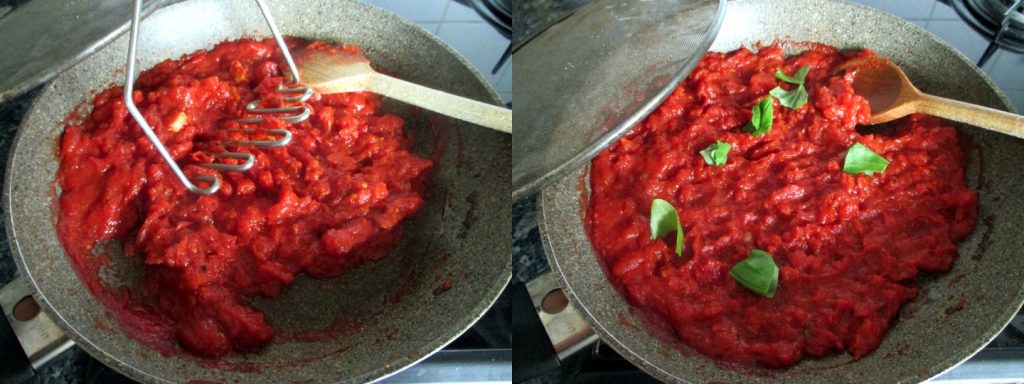
Our light pizza sauce is ready! How hard was that? Nothing! You can also prepare it in advance: it will release more water that you can pour off and you’ll be left with a very reduced tomato sauce, perfect for pizza.
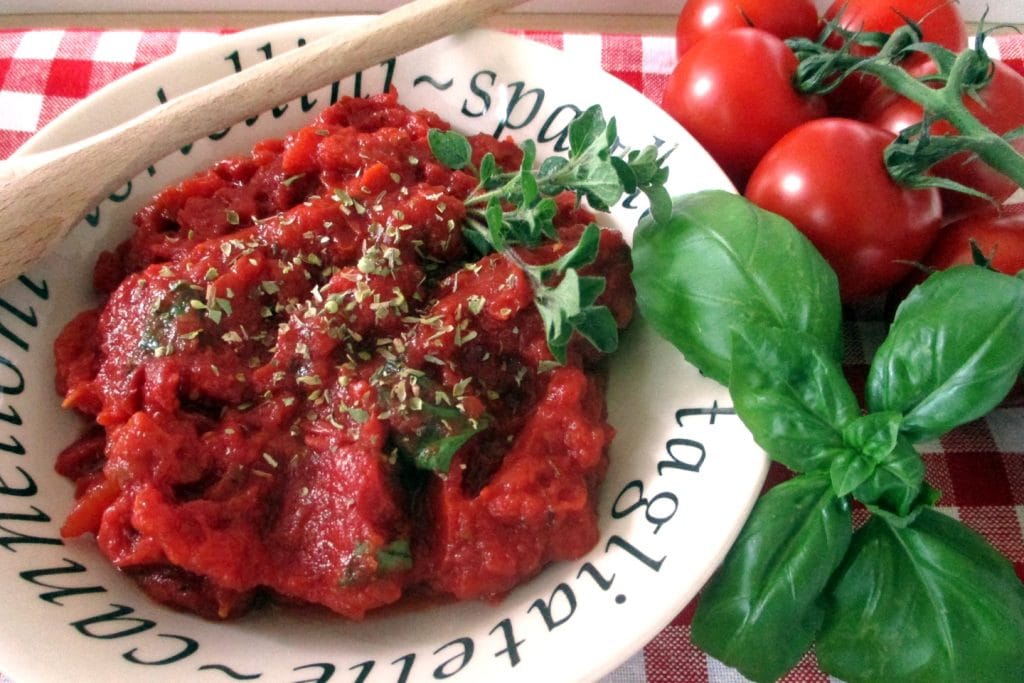
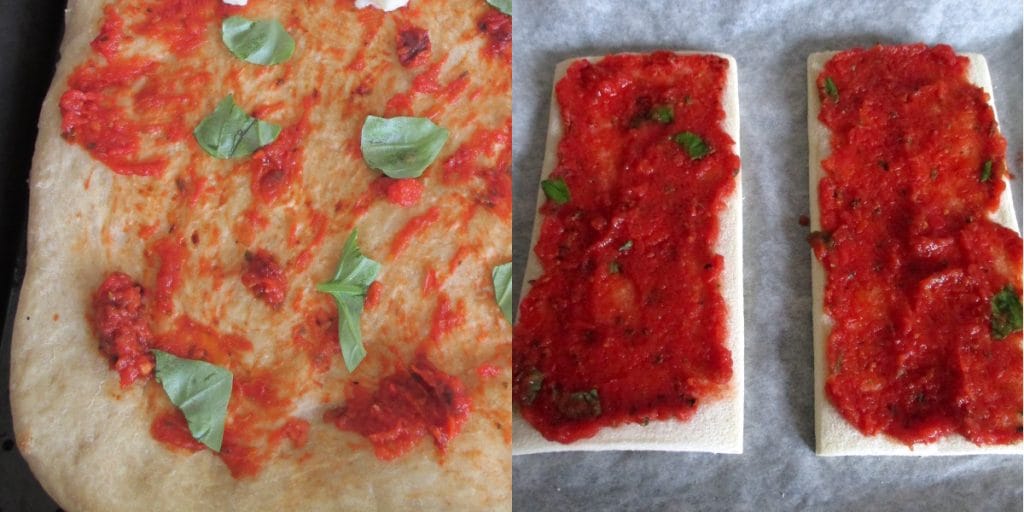
In the photo below you can see how I use this sauce on a tray-baked pizza or on sandwich-board pizza, but you can also use it in other ways. In practice you’ll have a quick, very reduced pizzaiola or marinara-style sauce.
You should know that when I make pizza I sometimes forget to prepare this sauce in advance. Well, at home they’re willing to wait another half hour for dinner as long as I make it.
Even my son, who is really not the most discerning eater, prefers it: enough said! Now I’ll hand it over to you: what do you use as pizza sauce?
Enjoy your meal!
by Giovanna Buono
Storage
You can keep the pizza sauce in the refrigerator for 4 days or freeze it already portioned. Let it thaw completely, drain any released liquid and then proceed to top your pizza.
FAQ (Questions and Answers)
Can I use fresh tomatoes?
In summer I use them but I peel them first: just make an X cut on the tomatoes, put them in boiling water for a few minutes and you’ll see the skin around the cuts will separate from the flesh making peeling easier. Then I cut them into pieces and proceed with the recipe.
How much should I use on the pizza?
These amounts are perfect for seasoning a pizza made using the oven baking sheet; in that case, as I suggest, the pizza is to be divided into three servings.