
Israel is the Promised Land for Jews, Christians and Muslims, and perhaps because of this it is an area of continuous wars, perhaps because everyone would like the Promised Land to belong only to them.
Internal religious and border disputes are a real plague afflicting a country that would otherwise be a perfect tourist destination, able to combine culture, sea and culinary tradition.
I will focus on the latter, because addressing a political-religious discussion on this blog is entirely inappropriate.
The current State of Israel, as we culturally understand it, was established only in 1948 after the events of the Shoah, receiving and welcoming Jews who had spread around the world as had happened in previous diasporas of ancient times.
Talking about Israeli cuisine is therefore not simple, given the variety of cultural and gastronomic influences that compose it.
However, there are two souls that characterize it the most: the Jewish one (but it should not be equated only with Kosher cuisine) and the Arab one with typical Middle Eastern flavors.
The debate on the existence of a true identity of traditional cuisine is still open.
Many of the dishes found in Israel are part of the tradition of other Middle Eastern countries; for example elements of Lebanese cuisine like falafel and hummus have become synonymous with Israeli cuisine.
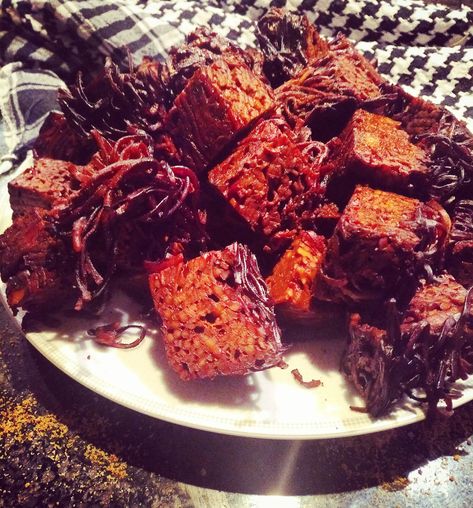
But among the few foods considered unique and specifically Israeli are Ptitim, often called Israeli couscous, and the Kugel Yerushalmi, caramelized thin noodles, spiced with black pepper, which was brought to the city of Jerusalem by Jews in the 18th century.
The Jerusalem kugel is baked overnight and eaten on the morning of Shabbat, after morning prayer services, along with cholent and pickles.
According to some Jews, eating kugel during Shabbat has a strong spiritual connotation.
In the original Jerusalem kugel recipe, the noodles were boiled in a relatively small amount of water, together with salt and pepper, and were intended to absorb the water.
Today they are boiled like normal pasta and then combined with caramel and pepper.
- Difficulty: Very easy
- Cost: Very inexpensive
- Preparation time: 5 Minutes
- Cooking time: 1 Hour
- Portions: 6 servings
- Cooking methods: Oven
- Cuisine: Jewish
- Seasonality: All seasons
Ingredients
- 14 oz egg noodles (very thin – lokshen)
- to taste canola or sunflower oil
- 2 cups sugar
- 4 eggs
- 1 tablespoon ground black pepper
- to taste sea salt (preferably Kosher)
Tools
- 1 Baking pan 12 x 8 in or 10 x 7 in
Preparation
In a pot filled to about one-quarter of its capacity with boiling water, cook the noodles for 5 to 7 minutes, drain, place in a bowl and set aside.
In a saucepan combine the oil and sugar, cook over low heat, stirring with a wooden spoon, until the sugar becomes liquid and brown in color (about 5 minutes). Pour the caramelized sugar over the noodles and set aside.
Preheat the oven to 347°F. Grease a baking pan (12 x 8 in or 10 x 7 in) and warm it.
Add the eggs, mix with the noodles and season with salt and pepper. Mix well. Return the pan to the oven and bake for about 1 hour.
To obtain perfect squares, it is better to let it cool slightly before cutting.
Jerusalem Liberated. Complete edition (Italian)
While for other types of Kugel (such as sweet ones with cheese and raisins) wide egg noodles are often used, for the “peppered” Jerusalem version, thin spaghettini are considered an essential requirement to respect the original dish’s aesthetics and texture.
Is Jerusalem Kugel a sweet or savory dish?
Its traditional placement is during the Kiddush (the refreshment after synagogue prayer) or as part of the Shabbat meal.
It is served:
Alongside savory dishes.
Typically accompanied by pickled cucumbers, which balance the sweetness of the caramel and the strength of the black pepper with their acidity.
