
Among the most authentic symbols of the Southern rural Easter tradition are the Sweet Egg Taralli, a ritual passed down from generation to generation that marks the end of Lenten austerity.
Originally born as “Taralli of the Newlyweds” to celebrate weddings, these large ring-shaped cookies have become, over time, the quintessential Easter gift.
In the past, women gathered during Holy Week to knead kilos of flour and eggs, then took the taralli to bake in the village communal ovens. Their aroma was the unmistakable sign that the feast was near.
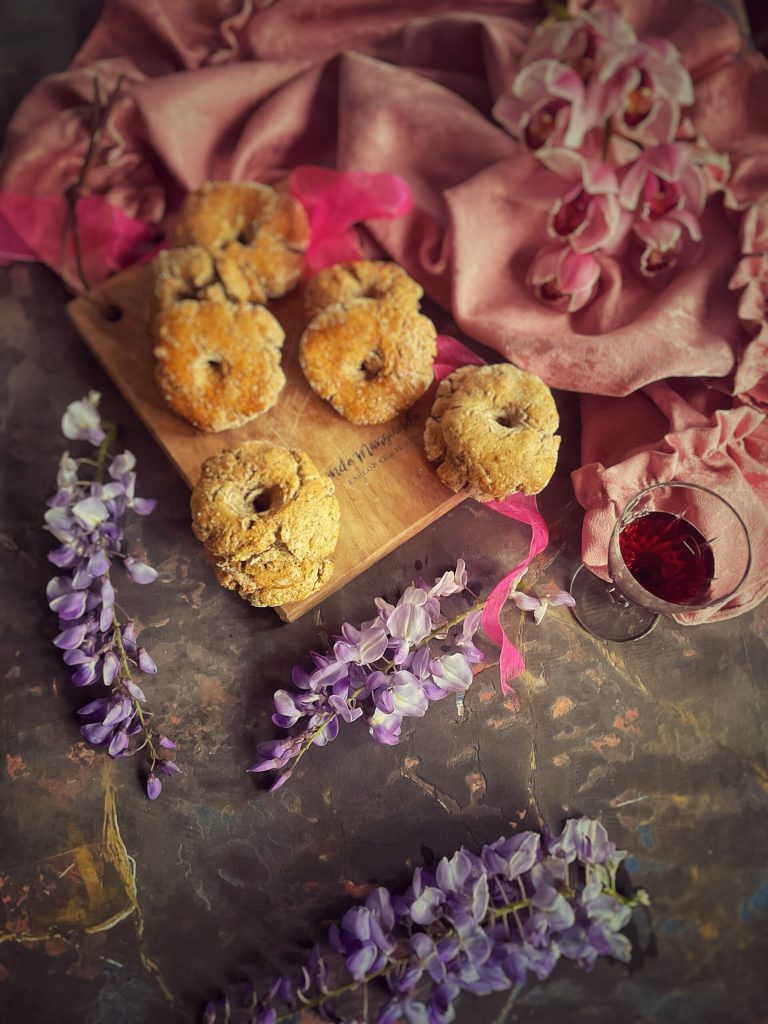
While many regional variants call for a generous coating of scileppo (a thick white sugar glaze), the version I propose today is the “naked” one.
It differs from the others because it highlights the fragrance of the dough, the quality of the extra virgin olive oil and the pungent aroma of anise.
Without the sugary coating, these taralli are less sweet, incredibly crumbly and perfect for dipping in sweet wine at the end of a meal or in milk at breakfast.
While the nobles and the clergy preferred the sugar-covered version (more expensive), the peasants often left them “naked” or simply brushed them with egg to make them glossy.
Unlike the “boiled” taralli, these are not boiled: their incredible lightness comes exclusively from the skilful use of eggs and a pinch of baker’s ammonia, which makes them porous and light as clouds.
Because no one should give up the flavors of memory, I wanted to adapt this ancient recipe into a Gluten-Free version.
On the blog you can also find:
- Difficulty: Medium
- Cost: Very inexpensive
- Rest time: 1 Day
- Preparation time: 15 Minutes
- Cooking time: 35 Minutes
- Portions: 20 pieces
- Cooking methods: Oven, Electric oven
- Cuisine: Italian
- Seasonality: Easter, Spring
Ingredients
- 5 eggs
- 1/2 cup granulated sugar
- 3 1/3 tbsp extra virgin olive oil
- 2 tbsp anise liqueur
- 4 cups gluten-free flour mix
- 1 1/4 tsp baker's ammonia (ammonium bicarbonate)
- 1/4 cup milk (+ more if needed)
- 2 egg yolks
- salt
Steps
Hydrated dough: Work the eggs with the sugar and oil, then add the flour and the ammonia dissolved in 1/4 cup of warm milk, and a pinch of salt. If the dough seems too dry, add milk or water: it should be firm but pliable.
Long rest: Let the dough ball rest wrapped in plastic wrap for at least 1 hour in the refrigerator. The cold firms the fats and makes gluten-free flour easier to work with.
Shaping on baking paper: Instead of rolling long ropes on the work surface, form balls, flatten them (about 4–5 in) and make a hole in the center with your finger, gently widening the ring directly on the baking sheet.
Double brushing: Brush with the egg yolks twice before baking to ensure that beautiful amber color typical of Puglian taralli.
Slow baking: Bake at 338°F for about 35 minutes. Gluten-free products take a little longer to dry out internally; if they remain moist they lose their characteristic crumbly texture.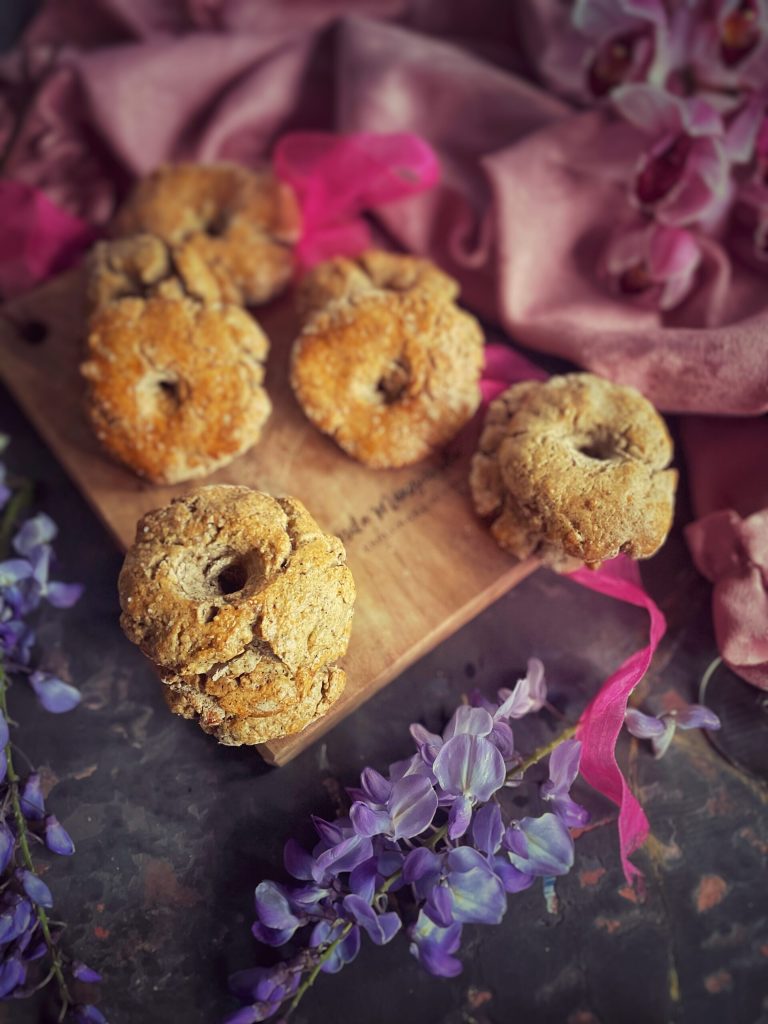
Ideal wines for pairing:
Moscato di Trani: To stay in Puglia, it is the natural companion. Sweet, aromatic and velvety.
Aleatico di Puglia: If you prefer a sweet red wine, its notes of red fruits and spice pair very well with the anise aroma of the tarallo.
Vin Santo: Although Tuscan, it is a very common pairing throughout central-southern Italy for dry cookies meant for dipping.
Vino Cotto: Typical of the Puglian and Abruzzese peasant tradition, it is perfect for those seeking a more intense, caramelized flavor.
