
The Pardulas de arrescottu are small hand-pinched leavened pastry baskets that enclose a filling made with ricotta, saffron and citrus zest.
Traditionally prepared for Easter, when sheep ricotta (arrescottu) is fresher and more aromatic, pardulas are a collective rite.
In Sardinian, the term “prenas” means “full” (i.e., “swollen”, “puffed”), and identifies precisely the leavened variant, where the pastry shell rises and puffs around the ricotta; it is usually used for “coccoi prenas”, leavened baskets made with potatoes and cheese.
In the more common version of pardulas, it is the pasta violada (a dough made with semolina and lard) that wraps the filling with a thin crispness.
My leavened version is a reinterpretation that merges two Sardinian recipes: coccois prenas and pardulas, creating the pardulas “prenas” where the texture changes completely, becoming a sort of soft brioche.
In Sardinian culture, natural leavening symbolized prosperity. A dough that “grew” well thanks to su fremmentu was a sign of good omen for the agricultural year.
The version I propose also departs from conventional preparations to meet specific dietary needs and aromatic curiosities, while keeping the ancient working method:
Gluten- and Lactose-Free: the use of oat flour gives a toasty note and a structure suitable for a gluten-free diet, while using clarified butter (ghee) removes milk proteins while keeping a noble, aromatic fat component.
Natural Leavening: Unlike the common use of brewer’s yeast, this recipe recovers the use of sourdough starter (su fremmentu), ensuring a slow maturation of the dough, greater digestibility and prolonged softness retention.
Aromatic Profile: Beyond the classic notes of saffron and orange, the filling is characterized by a light smoky note. The targeted addition of liquid smoke recalls the aromas of traditionally wood-aged cheeses, creating a technical contrast with the sweetness of the ricotta.
This interpretation of the Pardula de arrescottu combines the rigor of natural leavening with a blend of modern ingredients, offering a complex and inclusive tasting experience.
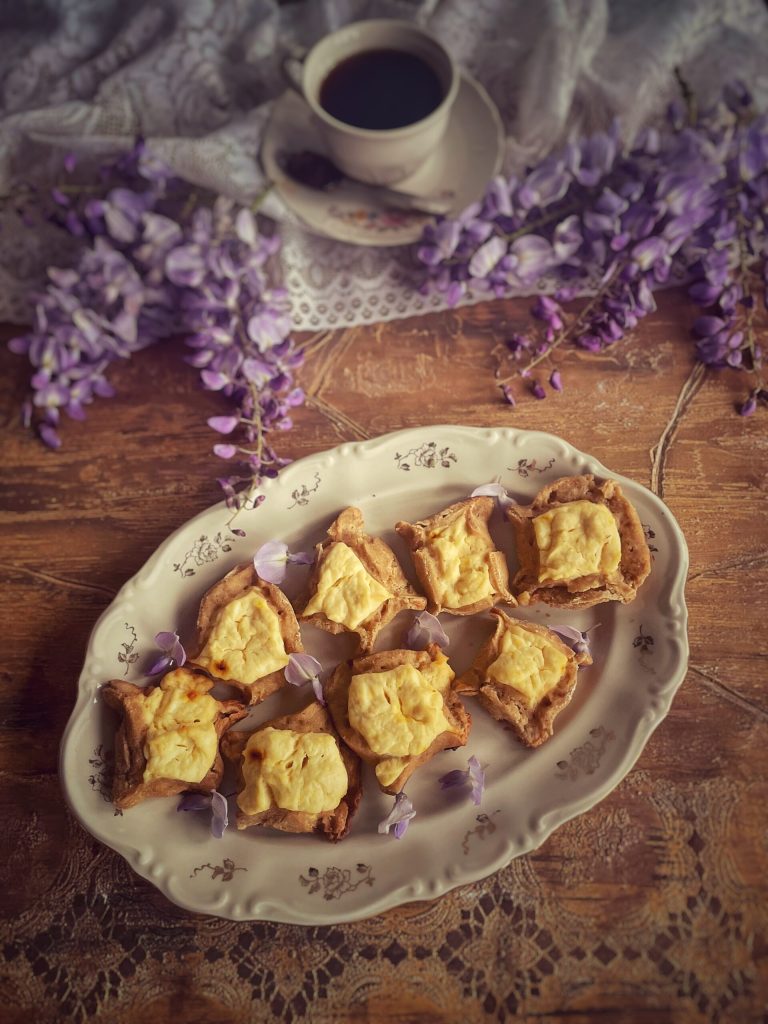
- Difficulty: Medium
- Cost: Budget
- Rest time: 6 Hours
- Preparation time: 10 Minutes
- Cooking time: 30 Minutes
- Portions: 22 pieces
- Cooking methods: Oven, Electric oven
- Cuisine: Italian
- Seasonality: Easter, Spring
Ingredients
- 3.4 fl oz fresh gluten-free sourdough starter (refreshed)
- 1/2 cup plant-based milk (+ for brushing)
- 1/4 cup granulated sugar
- 8.8 oz gluten-free oat flour
- 1 egg (+ 1 egg for brushing)
- 3.5 oz potato starch (gluten-free)
- 4 tbsp clarified butter (ghee)
- 2 cups lactose-free ricotta
- 1/2 cup granulated sugar
- 2 egg yolks
- 1 drop liquid smoke
- 1 packet saffron
- 2 tbsp rice flour
- to taste lemon zest
Steps
1. Dough Preparation
Dissolve the GF sourdough starter in the lukewarm milk.
In a bowl, combine the oat flour, potato starch and sugar. Add the milk with the starter and the egg.
Work the mixture well. When it starts to come together, incorporate the clarified butter (ghee) at room texture (soft but not melted) and the salt.
Knead until you obtain a smooth dough. If it’s too sticky, add a light dusting of starch.
2. Technical Rest (the secret for rolling)Wrap the dough in plastic wrap and place it in the fridge for 30–40 minutes. This hydrates the oats and firms the ghee so you can roll the dough without tearing it.
3. The FillingWhile the dough rests, sift the well-drained ricotta and mix it with the sugar, yolks, saffron and grated zest. Add the rice flour to absorb any remaining moisture.
4. Shaping the PardulasTake the dough out of the fridge. Roll it with a rolling pin on a surface dusted with rice flour to a thickness of about 1/4 inch (6–7 mm).
Cut discs about 3.5–4 inches (9–10 cm) across. Place a small ball of ricotta in the center (about 1.25 oz / ~35 g).
Lift the edges and pinch them to create the little star shape.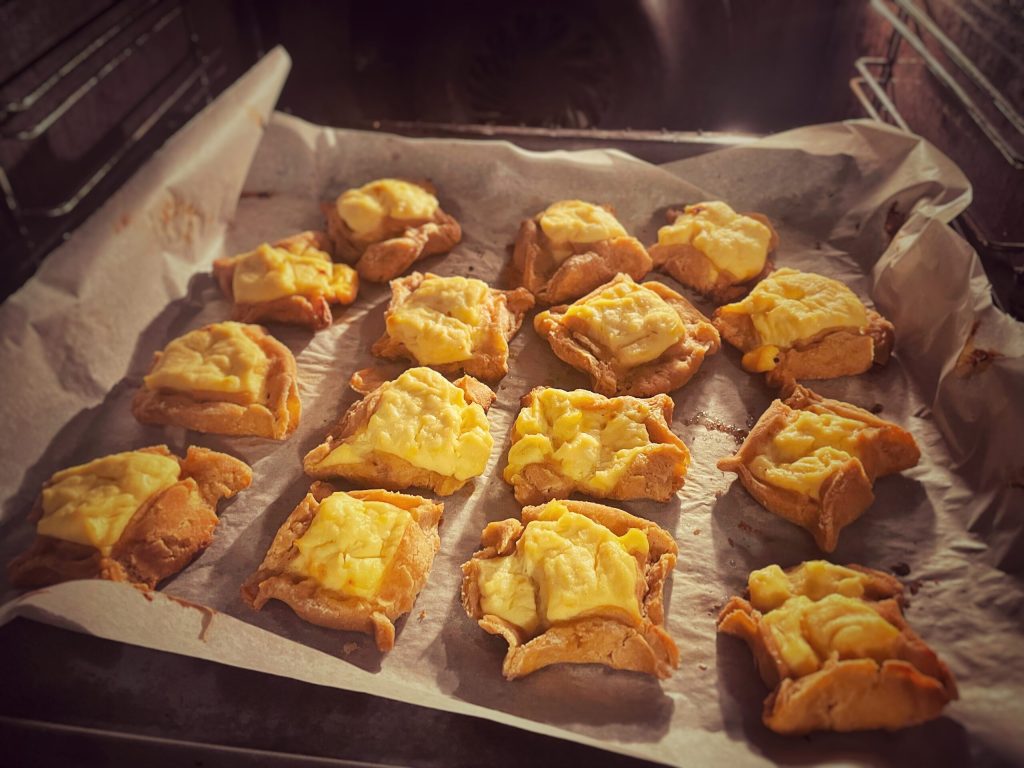
5. The Long Proof (6 Hours)
Arrange the pardulas on a baking sheet lined with parchment paper.
Let them proof for 6 hours in a sheltered place (an oven that’s off with the light on works well). They should visibly puff up.
6. Baking
Bake in a preheated conventional oven at 338°F (170°C) for about 25–30 minutes.
The oat flour and ghee will produce a deep golden color. Remove from the oven when the filling is set and the pastry is cooked but still tender.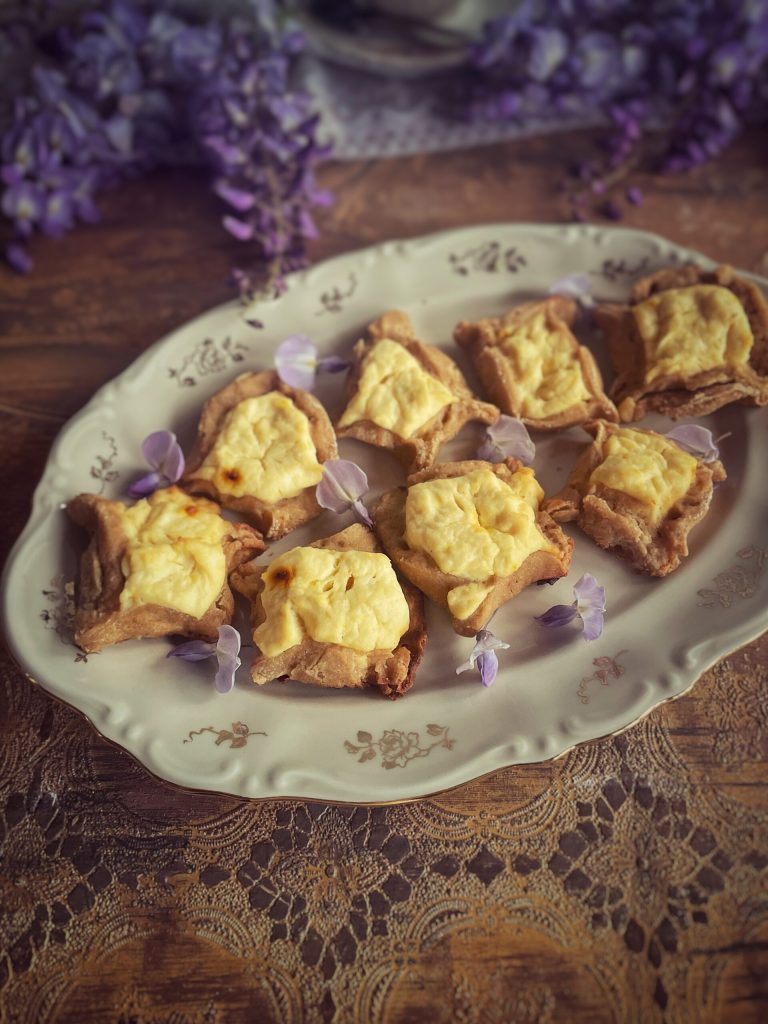
Pairing: Smoked Black Tea
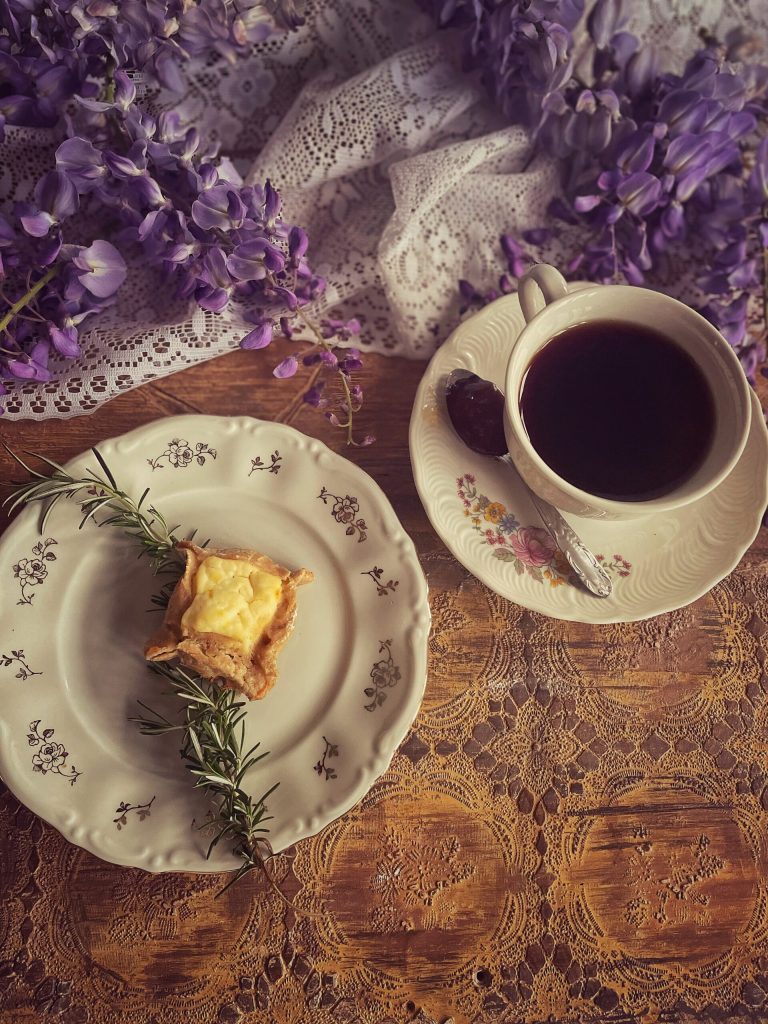
To complete the sensory experience, I chose to serve the Pardulas prenas paired with a robust smoked black tea.
The preparation is inspired by the taste of traditional Russian tea (like Lapsang Souchong or the Russian Caravan), characterized by a pronounced wood-smoke note, and often served with a spoonful of jam or honey.
Adding a drop of liquid smoke to the infusion directly recalls the aromatic component included in the ricotta filling, creating a coherent flavor bridge.
The presence of a slice of lemon in the tea serves an essential technical function: the citrus acidity cleanses the palate from the fat component of the ghee and the ricotta, balancing the intensity of the saffron and the smoky notes.
FAQ (Questions and Answers)
Was butter traditionally used to make Pardulas?
In the historic and original Sardinian recipe with sourdough (su fremmentu), butter was not used.
Instead, lard (sa ollu de porcu) was used.
Here’s why:
Pastoral tradition: In Sardinia, butter arrived very late in popular cooking. The agropastoral culture was based on sheep and pigs; the noble fat for pastries and layers was lard.
Technical result: Lard makes sourdough-based dough incredibly soft and fragrant, much more so than butter. It helps retain moisture, allowing pardulas to stay soft for days (which is essential with natural leavening).
Flavor: Good-quality lard is neutral and lets the intense aroma of saffron and the orange zest in the filling emerge, without covering them with milky notes.
